Seizoenarbeiderspad
Madonna
A peaceful rural walk around Madonna, following old church paths, a disused railway line, traces of the Vrijbos and the story of the seasonal…
The walk
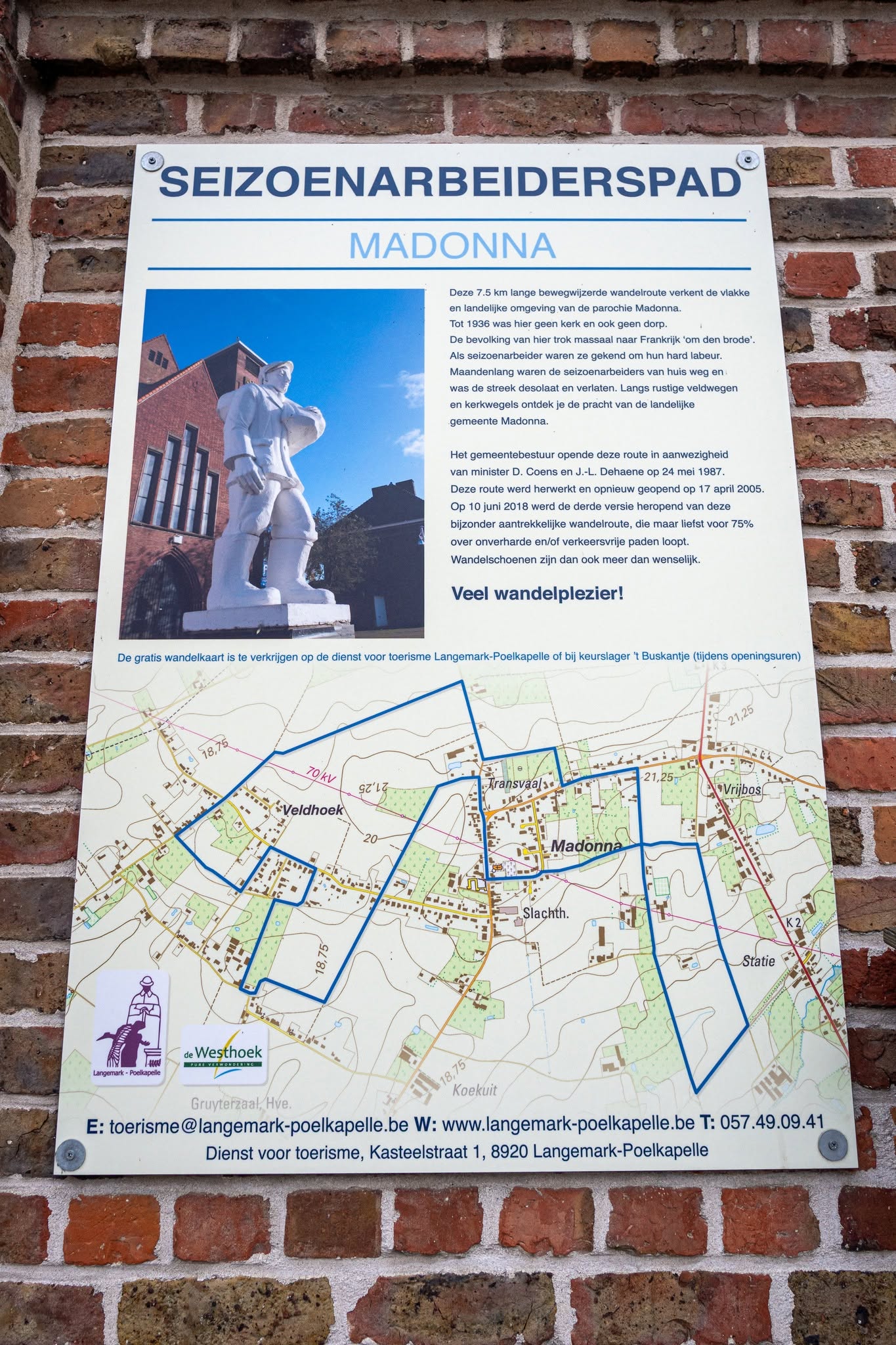
The Seizoenarbeiderspad is a 7.5-kilometre loop through the countryside around Madonna. The route follows quiet country lanes, old church paths and part of the former railway line between Ypres and Kortemark. Two stories in particular shape the walk: the former Vrijbos and the seasonal workers who left Madonna to earn a living in France.
A young parish with an older story
The walk begins at the Church of Our Lady of the Immaculate Conception in Madonna. The present church was designed in 1938 and consecrated in April 1939. Madonna is therefore a relatively young parish: until 1936 there was no church here, and the area consisted mainly of scattered farms and small hamlets.
Veldhoek was one of these older settlements, long before Madonna developed into a recognisable village. The name Boskant also recalls a time when woodland played a much greater role in the surrounding landscape.
The residents formed a close-knit community. Families lived near one another and marriages often remained within the local area. Traditions such as visiting neighbouring houses at New Year were also part of village life.
The old railway and the Vrijbos
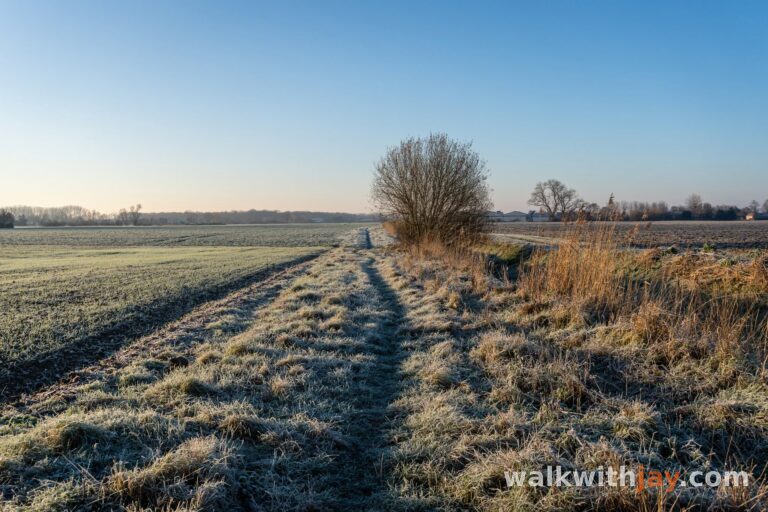
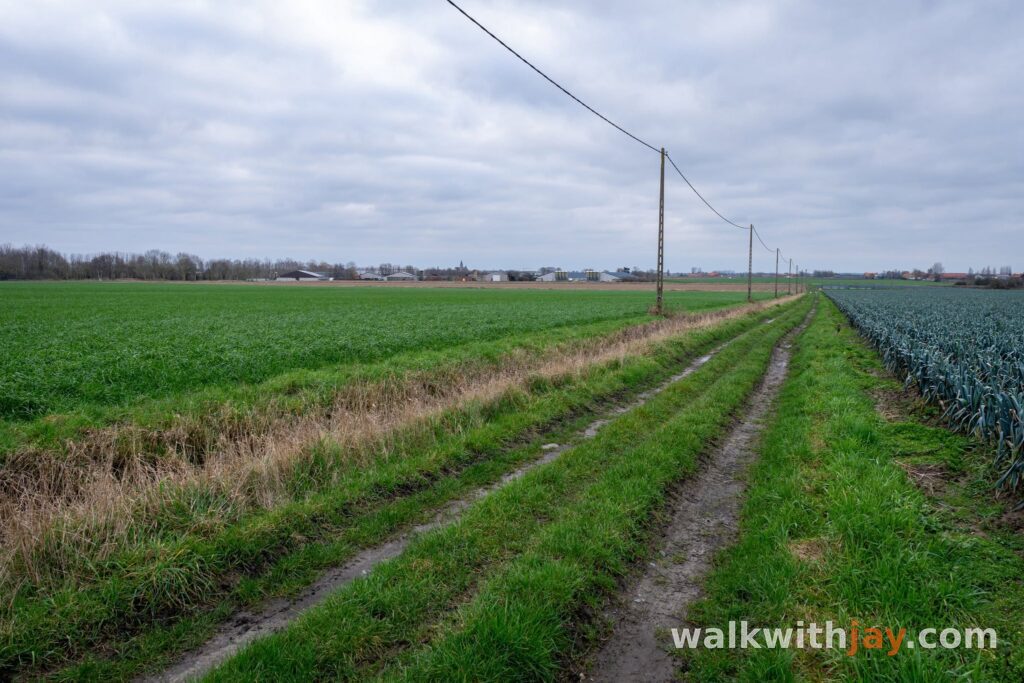
Quiet country lanes and old church paths lead towards the former railway line between Ypres and Kortemark. This section brings some variety to the surrounding farmland and gradually takes you towards the area once occupied by the Vrijbos.
The forest was once enormous. In the early Middle Ages, it is thought to have covered around 6,000 hectares and extended across a large part of what is now the Westhoek. Long, straight avenues still visible in places are reminders of the former woodland management, when felled timber was hauled out by horse along purpose-built tracks.
The Vrijbos also became firmly rooted in local folklore. During the French period, the area was associated with Lodewijk Bakelandt and stories of his gang, although much of that reputation was later romanticised. Centuries of clearance gradually reduced the forest, and the remaining woodland suffered heavily during the First World War. Only much smaller wooded areas survive today.
Following the seasonal workers
The central story of the walk is that of Madonna’s seasonal workers. From the late 19th century onwards, men and women from the area travelled to France for temporary agricultural work.
For many, the journey began on foot, and later by bicycle. The first stage to Tourcoing was roughly 35 kilometres. Foreign workers had to have their documents stamped there before continuing, sometimes by night train, towards farming regions much farther into France.
Clothes, food and tools were carried in a heavy double bag known as a baluchon. Working conditions were demanding. A six-and-a-half-day week was not unusual, and working days could last up to fourteen hours. Sugar beet work became particularly closely associated with the seasonal labourers, but they also worked with potatoes, flax, grain and chicory.
For many families in Madonna, seasonal work was an essential source of income. During the busiest periods, so many residents left for France that the village became noticeably quieter. The money they brought home after months of hard work helped families continue building their lives in the area.
Returning to Madonna
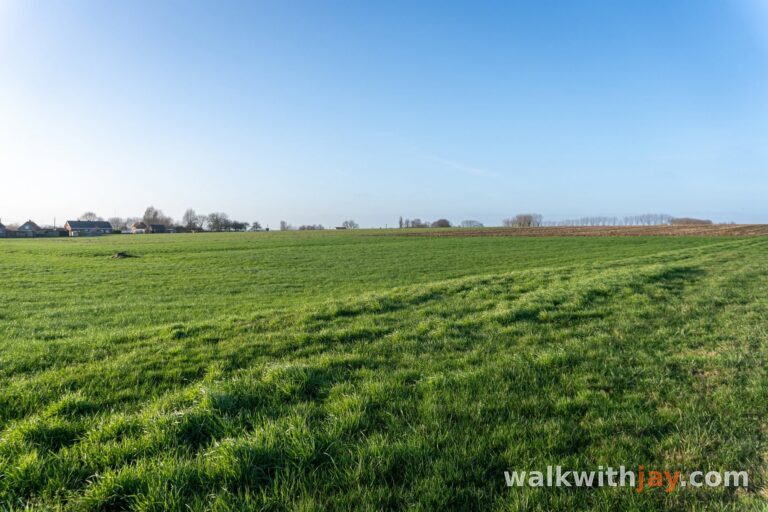
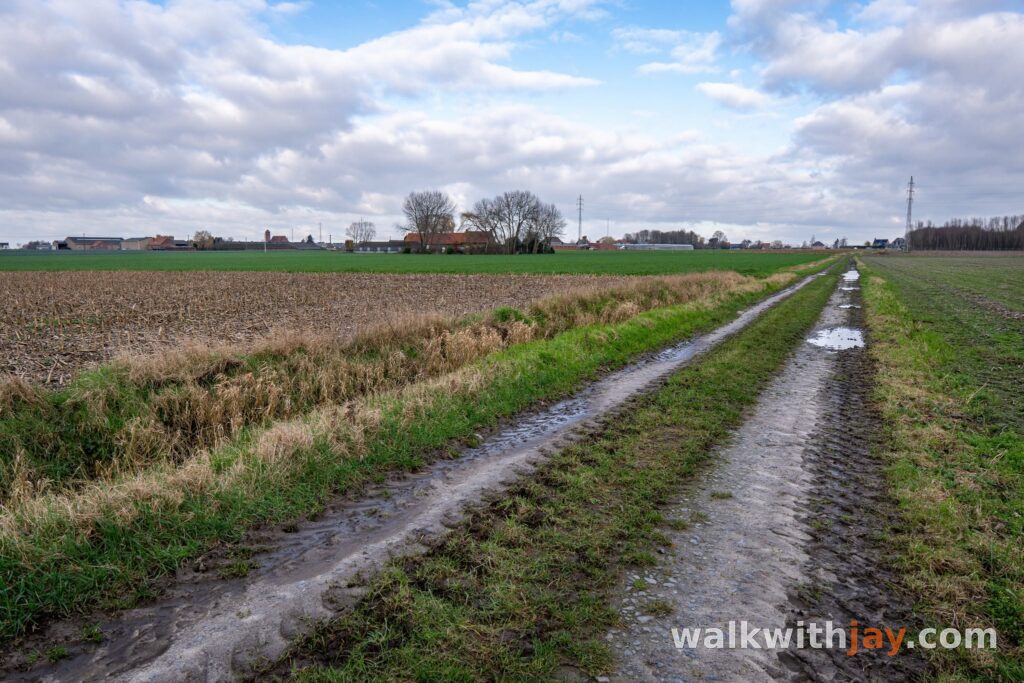
The route gradually heads back towards Madonna via Boskant and Veldhoek. The countryside remains open and quiet, with long rural roads, farmland and smaller strips of woodland.
Near the end of the walk stands the Seasonal Workers Monument, erected in 1962. It commemorates the men and women who spent decades travelling to France for temporary work.
It is a fitting way to end the walk. The Seizoenarbeiderspad is not only about the landscape around Madonna, but also about the people who lived and worked here. Their story gives this otherwise quiet rural route its distinctive character.
Photos from this walk






Good to know
Little shade
Church
Cemetery
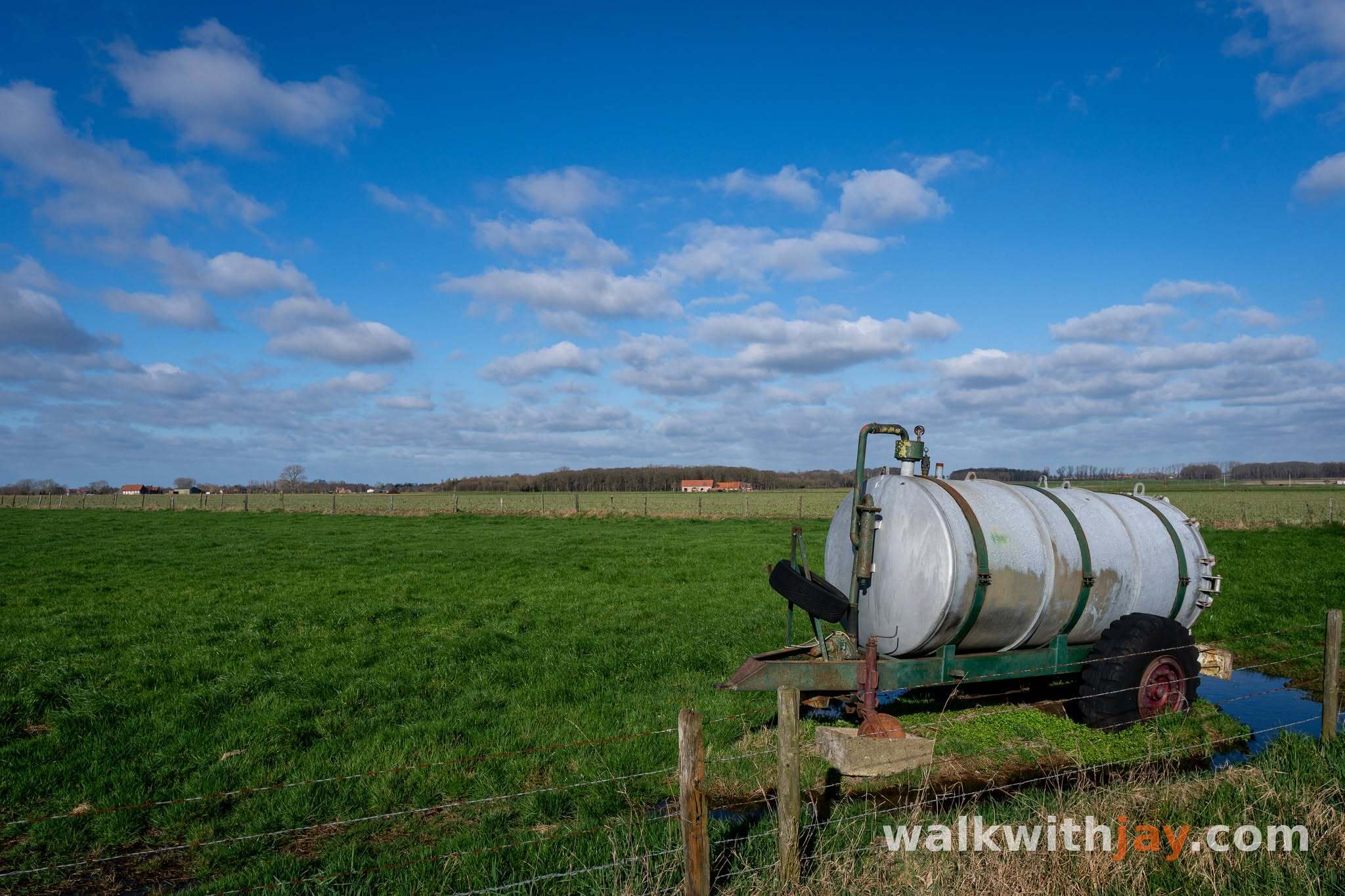
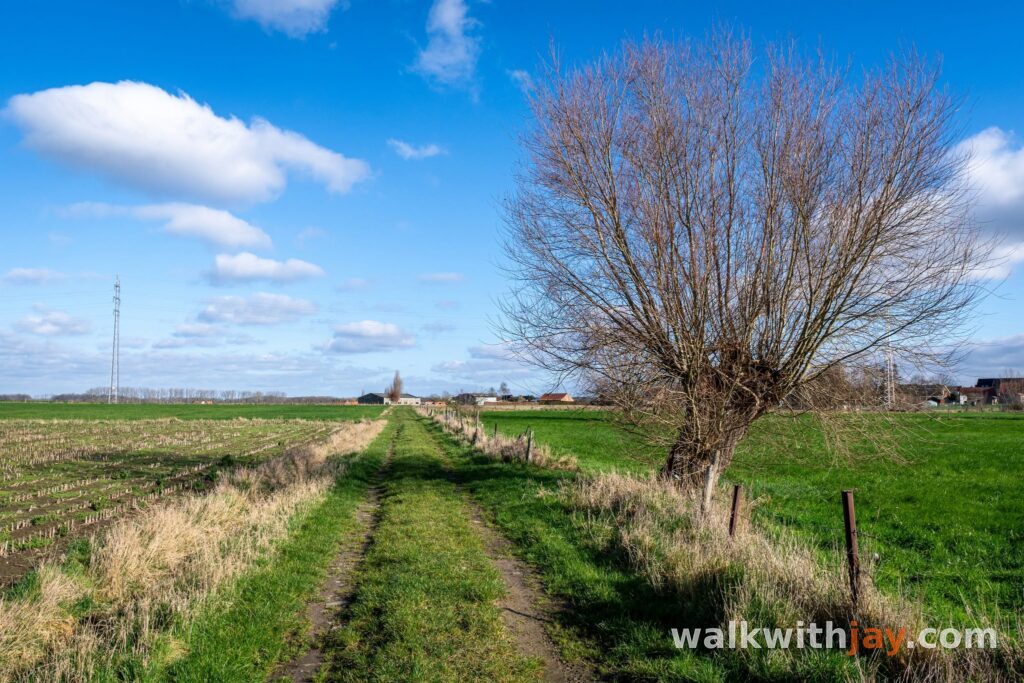
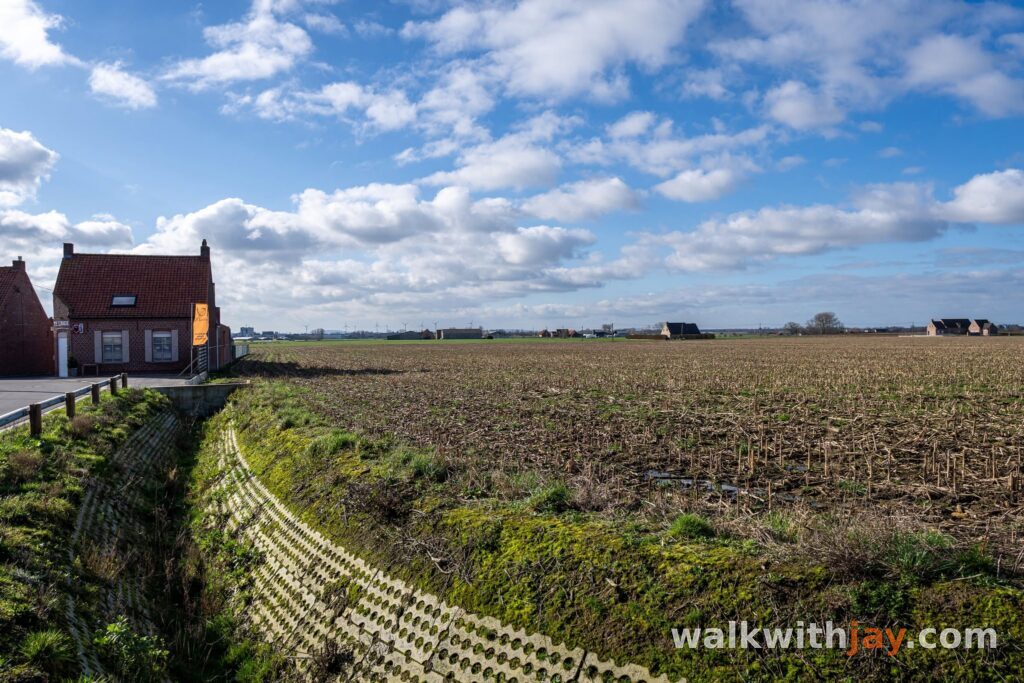
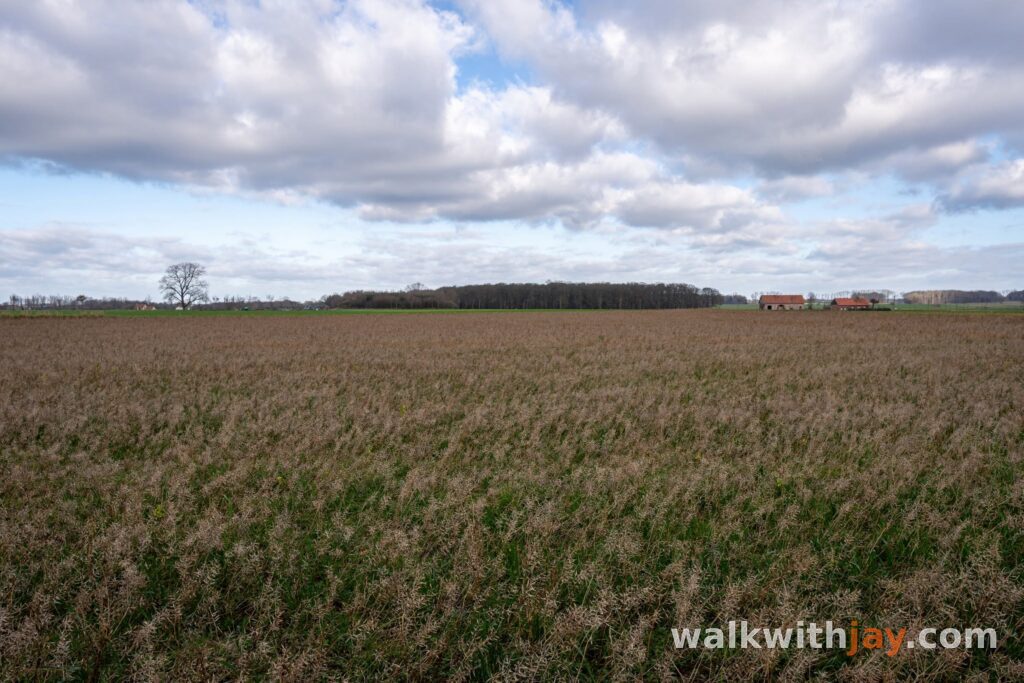
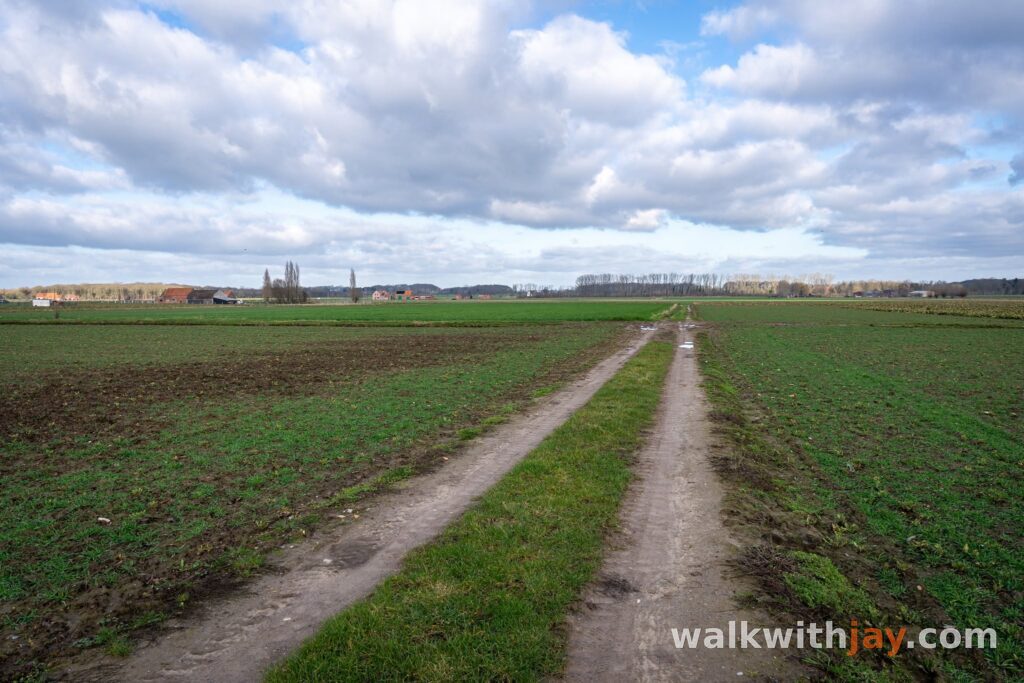
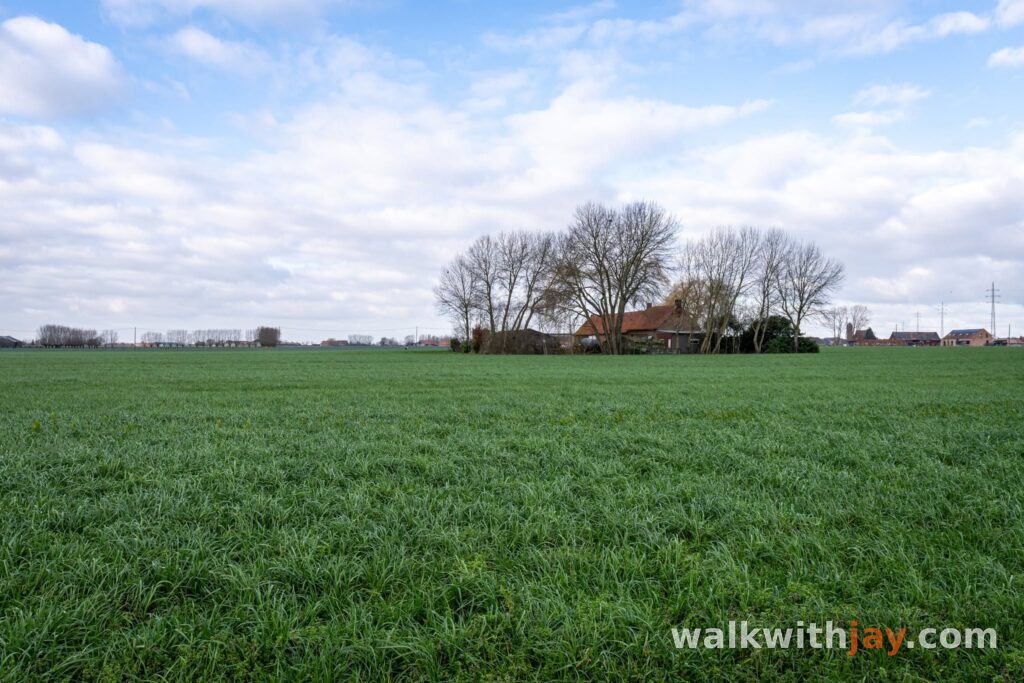
Much of the route crosses open farmland, so there is little shade.
My experience
For me, the strength of this route lies mainly in the story behind the landscape. The walk is flat and peaceful, and visually it is not the most varied route in the Westhoek. The old railway line, the former Vrijbos and especially the history of the seasonal workers nevertheless give the surroundings much more meaning.
If you are mainly looking for dramatic scenery, woodland or frequent changes in terrain, there are stronger walks elsewhere in the Westhoek. If you enjoy quiet countryside and want to learn more about the everyday history of the people who lived here, this is an interesting route with a very distinctive theme.
Waymarking
Seizoenarbeiderspad
The Seizoenarbeiderspad is one of Langemark-Poelkapelle's signposted walking routes. The municipality also provides an official route map.
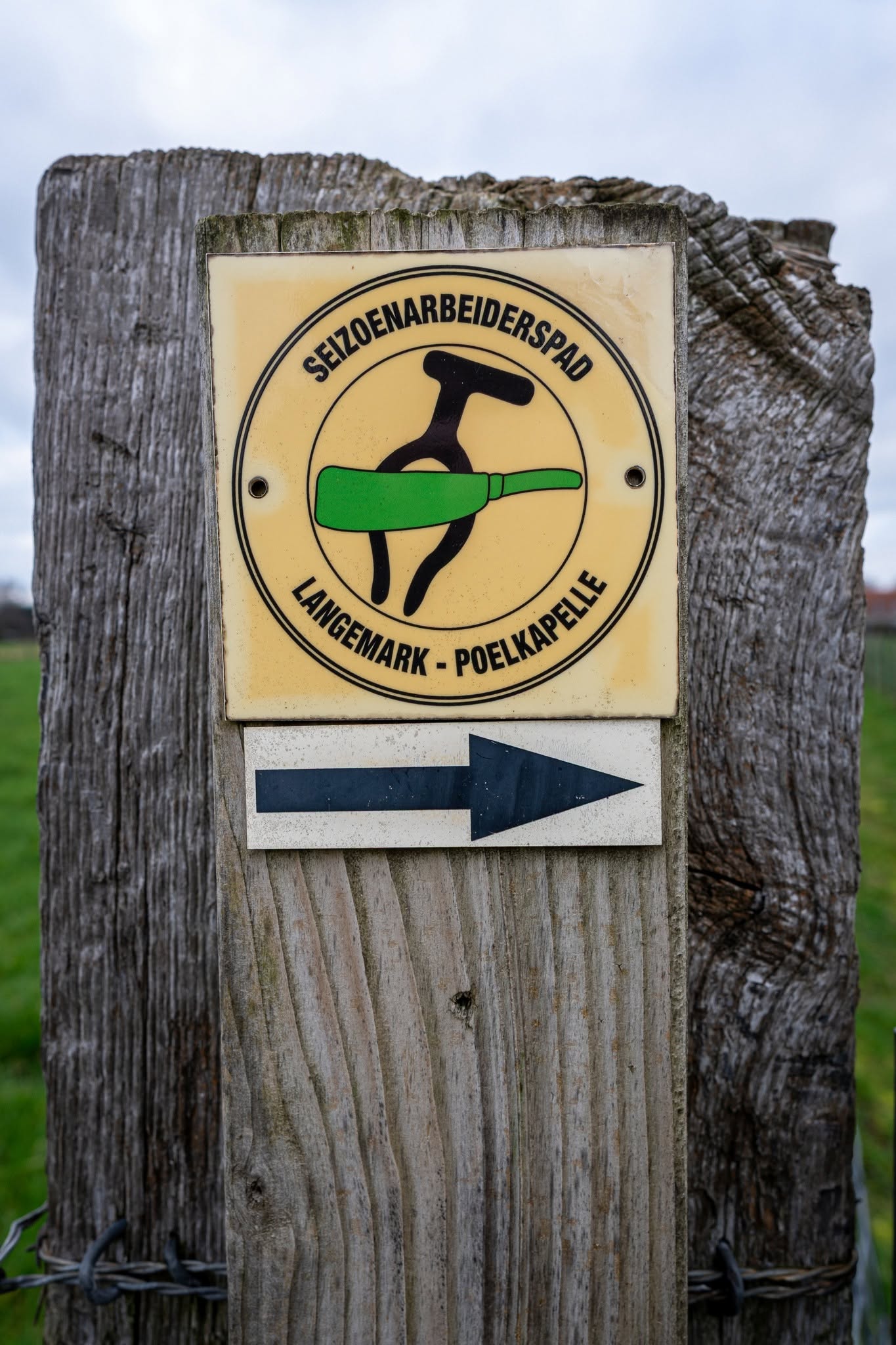
Route map available on site
Places of interest
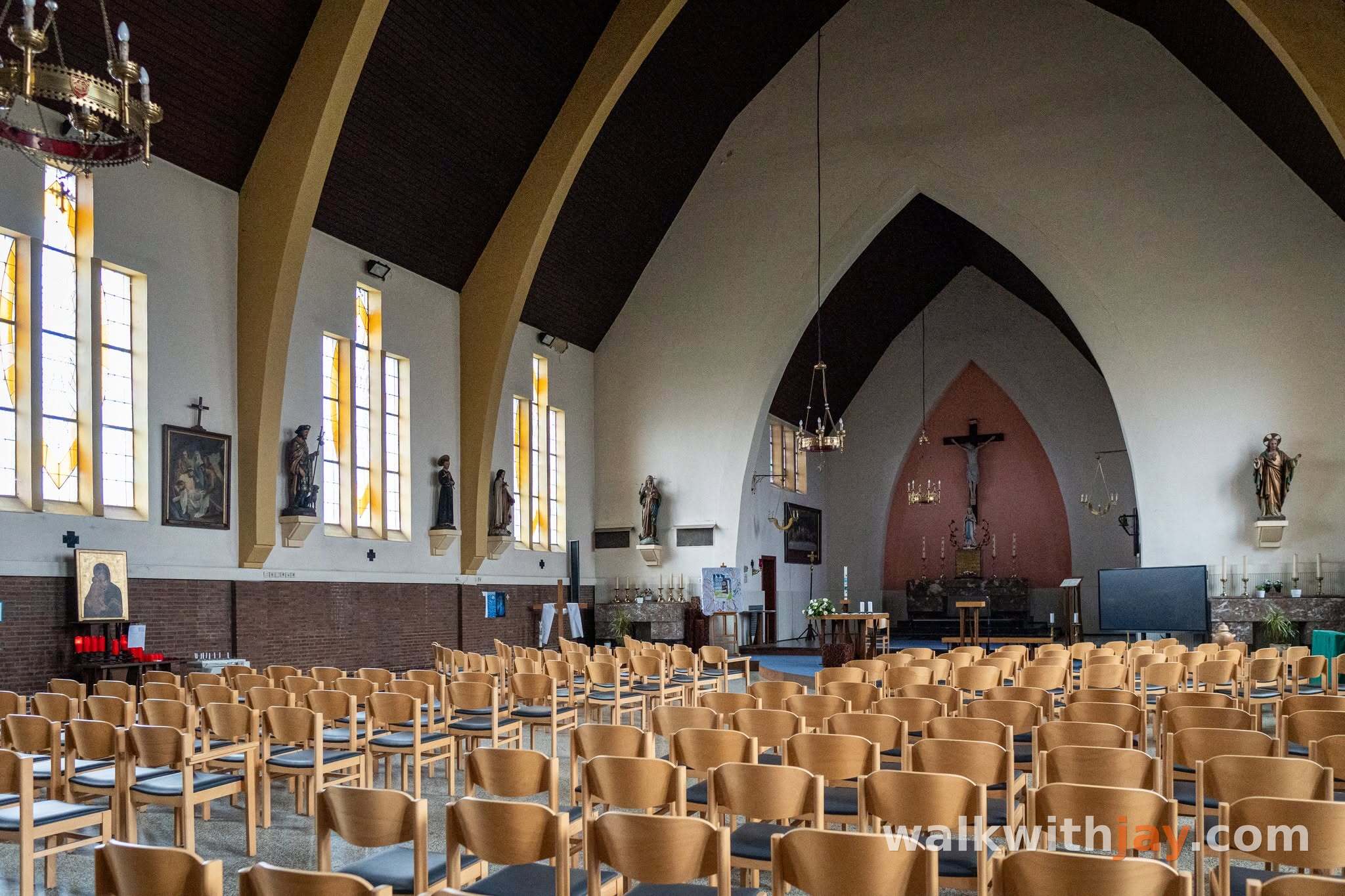
Onze-Lieve-Vrouw Onbevlekt Ontvangenkerk
At start/finish
Madonna's parish church, designed in 1938 and consecrated in 1939. The creation of the parish marked an important stage in the development of the village.
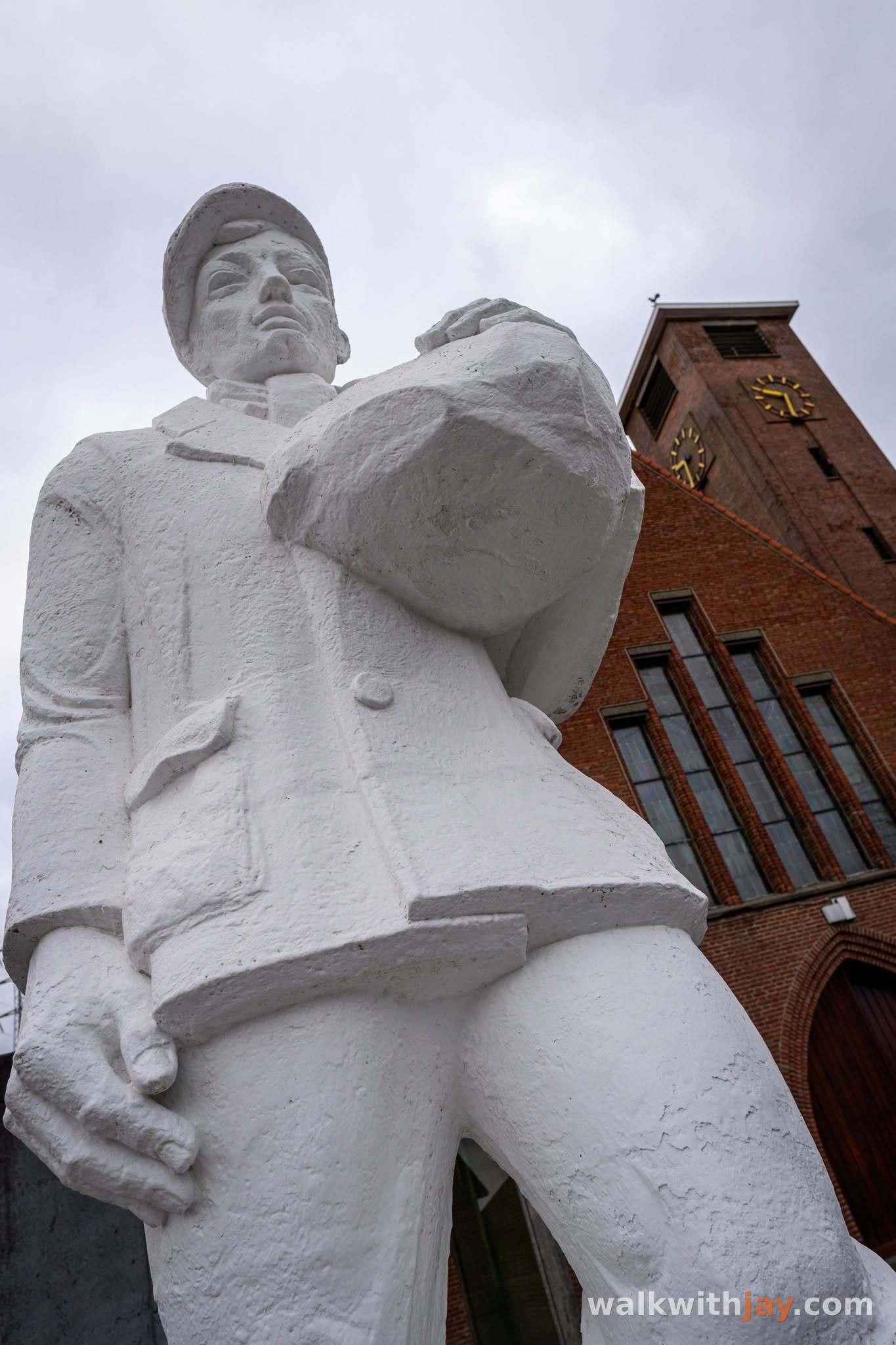
Seizoenarbeidersmonument
At start/finish
Monument erected in 1962 to Madonna's seasonal workers, who travelled to France for temporary agricultural work over many decades.
Ready to set off?
Open the starting point in your GPS and enjoy the walk.