Witches Walking Route
Beselare
A rural loop through Beselare, the witch village, with local legends, rolling countryside and some unexpected traces of the past.
The walk
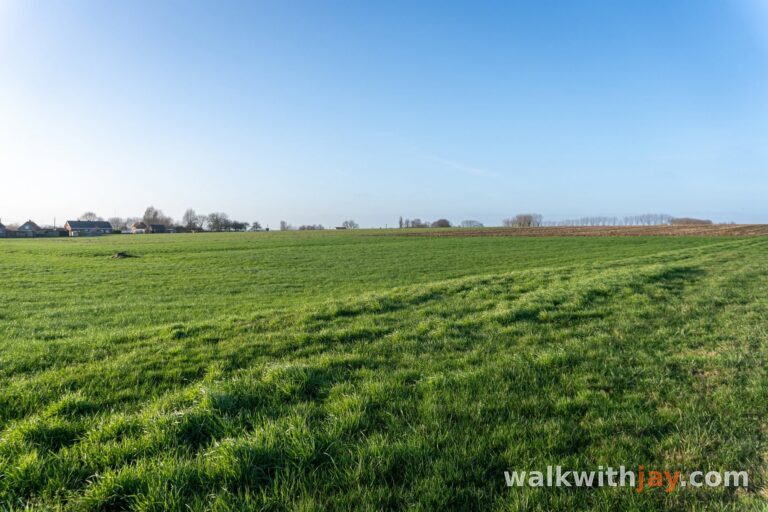
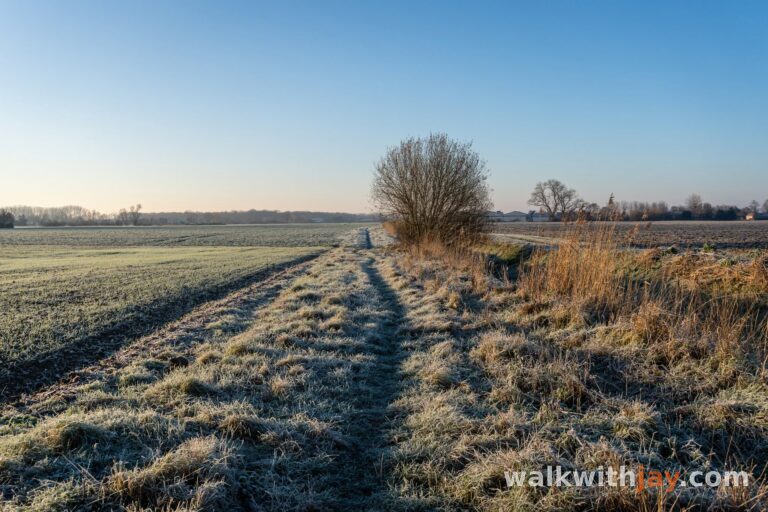
The Witches Walking Route is a 7.8-kilometre loop through Beselare and the surrounding countryside. The first part of the walk focuses mainly on the village’s famous witch stories. Once you leave the centre behind, the route opens out into rolling fields, old avenues and several unpaved tracks.
Folklore remains the main thread throughout the walk, but the former castle estate and a few traces of the First World War also appear along the way.
Beselare, the witch village
Beselare has been known as a witch village for generations. Many of the local stories are set in the 17th century and were later written down by folk writers and local historians, particularly Edward Vermeulen, better known as Warden Oom. Thanks to those stories, names such as Sefa Bubbels, Tanneken Vanhulle, Dokke van d’Heulebeke and Calle Bletters are still closely linked with the village today.
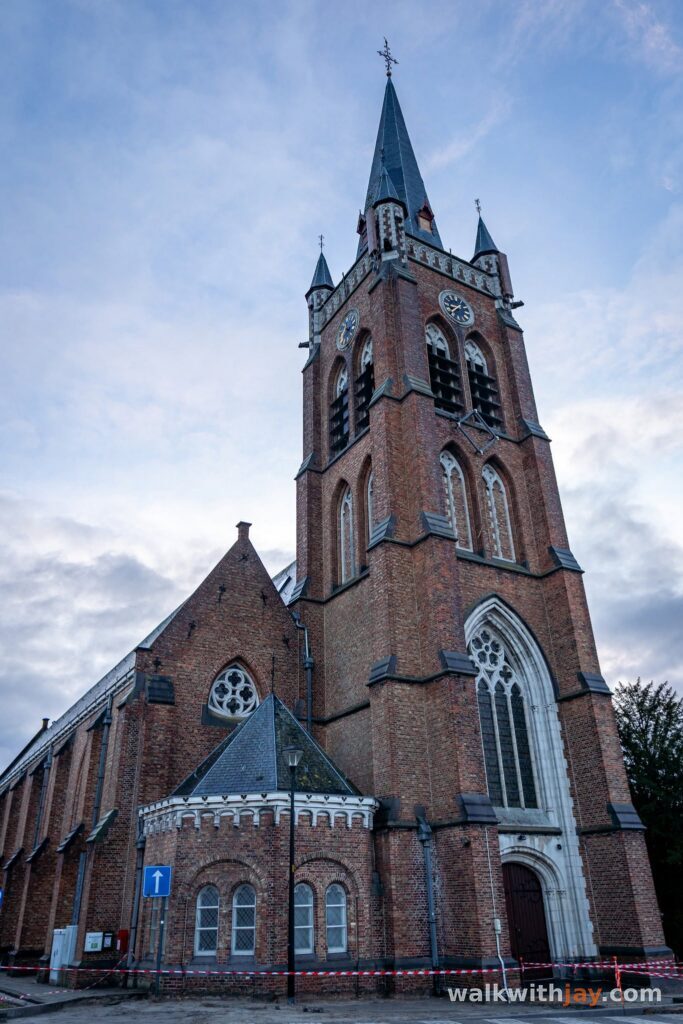
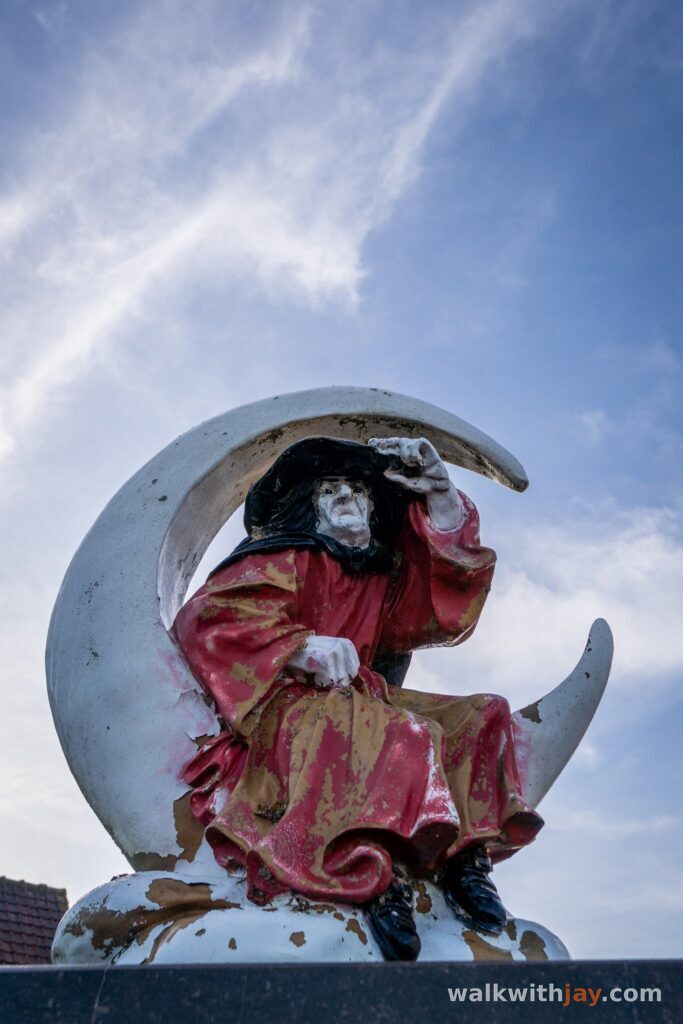
The walk starts on the village square beside the church. The theme begins immediately with the Heksenmonument and Heksenwaag. Behind the church, you will also find the Magische Kruidentuin, a small garden filled with herbs, symbols and references to the old legends.
The opening section still runs through the village streets. Small witch figures and other references appear here and there, but for me the walk really begins to improve once you leave the built-up area behind.
Old avenues and a lost castle
Beyond Beselare, the landscape gradually opens up around De Reutel. The long, straight roads and avenues are reminders of the former Beselare castle estate.
During the 17th and 18th centuries, a geometric network of avenues was laid out around the castle. Parts of that pattern can still be recognised in the road network today. One of the main avenues once connected the De Reutel area directly with the estate.
The castle itself gradually disappeared around the end of the 18th and beginning of the 19th century. By 1813, drawings mainly showed what was left of the ruins. The last surviving buildings and structures were lost during the First World War.
The countryside is far more open now, but those long straight lines still give an idea of how strongly the former estate once shaped the area.
Slangenmeers and the witch legends
Around Slangenmeers, the witch stories return to the foreground. According to local tradition, witches gathered here at night to dance and sing.
One of the best-known figures is Tanneken Vanhulle. The stories describe her as a wealthy witch who lived near Slangenmeers. After a small box of snake ointment was supposedly found in her possession, followed by sightings of a large snake nearby, a legend began to grow that Tanneken could turn herself into a snake.
Other tales mention nightmares, swarms of insects and strange events around her home.
Dokke van d’Heulebeke had an equally unsettling reputation. According to legend, she lived near the Mispelaarbeek and could predict the future. After her death, other stories linked her to the devil.
As with the other witches of Beselare, these are pieces of folklore passed down through generations rather than events that can be treated as established historical fact.
From the Pionierpark to Calle Bletters
The rural tracks continue through a landscape that took on a completely different role during the First World War.
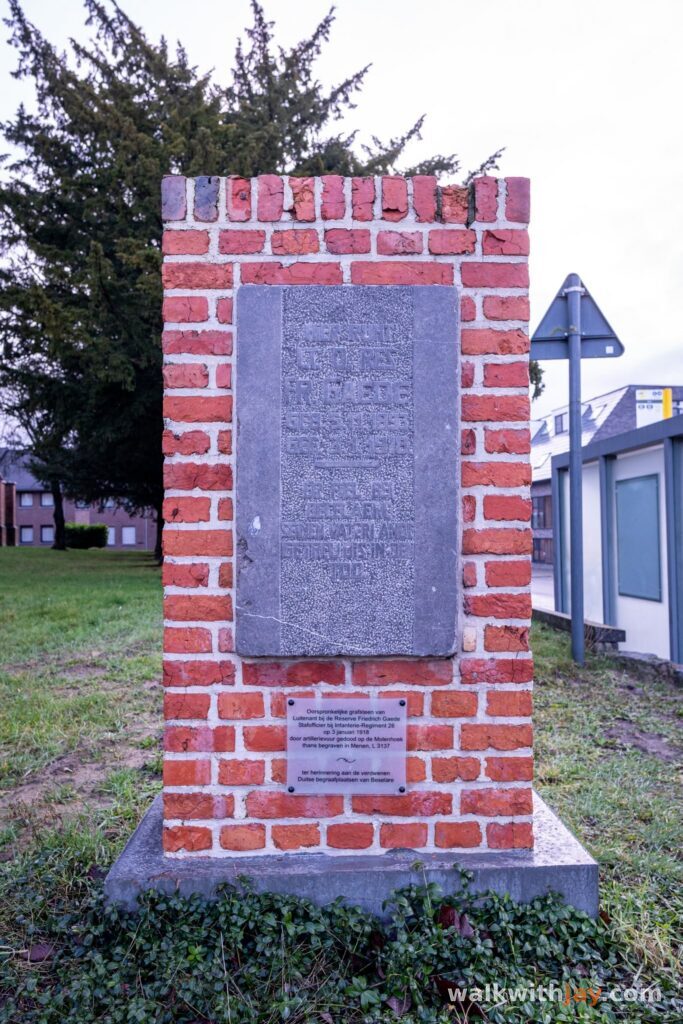
From 1916 onwards, German troops built an extensive network of railways and narrow-gauge lines in the area to move supplies and construction materials towards the front. Pionierpark In De Ster was one of the larger depots in the sector. Supplies arrived mainly by rail from Roeselare and Menen before being sent onwards to the German positions. Much of this activity came to an end during the British offensive of 1917.
Farther along, the route passes the area around Navegheer. This old lordship, later known as the Schaapsgoed, remained a separate estate within Beselare for centuries.
This is also where local tradition places Calle Bletters. She was said to be the daughter of a blacksmith and to use most of her magic on horses. After they had been shod, she would supposedly stroke their backs with her left hand while whispering spells from a large parchment book.
The horses were then said to become difficult to control, and the forge eventually became known as the “bewitched smithy”. Shortly before her death in 1747, Calle was said to have thrown her spell book into the fire.
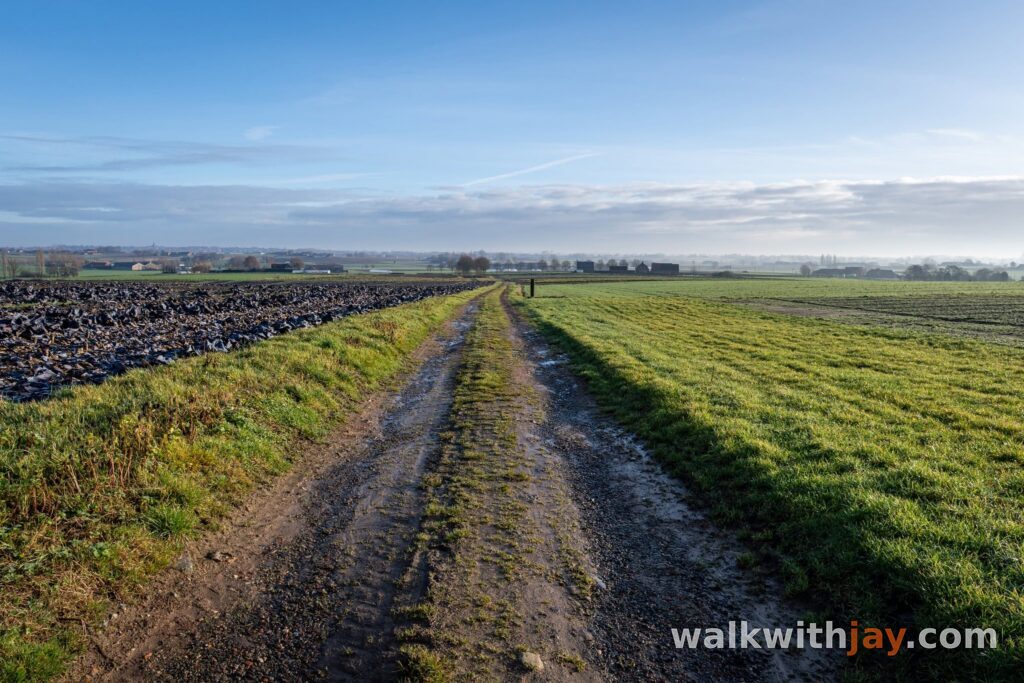
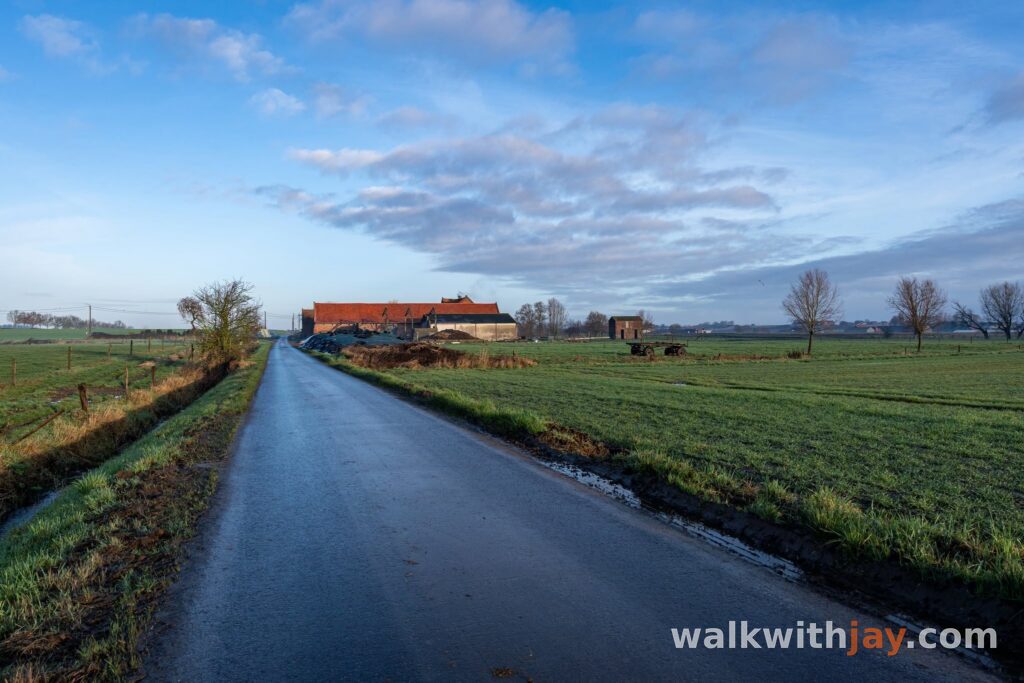
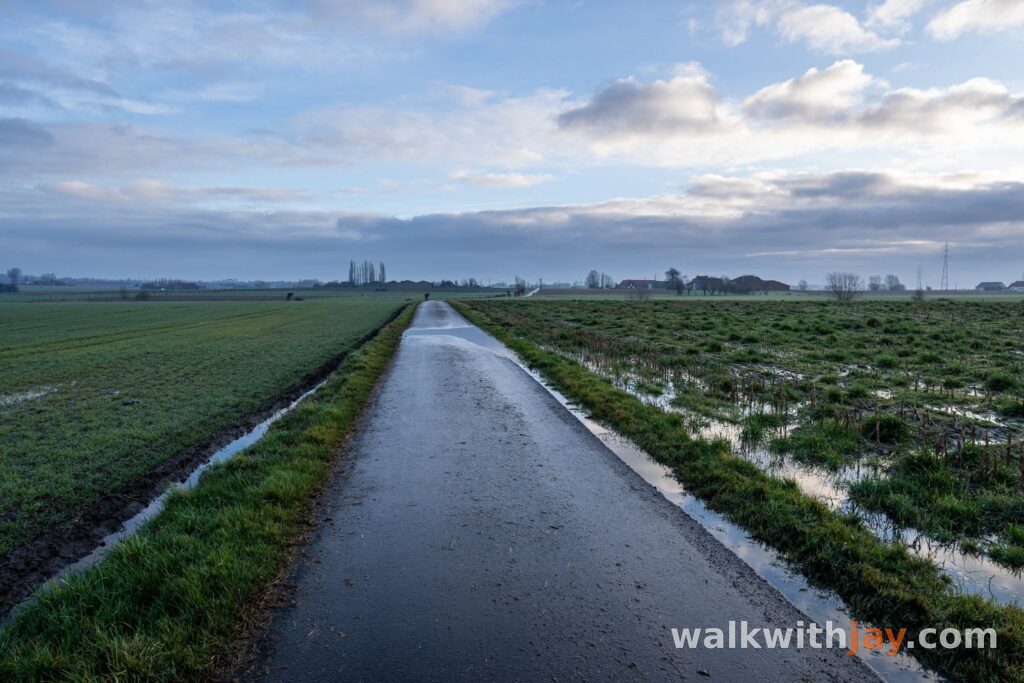
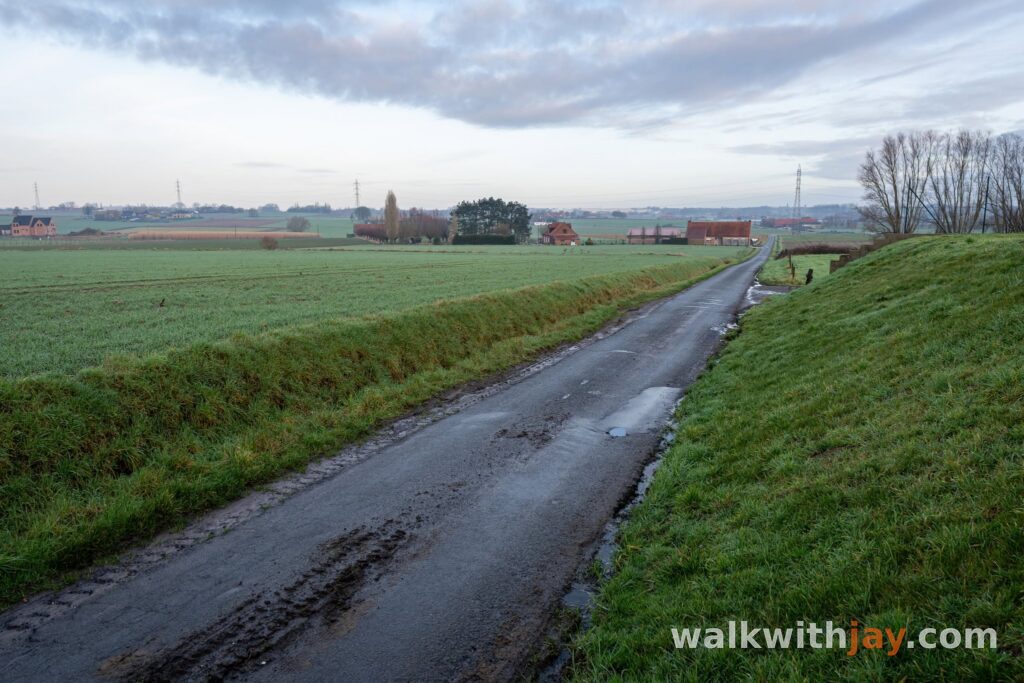
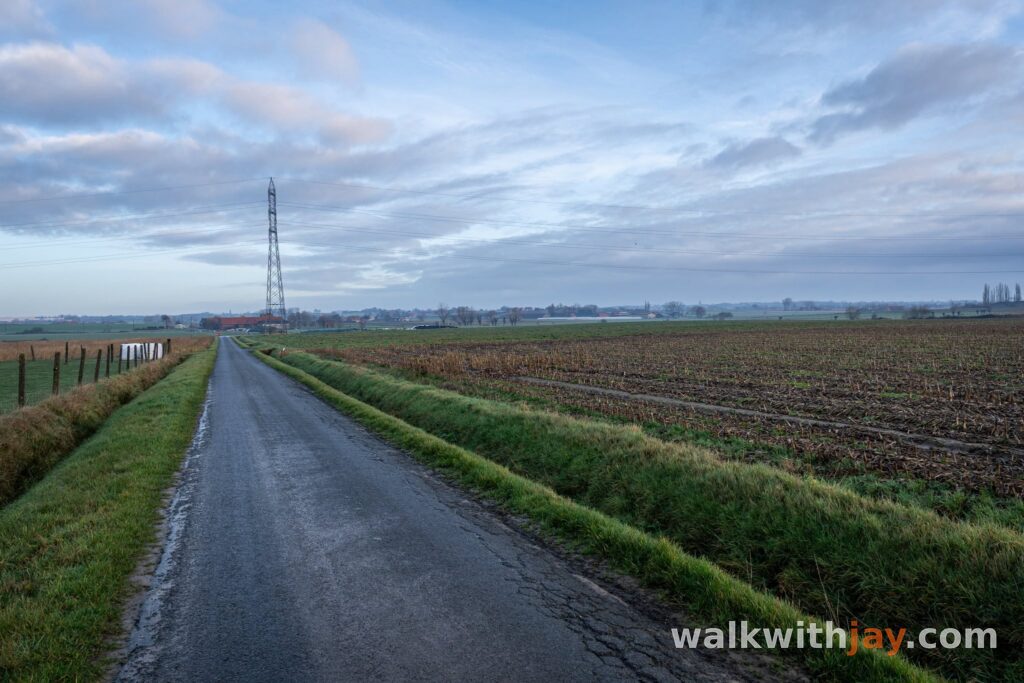
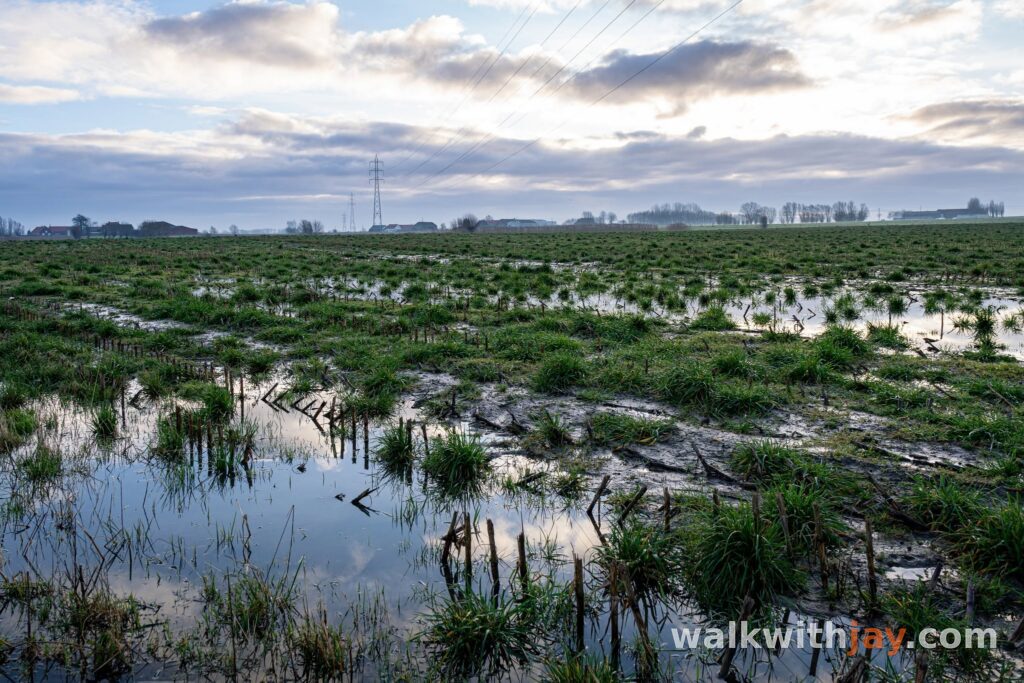
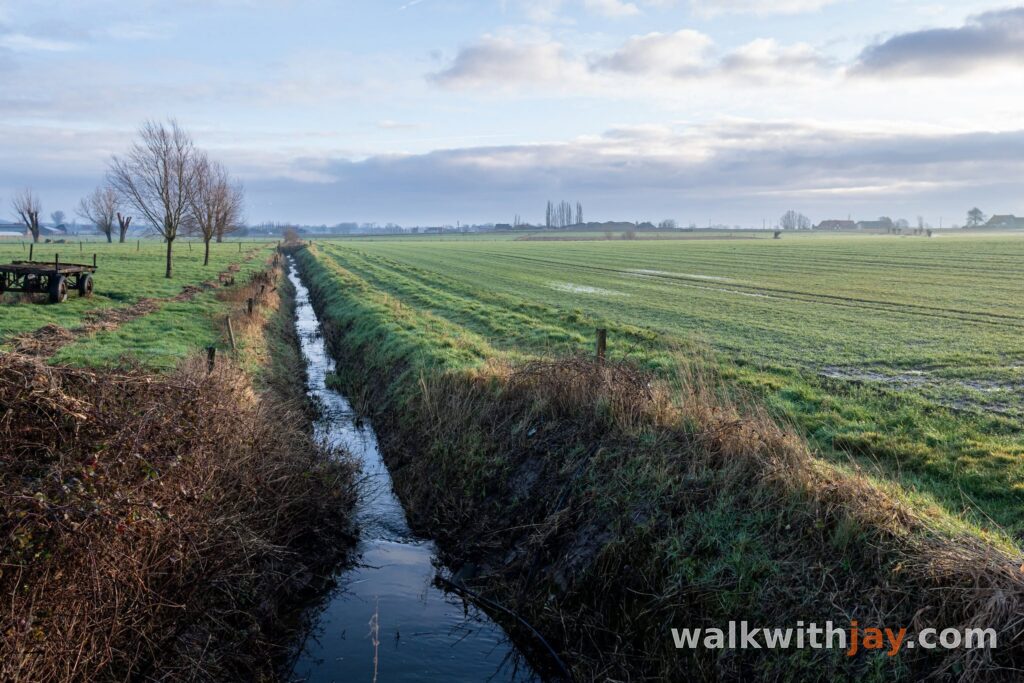
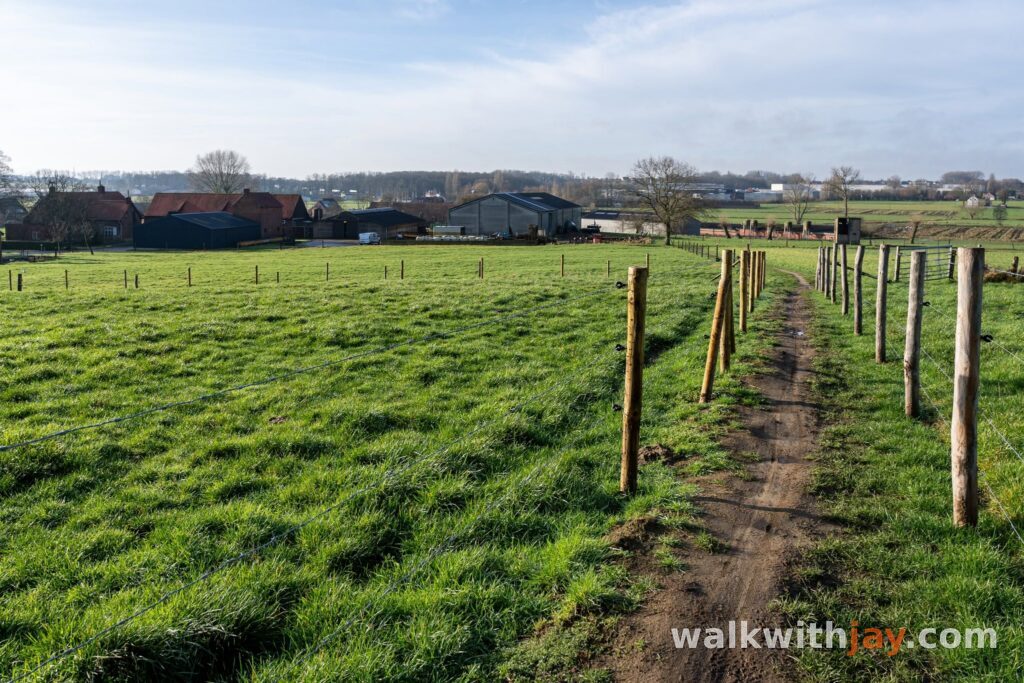
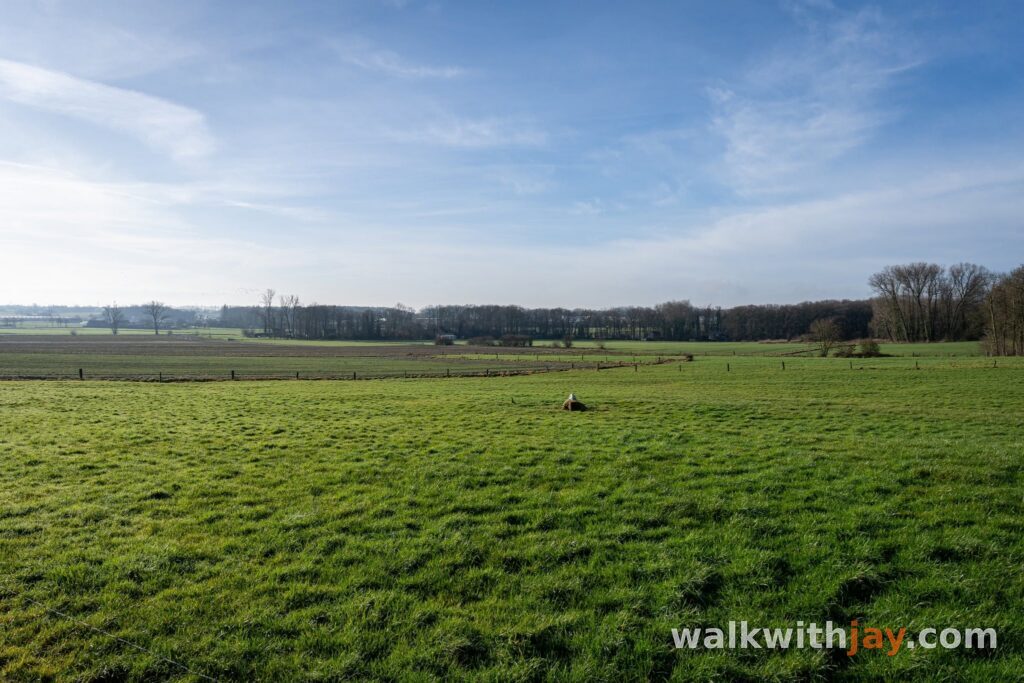
The route then gradually returns towards Beselare across open fields and several unpaved tracks. This second half also brings some of the best views across the rolling countryside.
Photos from this walk



Jay’s tips
Do not judge the walk too quickly by the opening streets through the village. From Slangenmeers and De Reutel onwards, I found it much stronger, with more unpaved paths, wider views and the most interesting stories along the route.
Good to know
Muddy after rain
Sturdy footwear recommended
Little shade
Bus stop near the start
Monument
Church
Outside the village centre, part of the route follows unpaved tracks and a narrower footpath. After rain, some sections can become quite muddy, so sturdy footwear is a good idea. The countryside is very open and there is little shade. Several cafés can be found around the starting point on the village square.
My experience
I found the first section through the village streets a little less interesting. The small witch references make it more enjoyable, but for me the walk really comes into its own once you reach the open countryside.
From Slangenmeers onwards, the landscape becomes more attractive, with more unpaved tracks and longer views across the fields. What I liked most was the way the legends remain tied to the places you are walking through. Tanneken Vanhulle and Calle Bletters do not just feel like names from an old story; their legends become part of the landscape itself.
The section around the Pionierpark adds another layer with the First World War, without allowing the wartime history to take over the whole walk.
If nature is your main priority, there are stronger walks elsewhere in the area. But if you enjoy local folklore, quiet country roads and walks with a distinctive theme, this route offers something you are unlikely to find in many other places.
Walking nodes
Places of interest

Heksenmonument en Heksenwaag
At start/finish
Witches’ monument and Heksenwaag on the village square, directly beside the start of the walk.
Beselareplaats, 8980 Beselare, Belgium ↗
Website →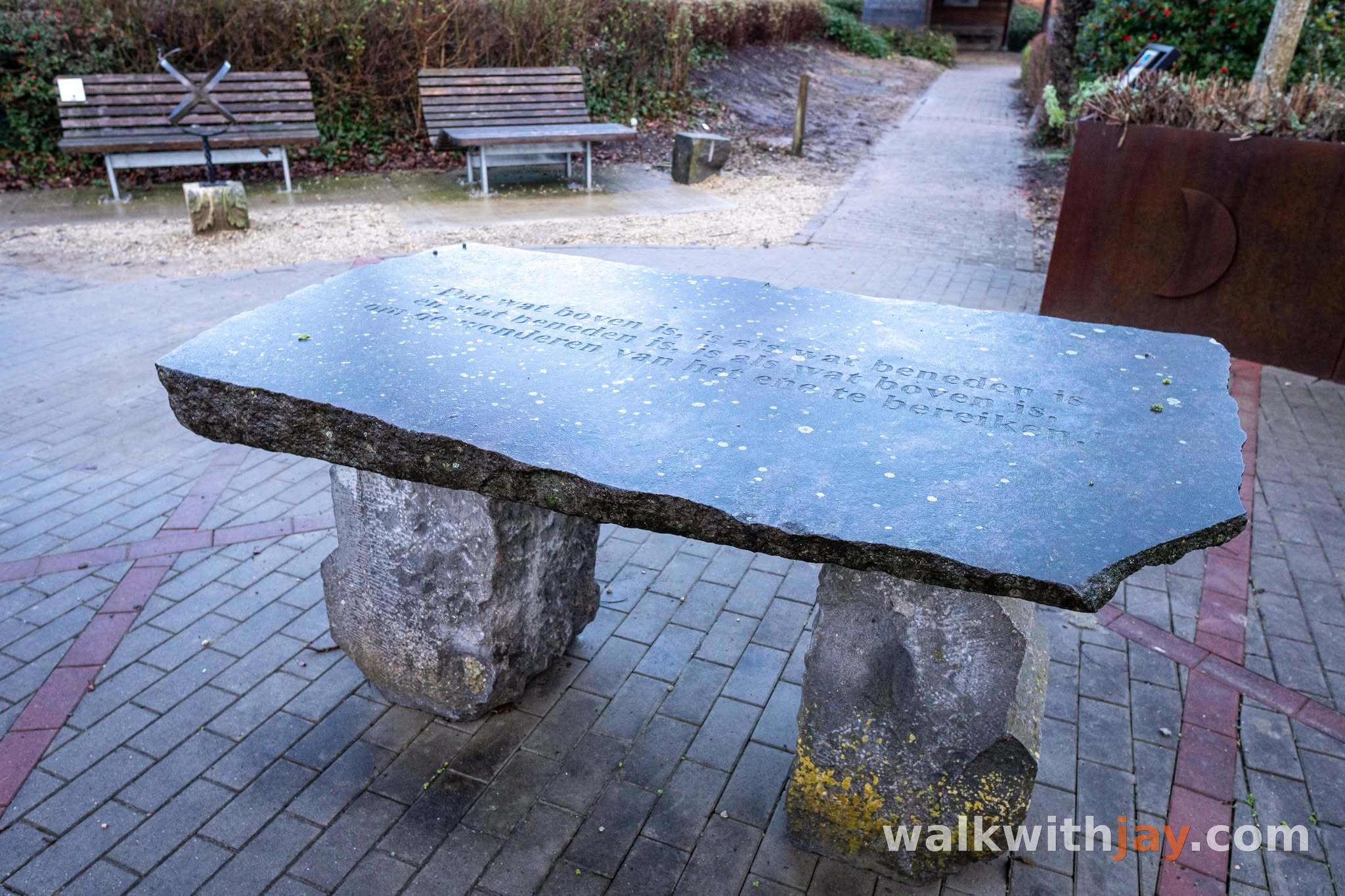
Magische Kruidentuin
At start/finish
Small herb garden behind the church with plants, magical symbols and references to Beselare’s witch legends.
Neerhof, 8980 Beselare, Belgium ↗
Website →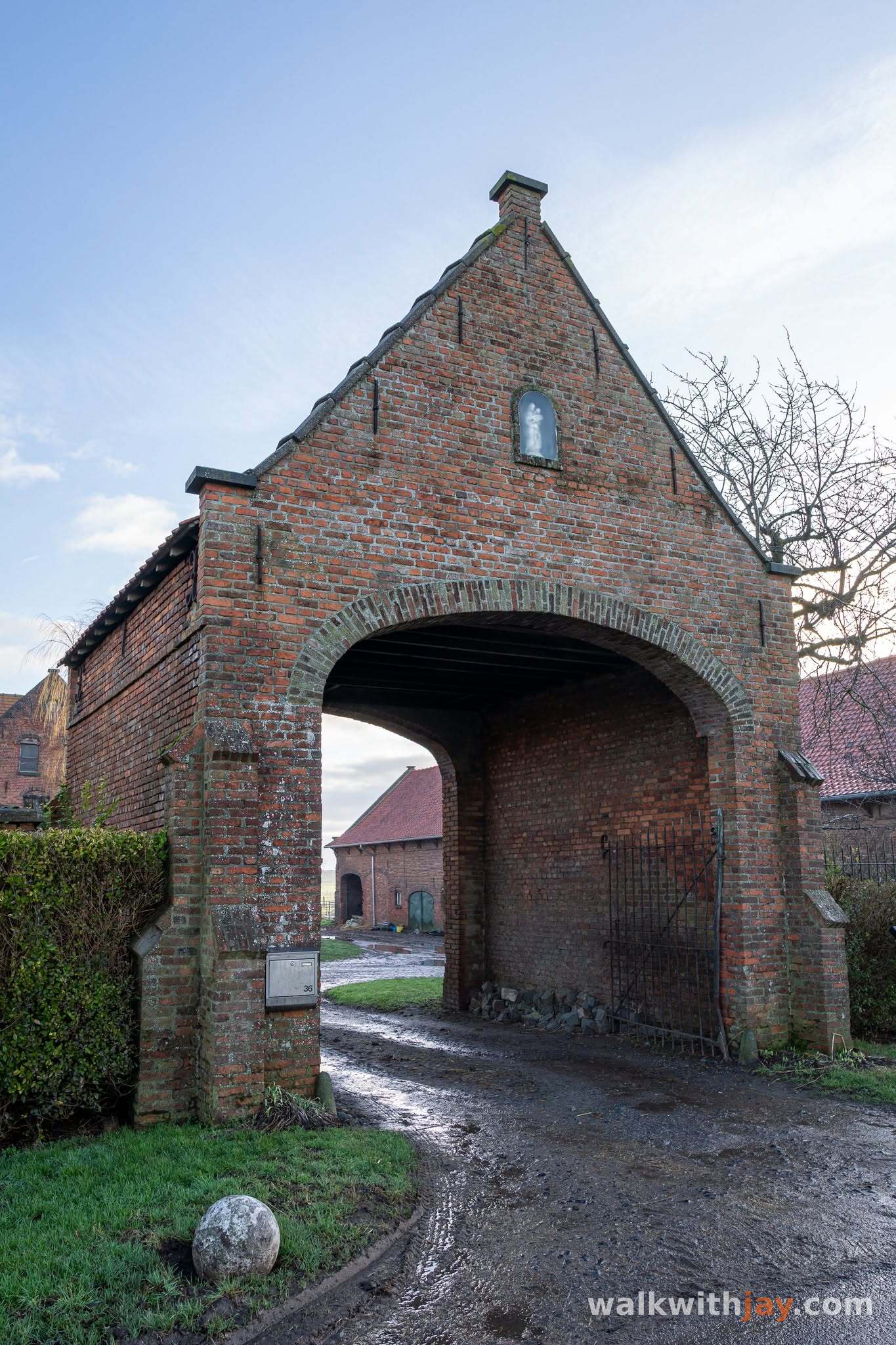
Voormalig kasteeldomein van Beselare
Along the route
The castle has disappeared, but parts of its former geometric avenue pattern can still be recognised in the landscape.
Kortrijkdreef, 8980 Beselare, Belgium ↗
Website →Ready to set off?
Open the starting point in your GPS and enjoy the walk.