Couthof and De Lovie Junction Walk
Proven
 5 min read
A peaceful junction walk between Couthof and De Lovie, where old woodland, castle estates and layers of local history come together.
The walk
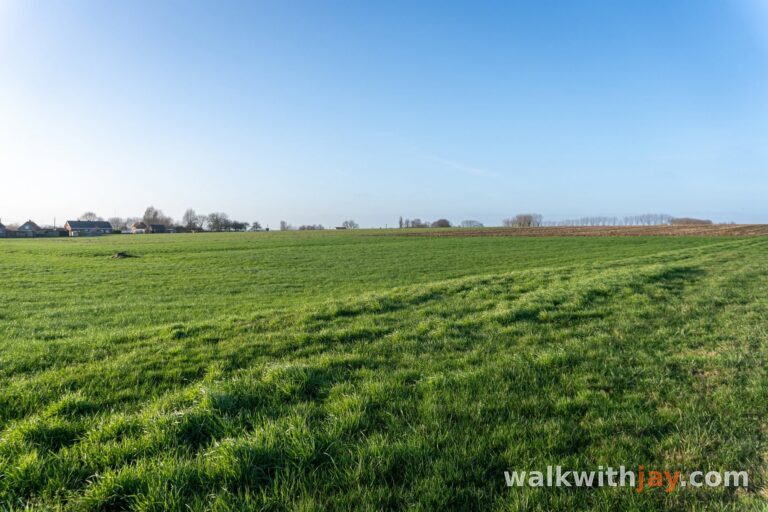
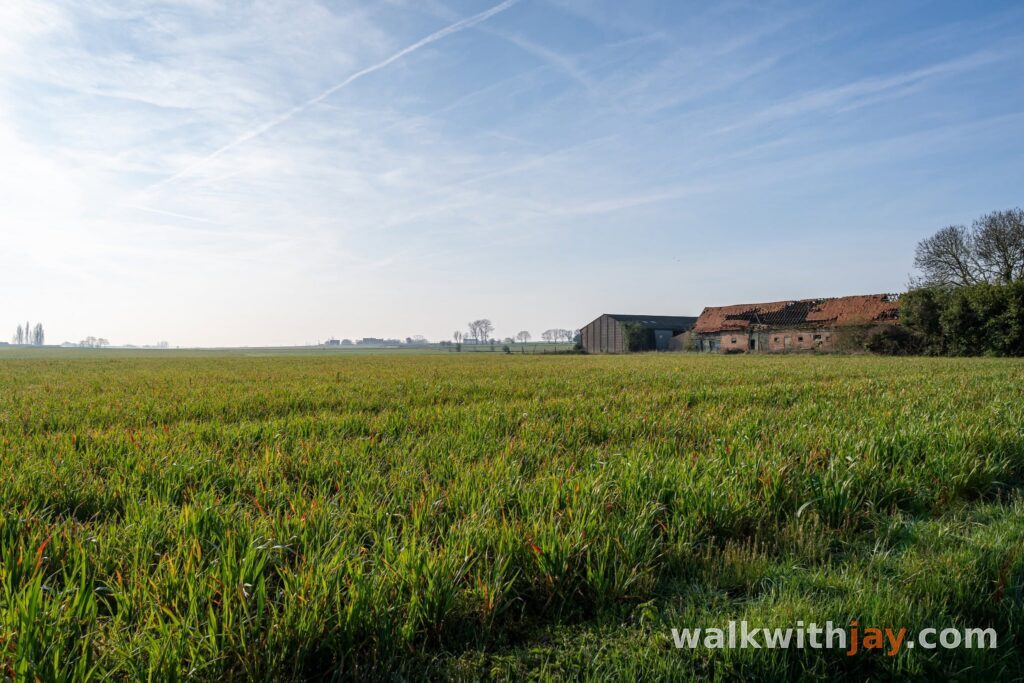
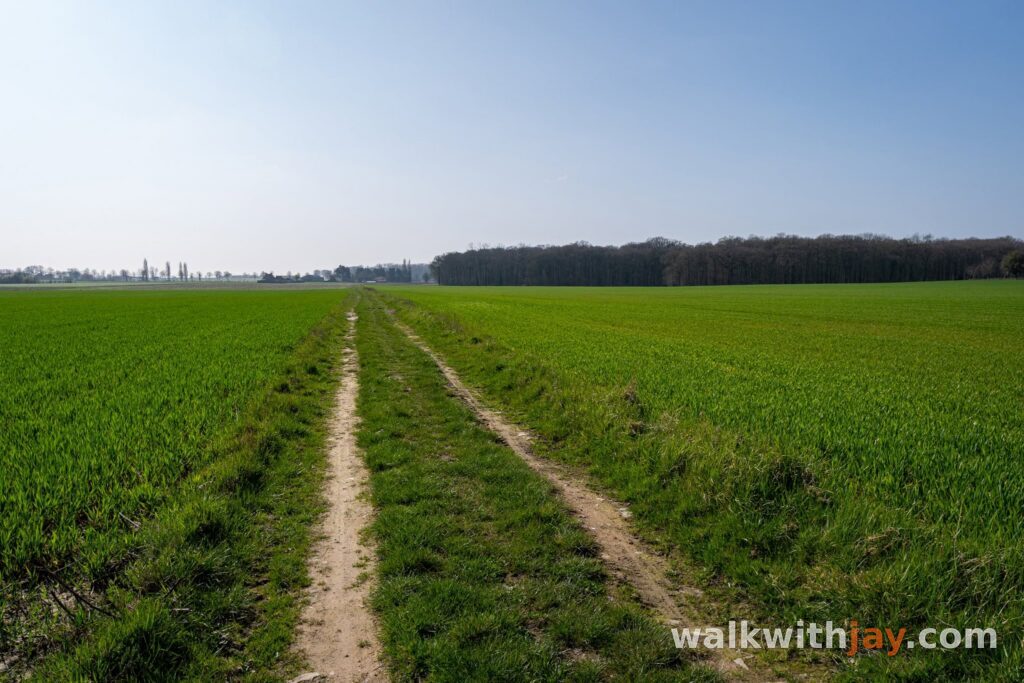
This 7.8-kilometre loop links Couthof and De Lovie through Couthofbos, quiet country lanes and the green estate landscapes around Proven. It is a relatively short and peaceful walk, but the surroundings constantly take on new meaning. Behind the old trees, avenues and castle grounds are stories of noble families, British tunnellers, wartime hospitals and an airman who lost his life here during the Second World War.
From the Gapaard to Couthofbos
I start at the small parking area near Gapaardstraat. This was once the site of the centuries-old inn In de Gapaard. It disappeared in the early 20th century and was replaced by café ’t Couthof, which itself made way for the separated cycle path in 2002.
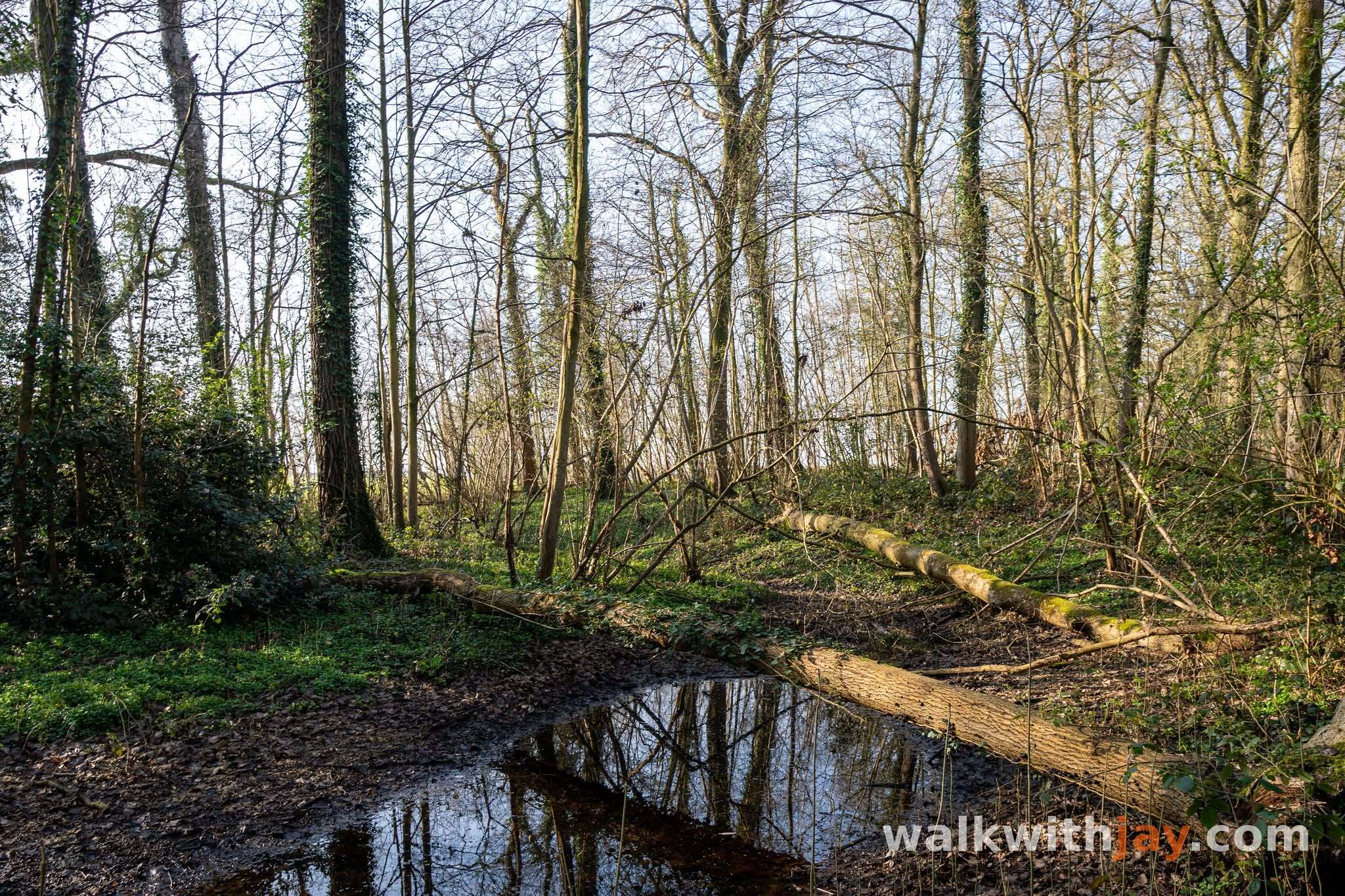
Following Gapaardstraat, you reach Couthofbos, the oldest woodland in the area and part of the Sixtusbossen. During the First World War, the 177th Tunnelling Company had its headquarters near Couthof and used the surrounding area to train men in underground warfare. In 1916, an experimental mine shaft was dug and detonated here. Underground listening galleries were also created so soldiers could learn to detect tunnelling activity below ground.
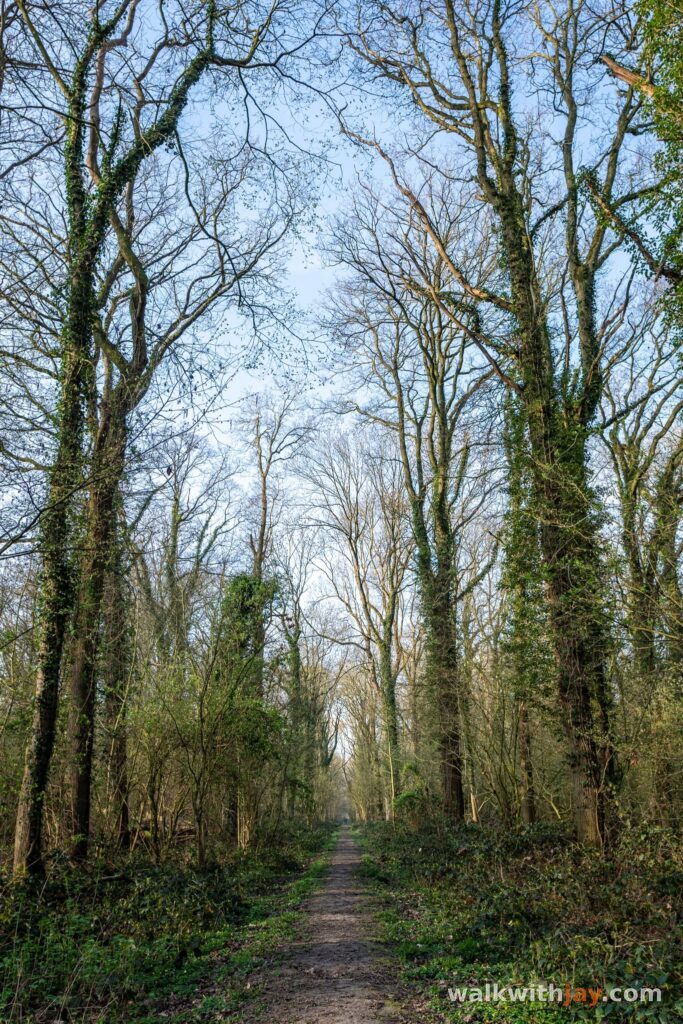
The walk then becomes much greener. Narrow paths lead through old avenues lined with mature trees. One of the most remarkable is an English oak planted around 1795. With a trunk circumference of almost five metres, it is thought to be the oldest tree in the Westhoek. Nearby you also pass an old motte, an earthwork surrounded by a ditch that points to a much earlier chapter in the history of the estate.
De Galge and the Couthof estate
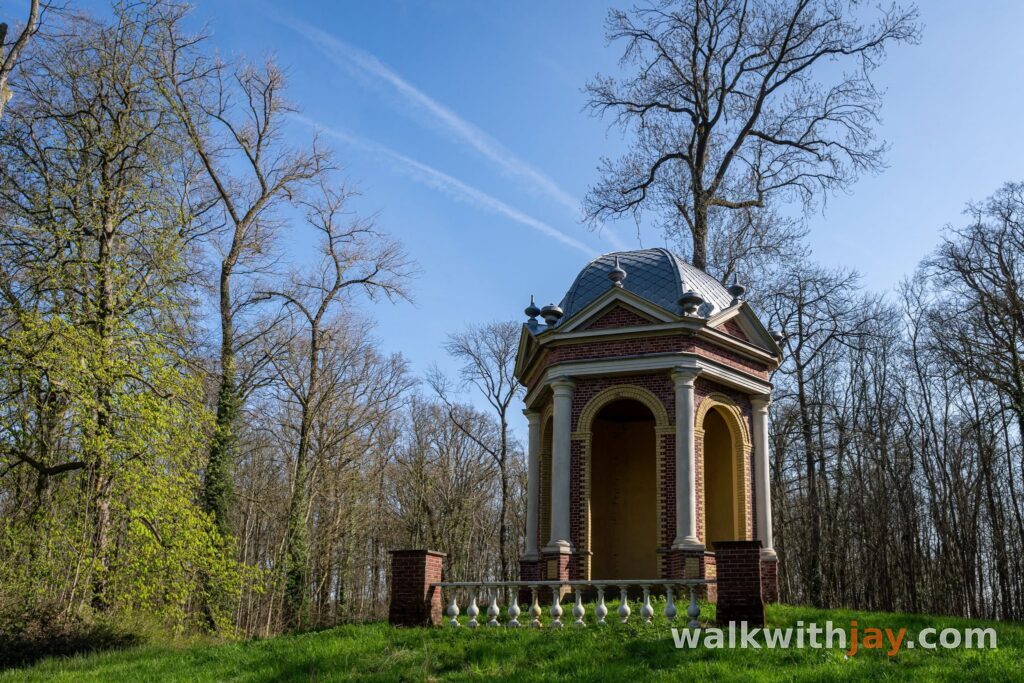
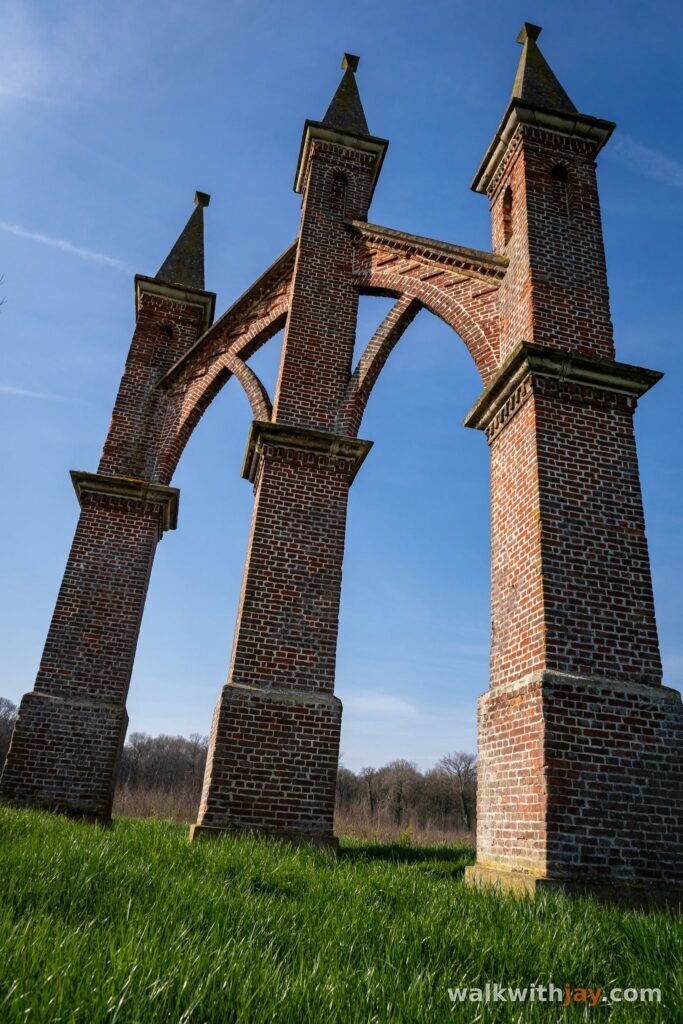
After more woodland and open fields, you reach De Galge. Despite its name, this neo-Gothic brick arcade had nothing to do with executions. It served as a landmark in the middle of a maze created in the 19th century by Baron Jules Joseph Thimothee Mazeman.
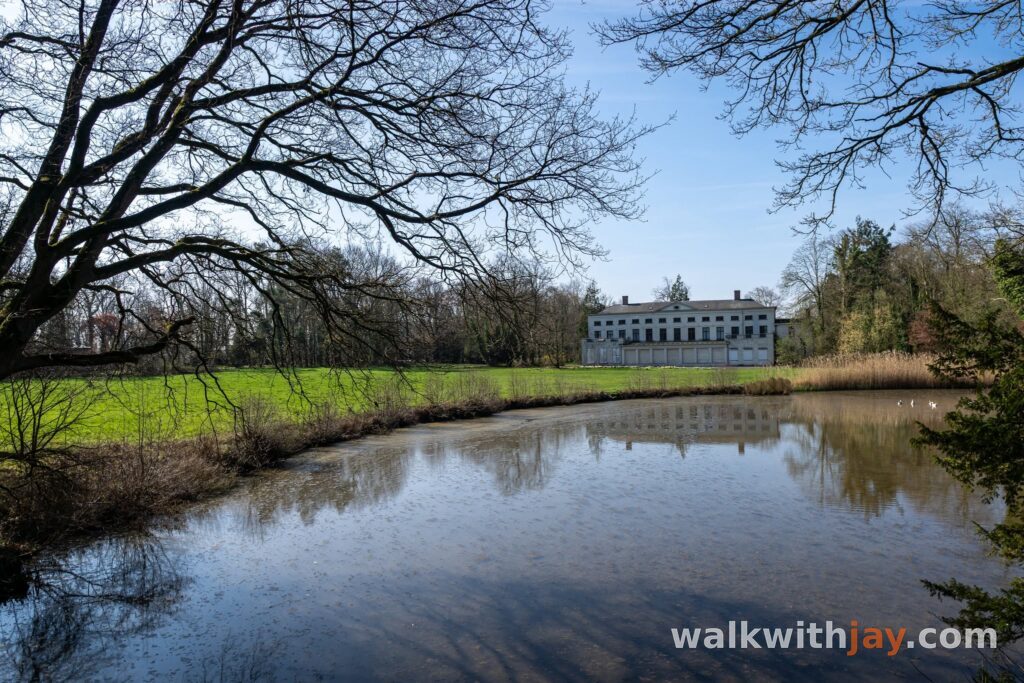
A little farther on, you cross Couthoflaan. The road itself has a much older story: in 1679, a paved route between Warneton and Dunkirk was laid out here on the orders of Louis XIV. Beside it lies the Couthof estate. The lordship was already mentioned in 1350, while the present castle was built in 1763 by Jean François de Sales de Mazeman as a summer residence. During the 19th century, the surrounding park was further developed with ponds, pavilions and other pieces of landscape architecture.
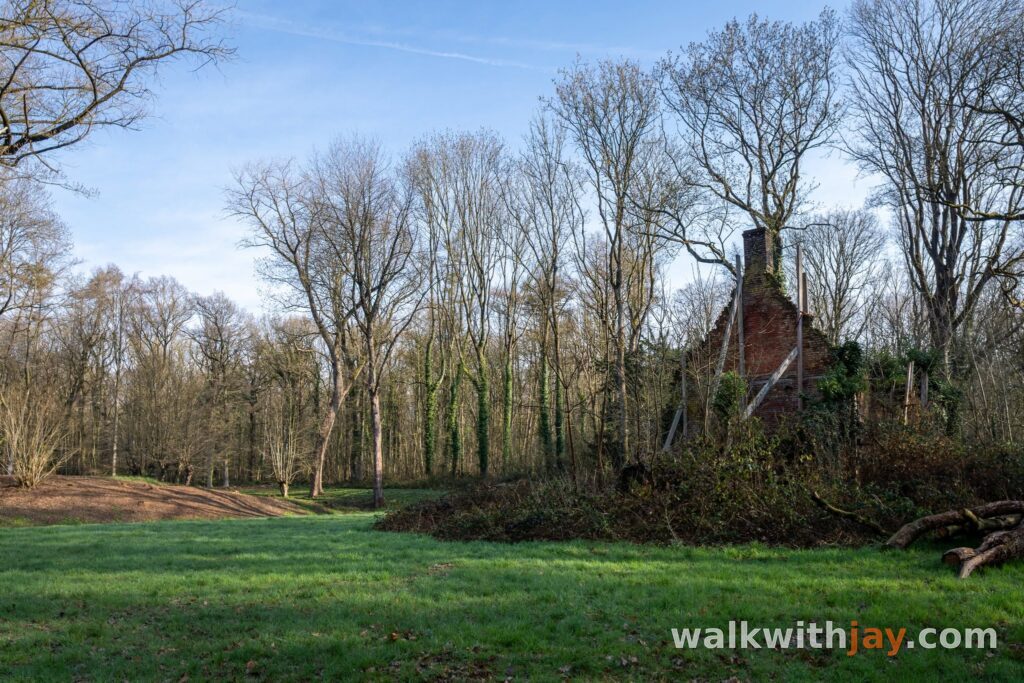
The estate took on a very different role during the First World War. Elisabeth Hospitaal Couthove was established behind the castle, treating Belgian civilians and soldiers. Only one small wooden hut from the former hospital complex survives today beside Canadaweg. British troops were also stationed in the surrounding area. If you want to visit the castle park itself, it is best to check the current access arrangements beforehand.
Through the Chinese Gate to De Lovie
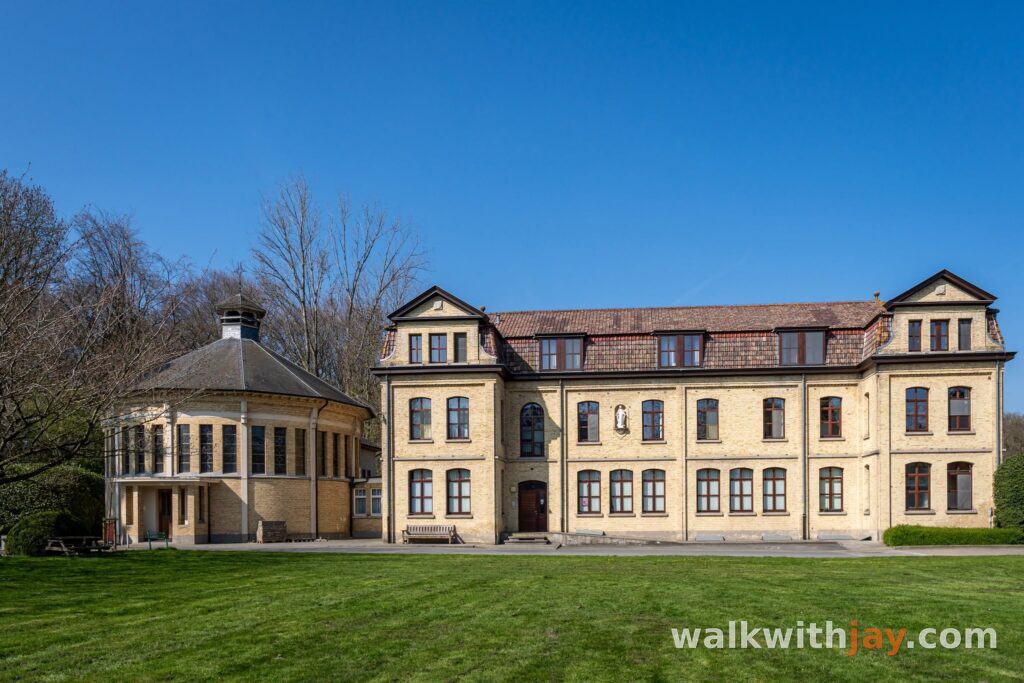
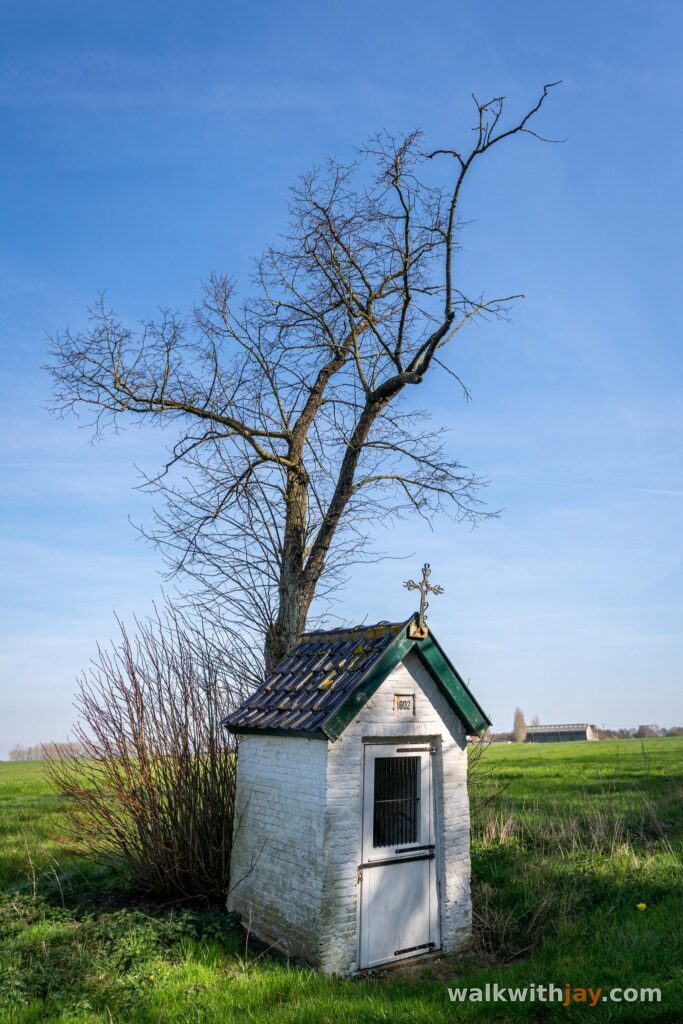
The route continues along Canadaweg, passing several small chapels on the way to De Lovie. The so-called Chinese Gate forms a distinctive entrance to the estate. It originally stood at a hospital site in Houtem, established during the First World War mainly for civilians living in the unoccupied part of Belgium. The site continued in use after the Armistice and gradually became a sanatorium for tuberculosis patients. When the sanatorium moved to De Lovie in 1930, the entrance gate and one wooden hut were moved to Proven as well.
Beyond the gate, the landscape opens around Kasteel De Lovie. The castle was built in 1856 as a summer residence and sits in a park of lawns, ponds, woodland, a gazebo, chapels and a Lourdes grotto. It feels quite different from Couthofbos, yet once again nature and history are closely intertwined.
During the First World War, De Lovie served as headquarters for several British units. Its flat roof and open surroundings also made the castle well suited as an observation point.
Back via the Rode Dreef
The return follows the Rode Dreef, a long green avenue that reconnects the estate with the surrounding countryside. From here, the route gradually leads back towards Couthof and the starting point.
Just before the end of the loop, there is one final wartime story. Beside Provenseweg stands a memorial to Flight Sergeant Stacey Jones of No. 122 Squadron RAF. On 5 May 1942, he was killed during Operation Circus 157. His Spitfire Mk V BM404 crashed into the house on the opposite side of the road.
It is a small memorial, but for me it makes a strong ending to the walk. In only 7.8 kilometres, the route brings together centuries-old trees, castle estates, traces of underground warfare, former hospitals and a story from the air war of 1942, while the walk itself remains remarkably peaceful and green.
Photos from this walk





Jay’s tips
You do not have to start at Couthof. There is a larger parking area at De Lovie, where you can join the loop at junction 34. In Couthofbos, take a little extra time for the information panels as much of the history is no longer obvious in the landscape.
Good to know
Muddy after rain
Sturdy footwear recommended
Picnic area or benches
Heritage or historical site
Castle
Military heritage
Memorial or commemorative monument
Part of the walk follows unpaved woodland paths, so sturdy walking shoes are a good choice, especially after a wet spell.
My experience
This is exactly the kind of walk where heritage and landscape fit together naturally. The route is peaceful and green, yet almost every section has something that gives the surroundings more meaning. The old oak, De Galge, Couthof, the Chinese Gate, De Lovie and the small memorial to Stacey Jones do not feel like separate stops; they all belong to the same landscape.
What I particularly like is that the history makes the walk interesting without taking over completely. Between the heritage sites, you still have woodland, fields and quiet avenues, so the route keeps enough variety from start to finish.
I really enjoyed this walk. For a route of less than 8 kilometres, there is a surprising amount to see and discover without it ever feeling busy or demanding.
Walking nodes
Wandelnetwerk Hoppeland
Route map available on site

Places of interest
Couthofbos
Along the route
Historic woodland forming part of the Sixtusbossen, now accessible via a signposted walking loop.

Oude eik Couthofbos
Along the route
English oak planted around 1795 with a trunk circumference of about five metres, thought to be the oldest tree in the Westhoek.

Motte Couthofbos
Along the route
Preserved ditched earthwork linked to an earlier phase in the history of the estate.

De Galge
Along the route
Neo-Gothic brick arcade that served as a landmark within a 19th-century maze on the Couthof estate.
Gravendreef, 8972 Proven, Belgium ↗
Website →
Kasteel 't Couthof
Along the route
Castle built in 1763 as a summer residence for the Mazeman family, surrounded by a 19th-century landscape park.
Couthoflaan 50, 8972 Proven, Belgium ↗
Website →
Chinese Poort
Along the route
Distinctive entrance gate moved to De Lovie in 1930 together with a wooden hut from the former hospital and sanatorium site at Houtem.
Krombeekseweg 82, 8972 Proven, Belgium ↗
Website →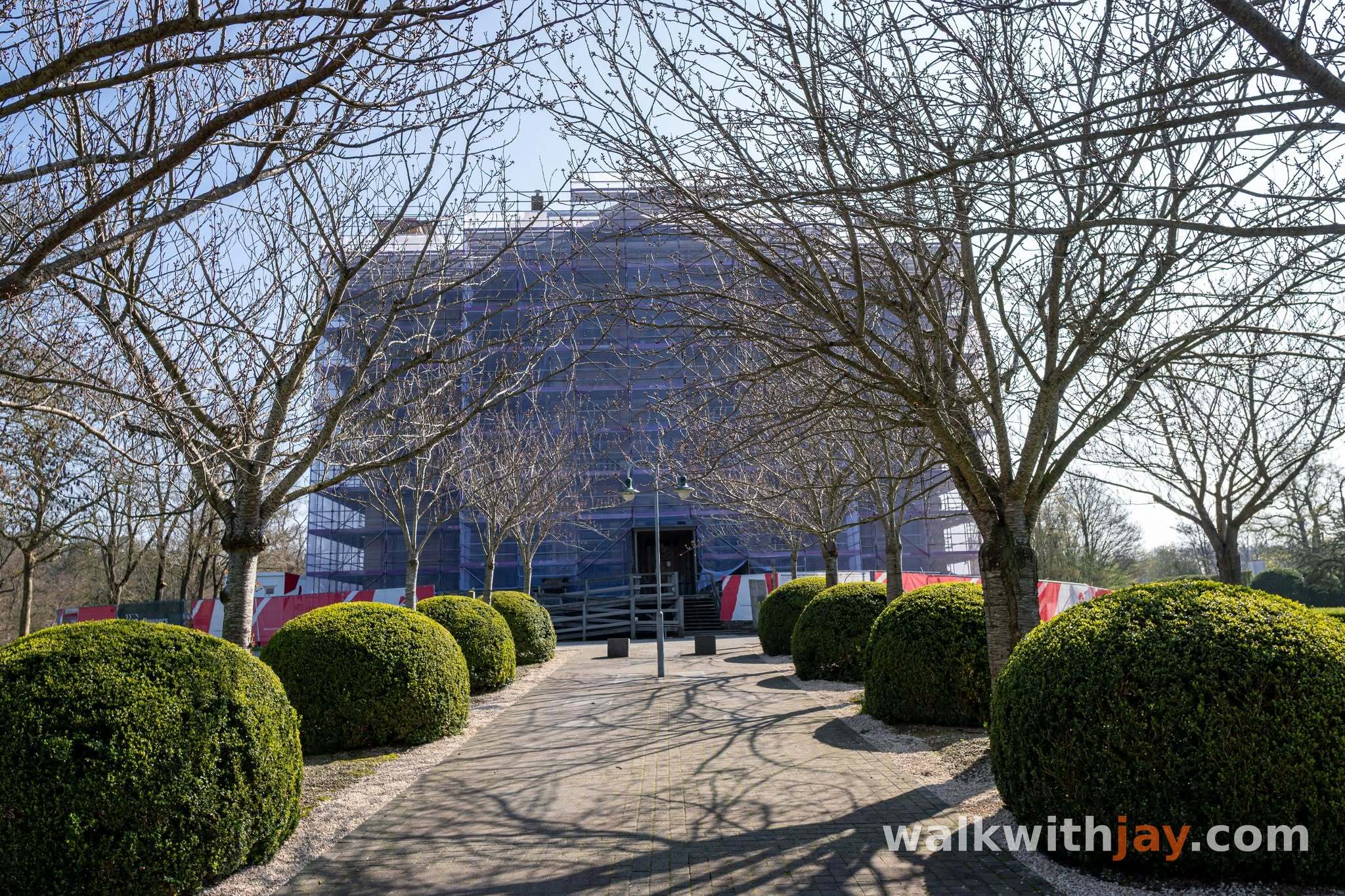
Kasteel De Lovie
Along the route
1856 castle in a green parkland setting, used as headquarters by several British units during the First World War.
Krombeekseweg 82, 8972 Proven, Belgium ↗
Website →
Stacey Jones Memorial
Along the route
Memorial to Flight Sergeant Stacey Jones of No. 122 Squadron RAF, whose Spitfire crashed here on 5 May 1942 during Operation Circus 157.
tegenover Provenseweg 47, 8972 Proven, Belgium ↗
Website →Ready to set off?
Open the starting point in your GPS and enjoy the walk.