Vrijbos
Houthulst
A short woodland walk in Houthulst, combining First World War history, the Belgian military cemetery and the nearby Rotsebos.
The walk
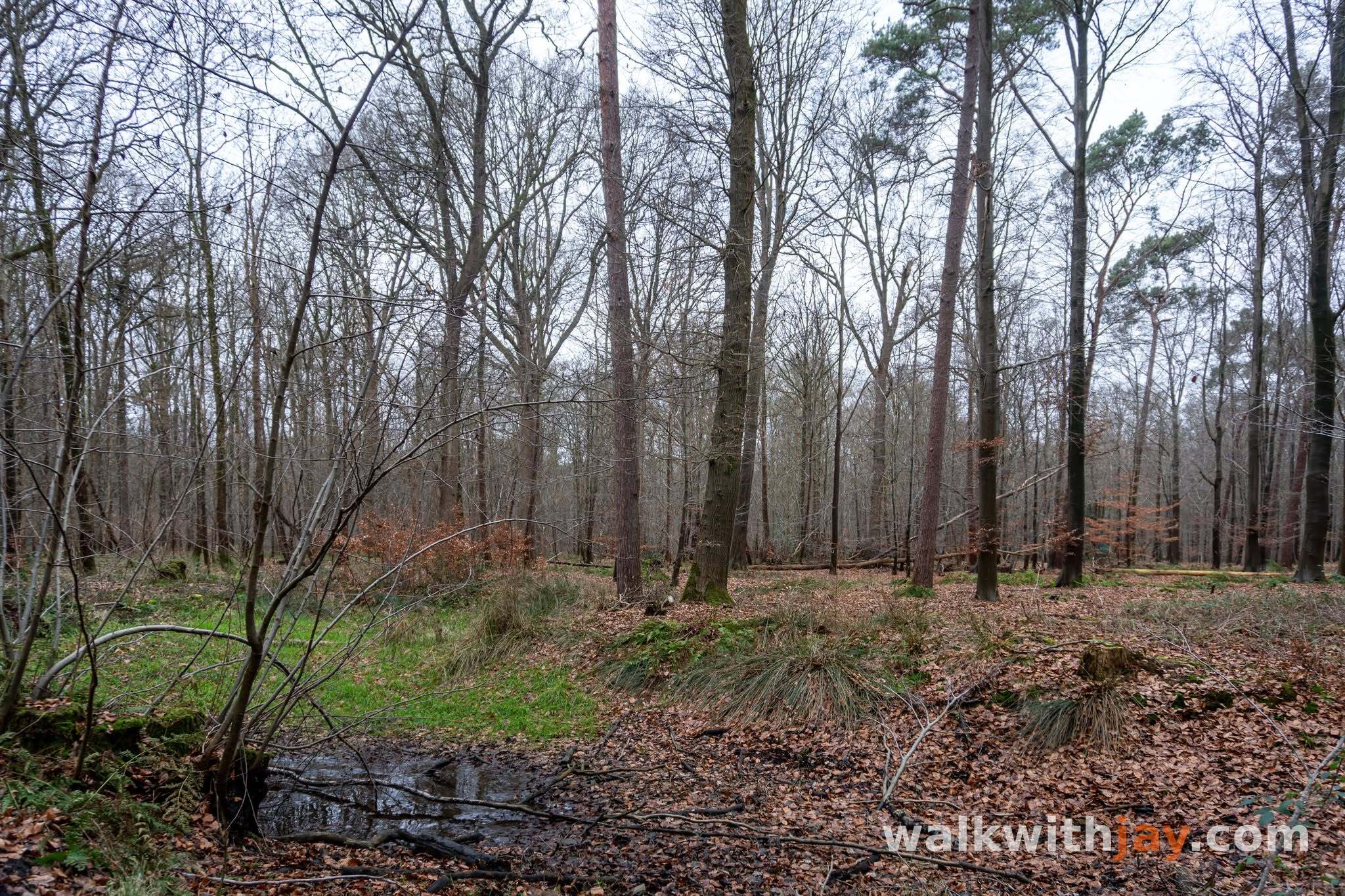
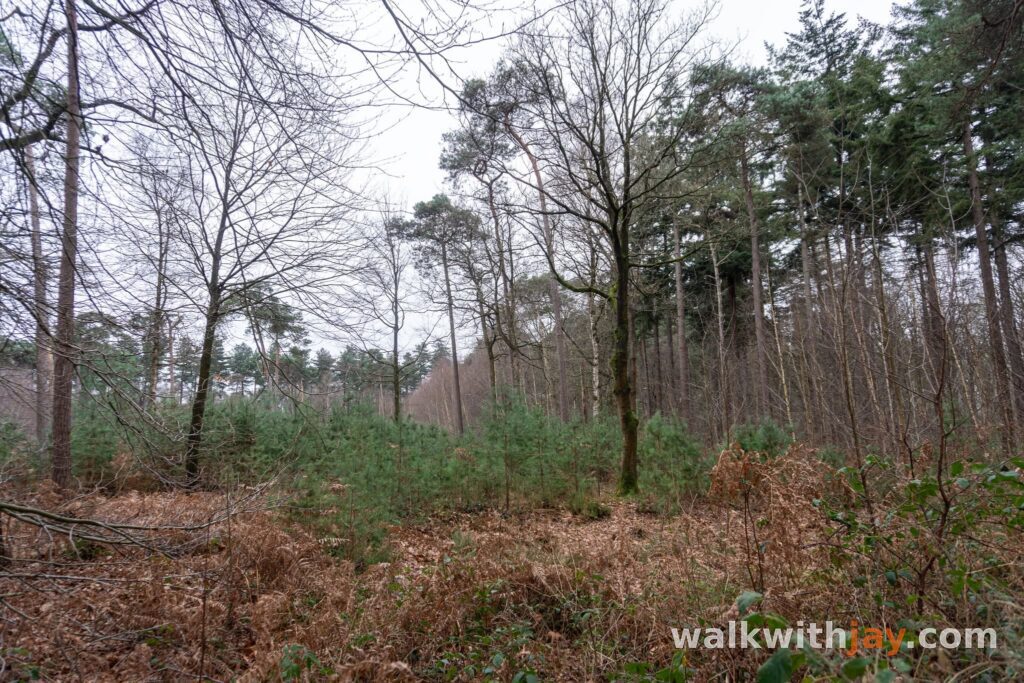
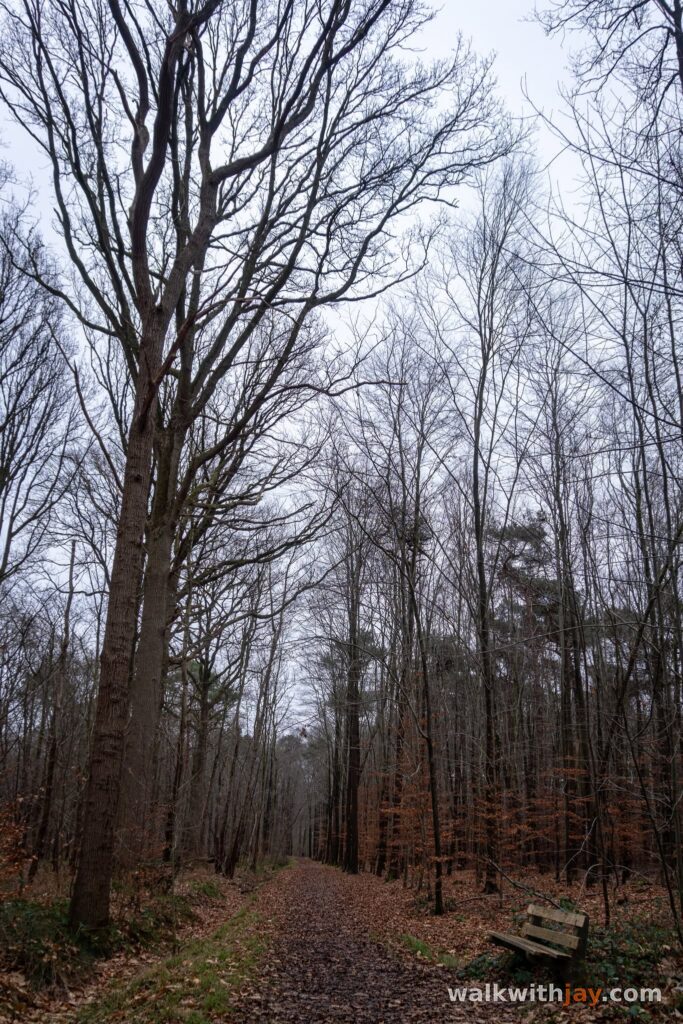
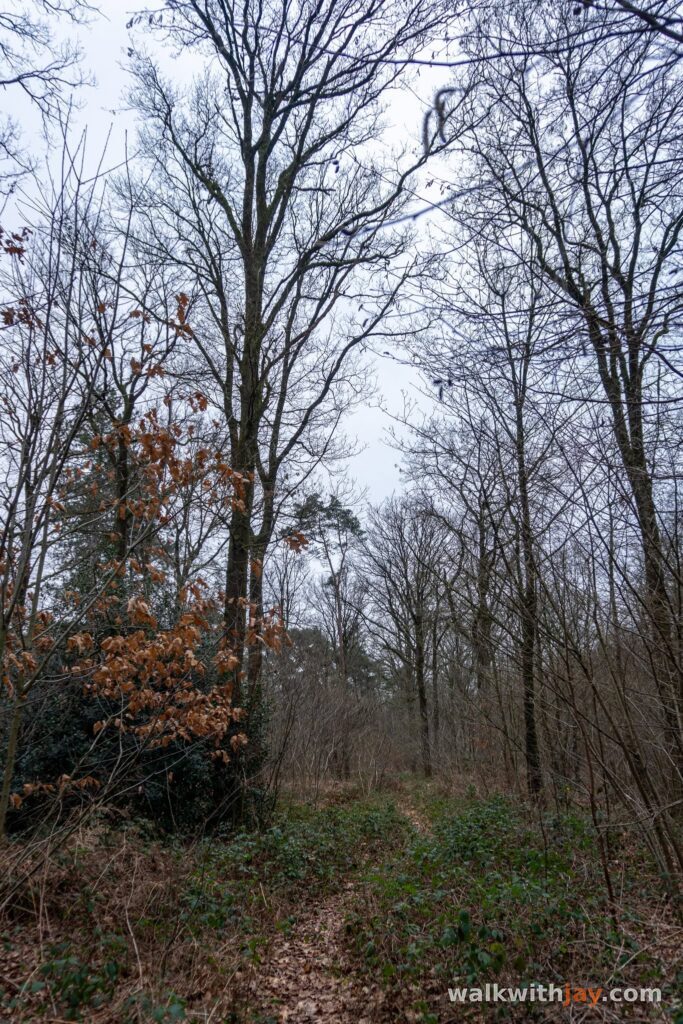
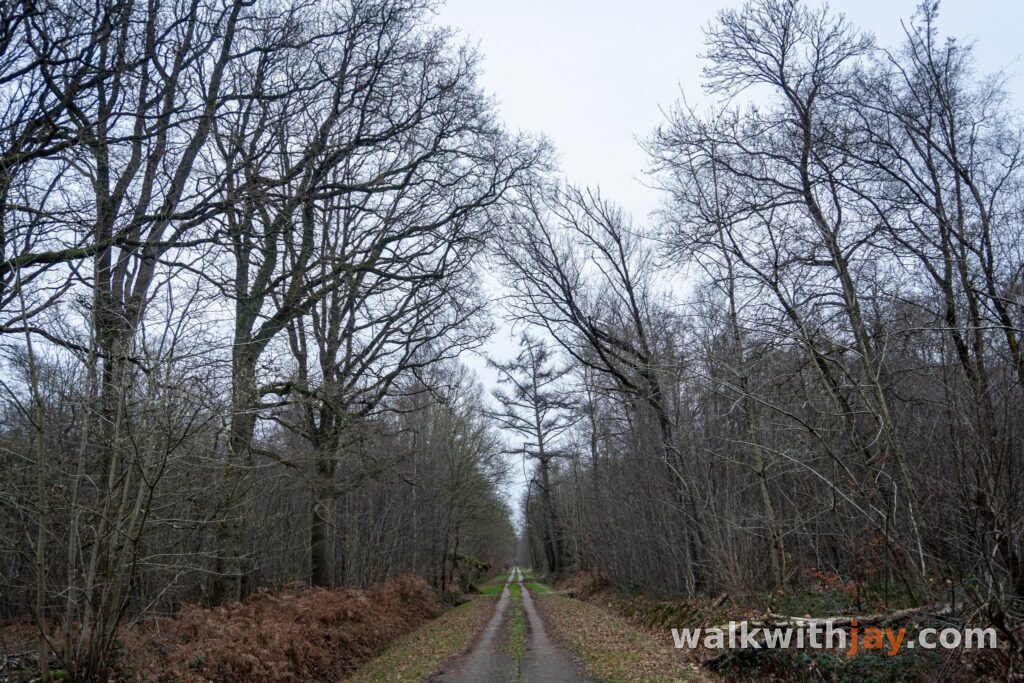
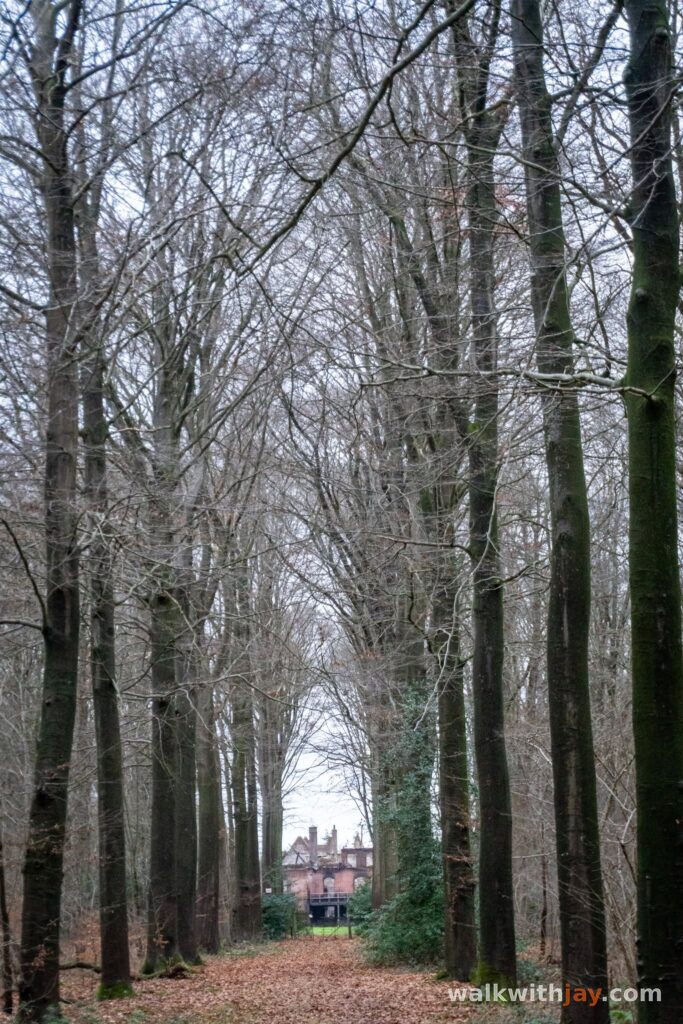
Vrijbos in Houthulst is ideal when you simply want a short walk in the woods. A large part of the historic forest is now a military area and closed to the public, but the accessible section contains plenty of small tracks and avenues. This short loop starts at Parking Vrijbos and combines woodland, wartime history and several interesting heritage sites.
A small remnant of a much larger forest
Today’s Vrijbos is only a small part of the historic Bos van Houthulst. In the early Middle Ages, the forest covered several thousand hectares. Centuries of clearance gradually reduced it, and by the eve of the First World War around 1,000 hectares remained.
Today the forest covers roughly 370 hectares. A large part is military land and closed to the public, but the accessible sections still offer an easy network of woodland tracks and avenues for a short walk.
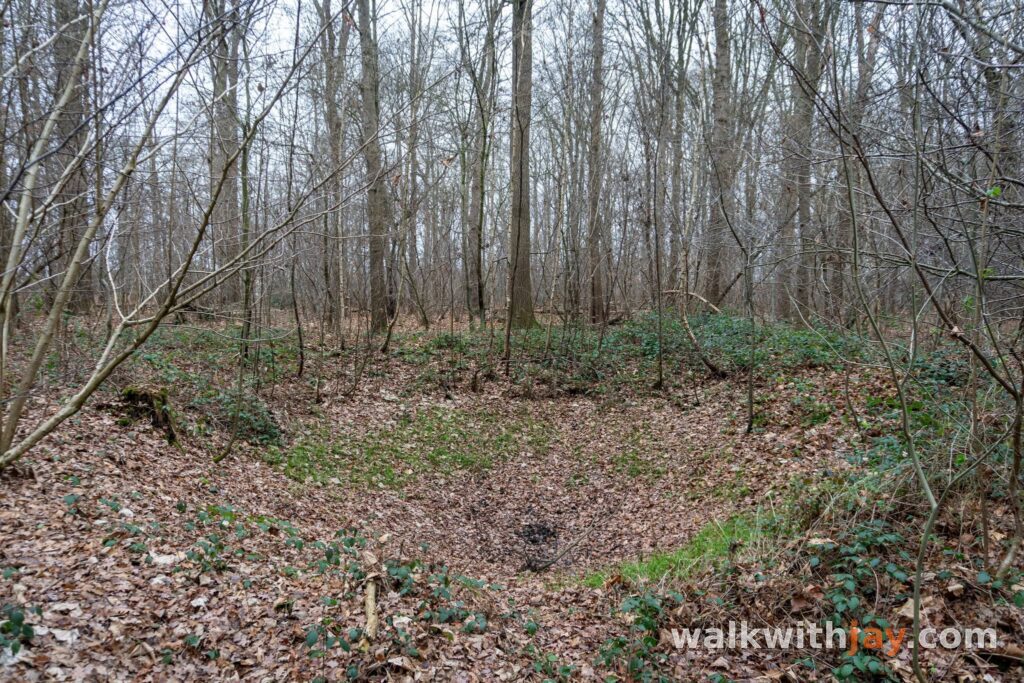
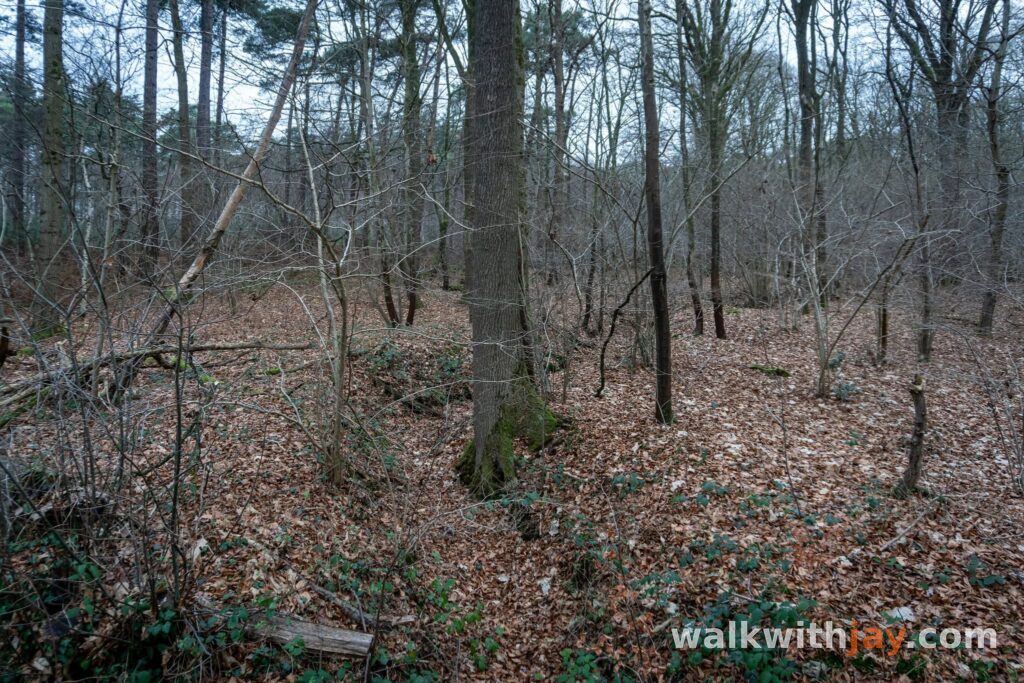
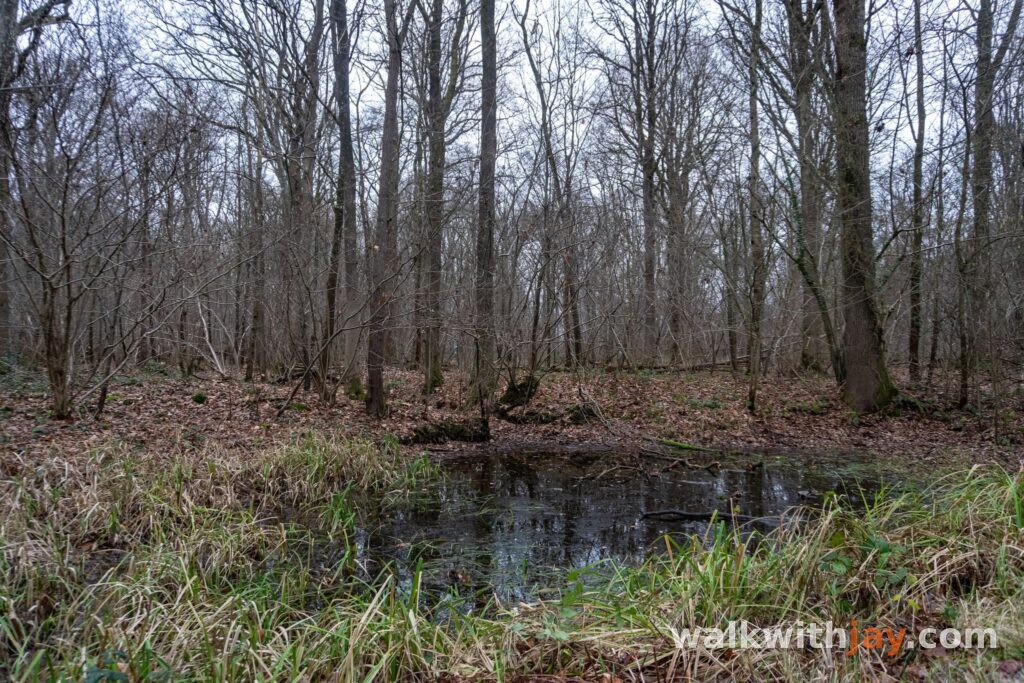
Several ponds and wet hollows can also be found among the trees. Ponds were already being created here in the Middle Ages, while some of the present-day depressions also reflect the heavily shelled wartime landscape.
The German depot in Vrijbos
During the First World War, Houthulst lay behind the German front. Vrijbos was developed into a large, well-camouflaged logistics area. A network of railway lines, sidings and narrow-gauge tracks crossed the forest, serving ammunition and supply depots, training grounds, firing ranges, cemeteries and observation posts.
Until 1917, the woods remained relatively sheltered compared with the front-line trenches. Allied artillery then began hitting the area increasingly heavily, eventually turning it into what contemporary descriptions called a volcanic lunar landscape.
During the Allied Final Offensive on 28 September 1918, the forest became a major objective. Belgian troops of the 7th Infantry Division entered it from several directions. Much of the position had been taken by around midday, although the fighting and casualties remained heavy.
By the end of the war, the forest had been almost completely destroyed. It was cleared of explosives during the early 1920s and only partly replanted.
The Belgian military cemetery
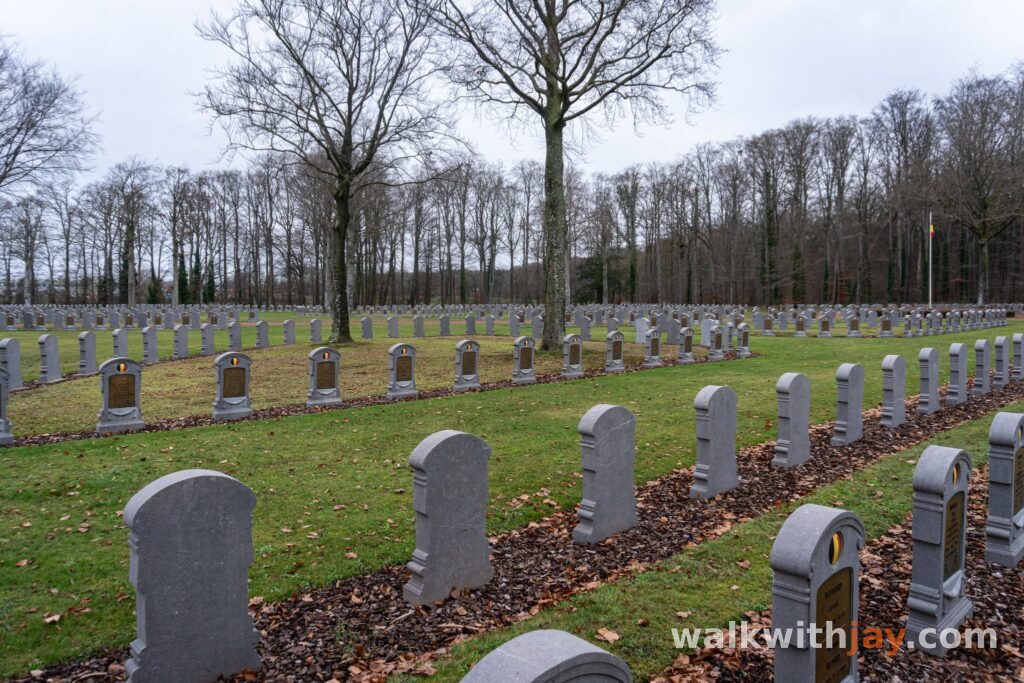
On the edge of the forest lies Houthulst Belgian Military Cemetery. It was created after the war as a concentration cemetery for Belgian soldiers whose families had not had them returned to their home towns.
There are now 1,722 Belgian graves here, commemorating 1,230 identified and 493 unidentified soldiers. Most of the identified men died in 1918, particularly during the Final Offensive.
At the rear are also 81 Italian grave crosses for 74 identified and 7 unidentified prisoners of war. The Italians had been used as labourers by the German Army, including in the ports of Roeselare and Izegem and on railway works.
Its star-shaped layout and setting against the edge of the forest make this one of the most distinctive Belgian military cemeteries in the Westhoek.
Rotsebos and the Lourdes grotto
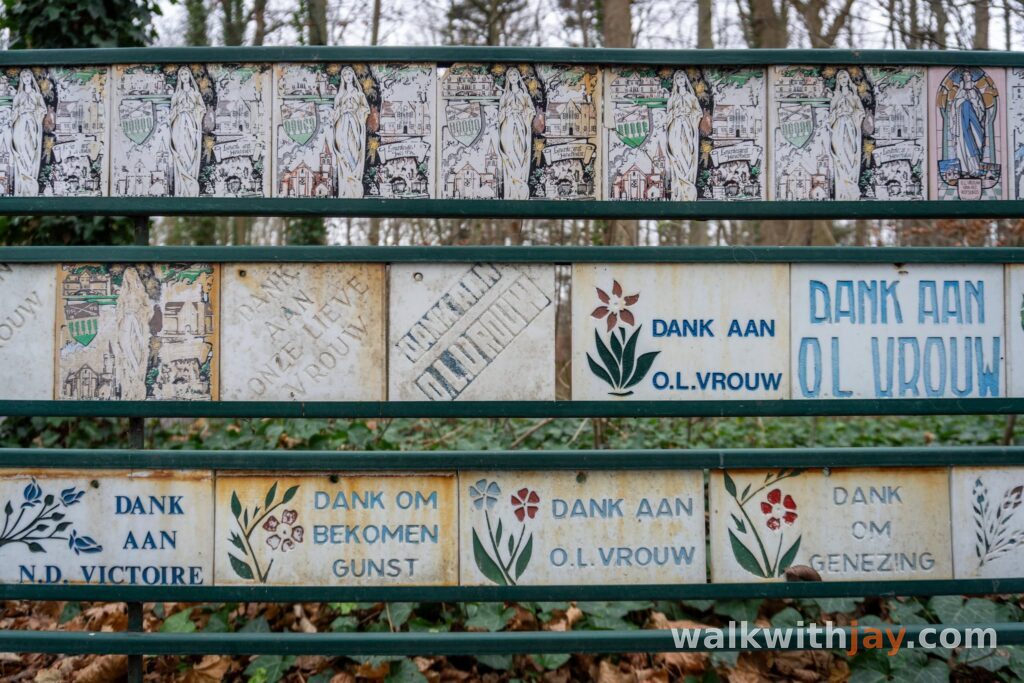
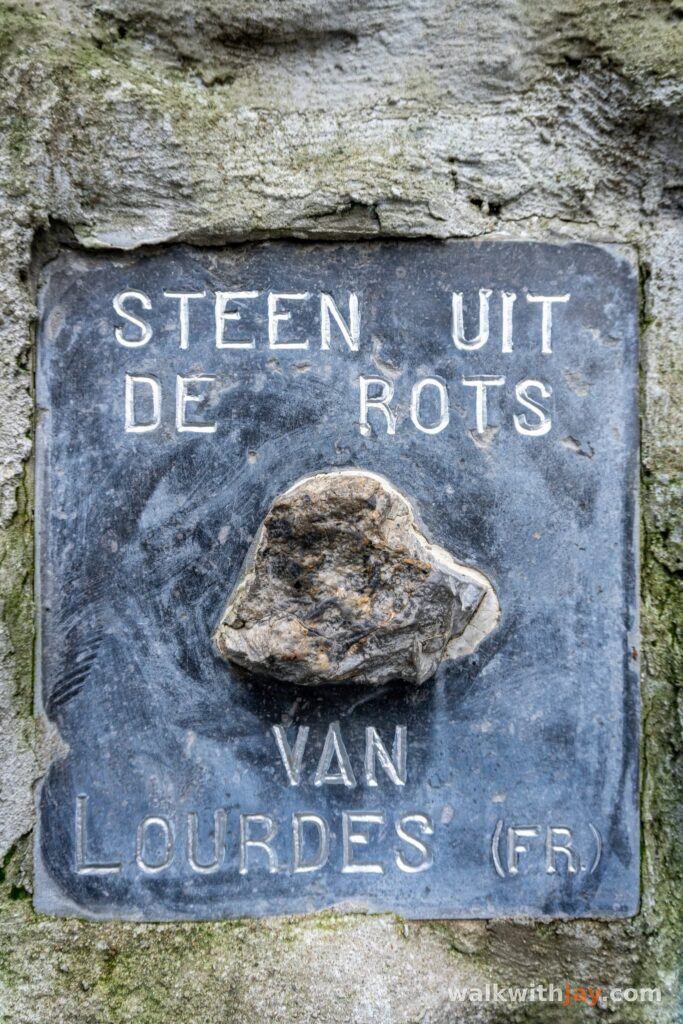
To the north of Vrijbos lies Rotsebos and its Lourdes grotto. The grotto was established around 1880 by Madame Cassiers in honour of Our Lady of Lourdes. Some sources even give 1873, which means it may be among the oldest Lourdes grottoes in Belgium.
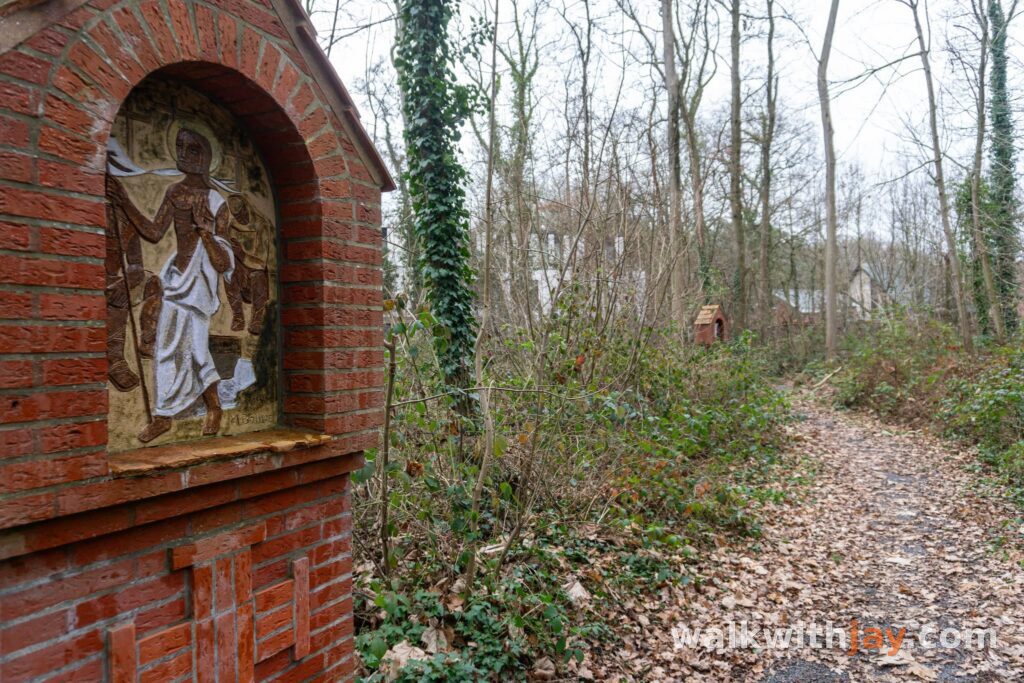
This part of Houthulst was also affected by the First World War. The Flemish heritage inventory suggests that Rotsebos and the grotto were probably largely destroyed and then rebuilt after the war. Several small chapels were later added along the paths.
The contrast with the military history of Vrijbos is striking. Only a short distance from the former German depots and military cemetery, you are back in a quiet patch of woodland around a devotional site that has been visited for generations.
Photos from this walk




Jay’s tips
Combine the woodland with the Belgian military cemetery and Rotsebos. On a short walk, you get both nature and two very different sides of Houthulst’s history.
Good to know
Muddy after rain
Sturdy footwear recommended
Chapel
War cemetery
A large part of Vrijbos is military land and closed to the public. Always stay on the public paths and respect barriers. Woodland tracks can become muddy after rain. Parking Vrijbos is on Eugène de Grootelaan.
My experience
I ended up here because the sky was still too grey for the more open landscape walk I planned to do later in Klerken. For that sort of moment, Vrijbos is ideal: you do not need a long route to spend some time among the trees.
The public section is not large, but the many small avenues make it easy to vary your walk. Combining the forest with the military cemetery and Rotsebos also gives this short outing more interest than a simple woodland loop.
There are larger and more varied forests elsewhere in the Westhoek if nature is your only priority. But for a quiet short walk with a lot of history packed into a small area, I enjoy coming back here.
Waymarking
Not waymarked
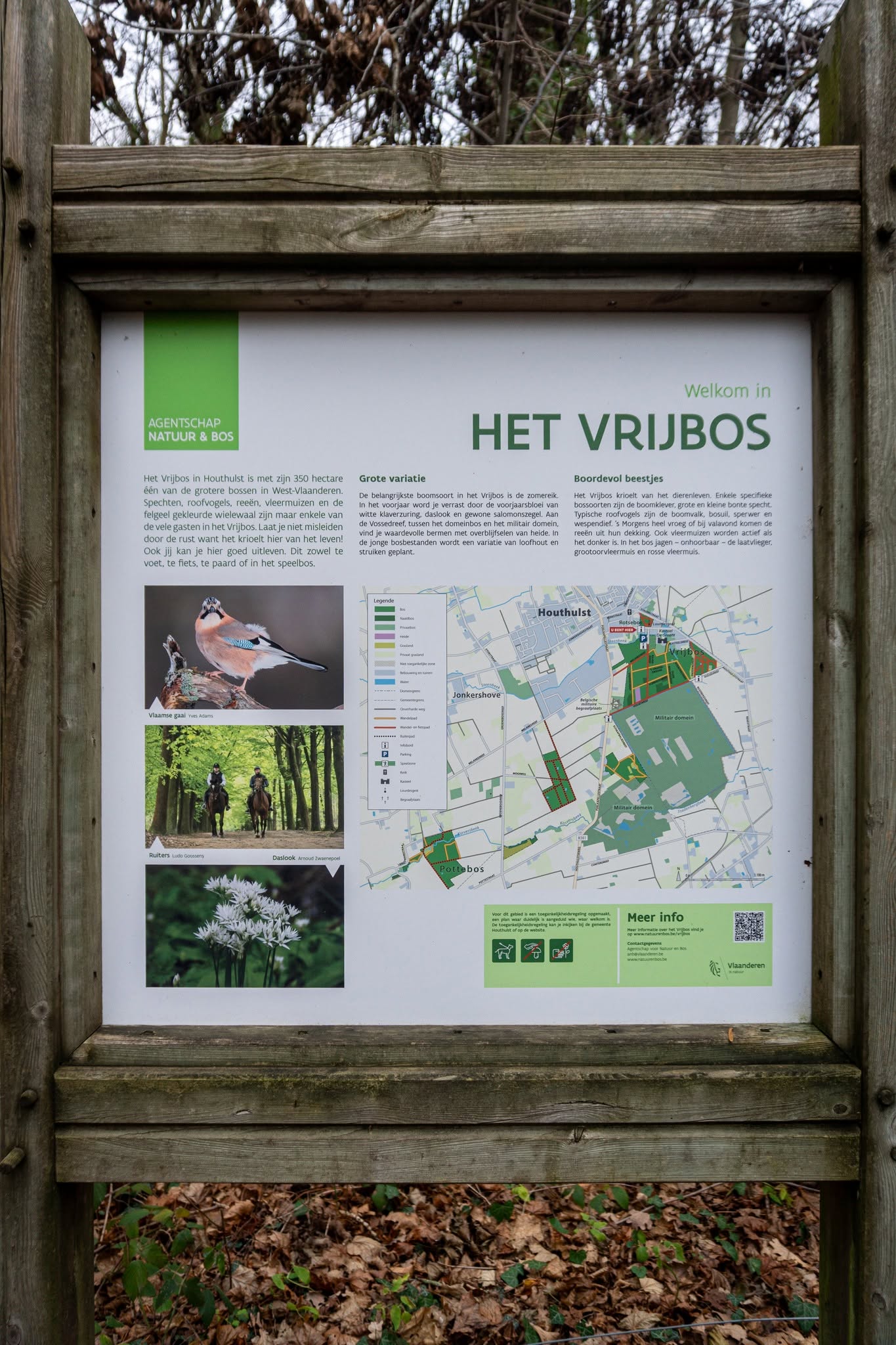
Route map available on site
Places of interest
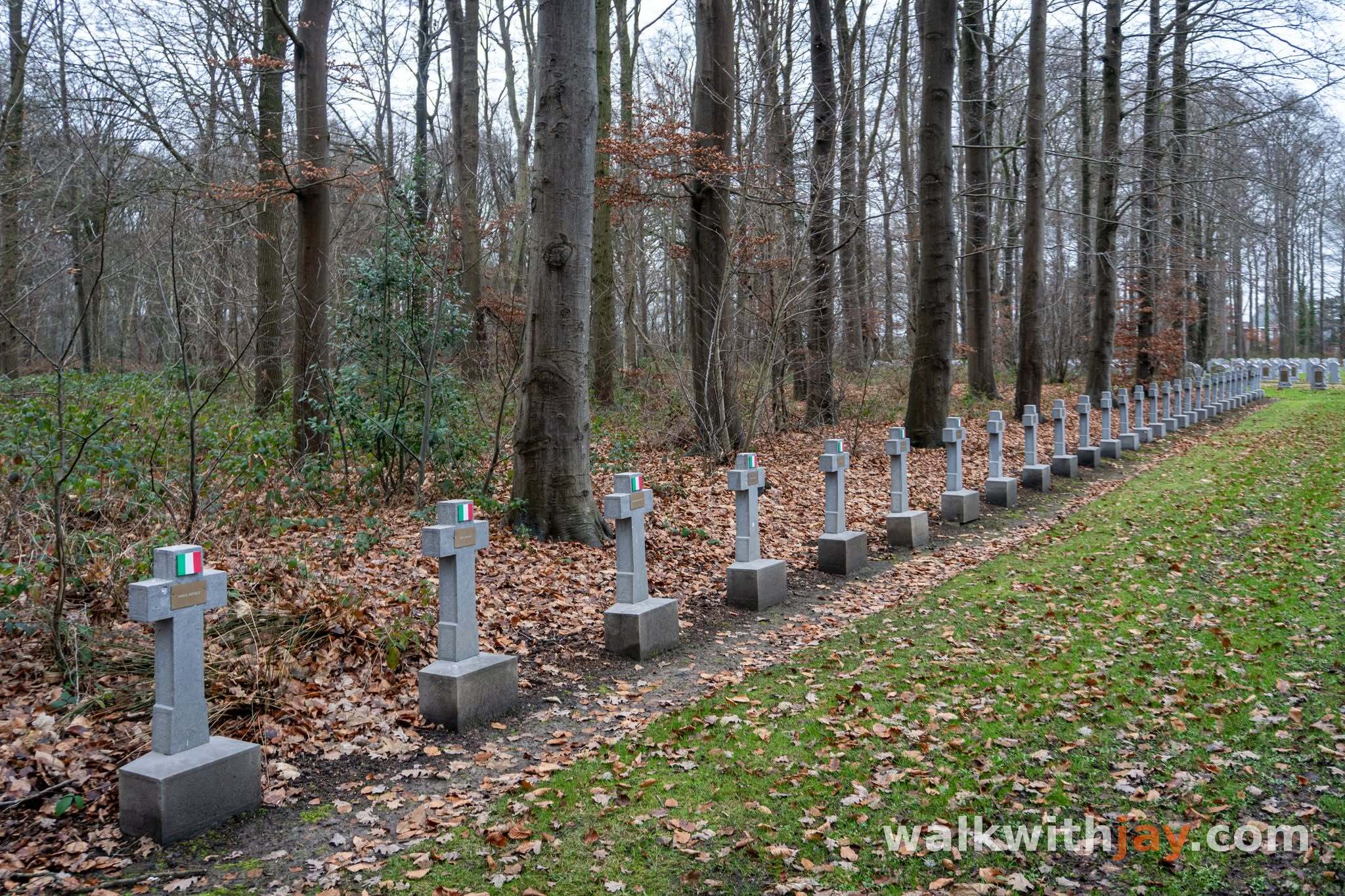
Belgische militaire begraafplaats Houthulst
Along the route
Star-shaped Belgian military cemetery with 1,722 Belgian graves and 81 Italian grave crosses.
Poelkapellestraat, 8650 Houthulst, Belgium ↗
Website →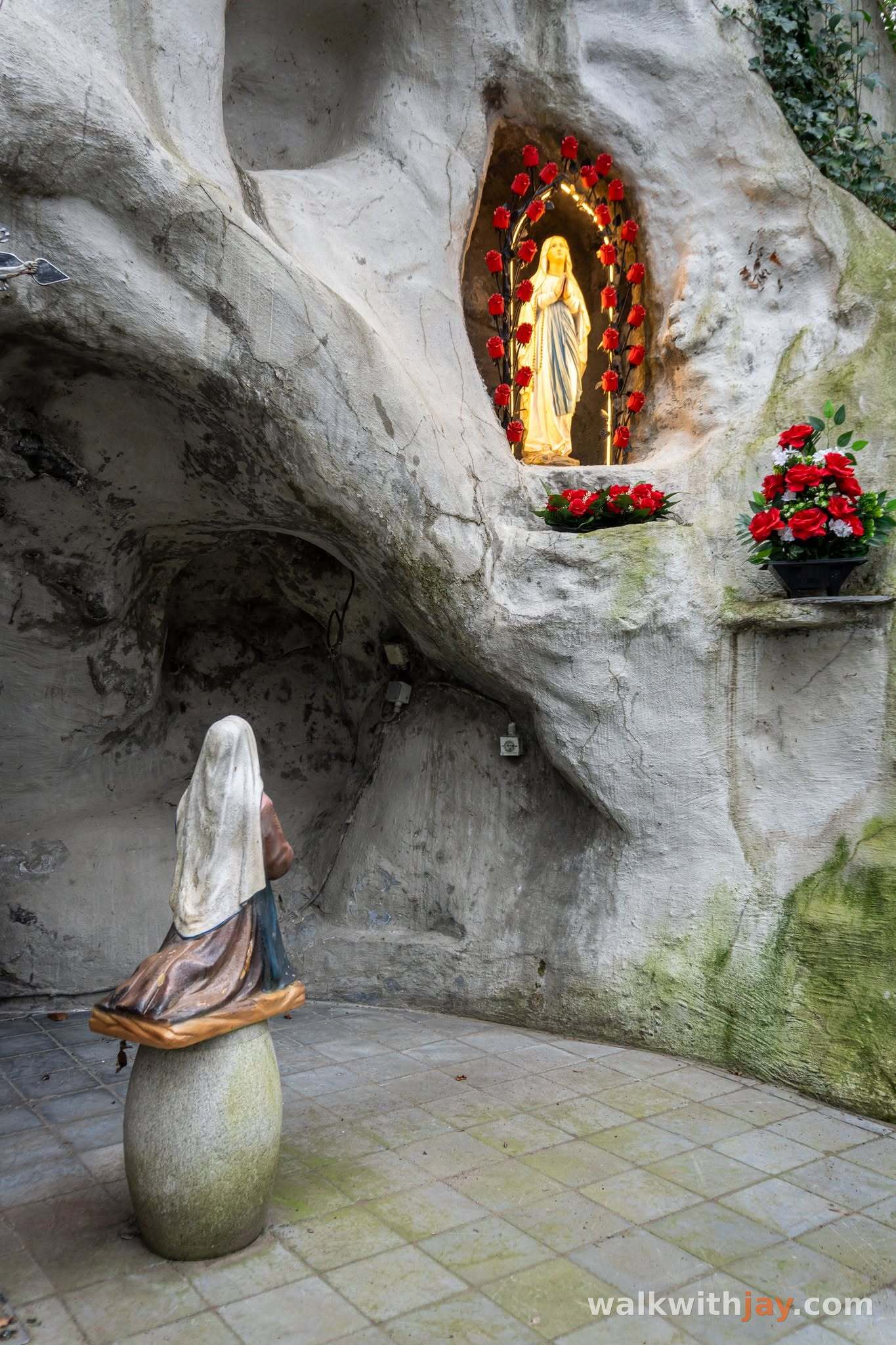
Lourdesgrot Rotsebos
Along the route
Lourdes grotto dating from around 1880, possibly one of the oldest in Belgium.
Eugène de Grootelaan, 8650 Houthulst, Belgium ↗
Website →Ready to set off?
Open the starting point in your GPS and enjoy the walk.