Bakelandtpad
Langemark
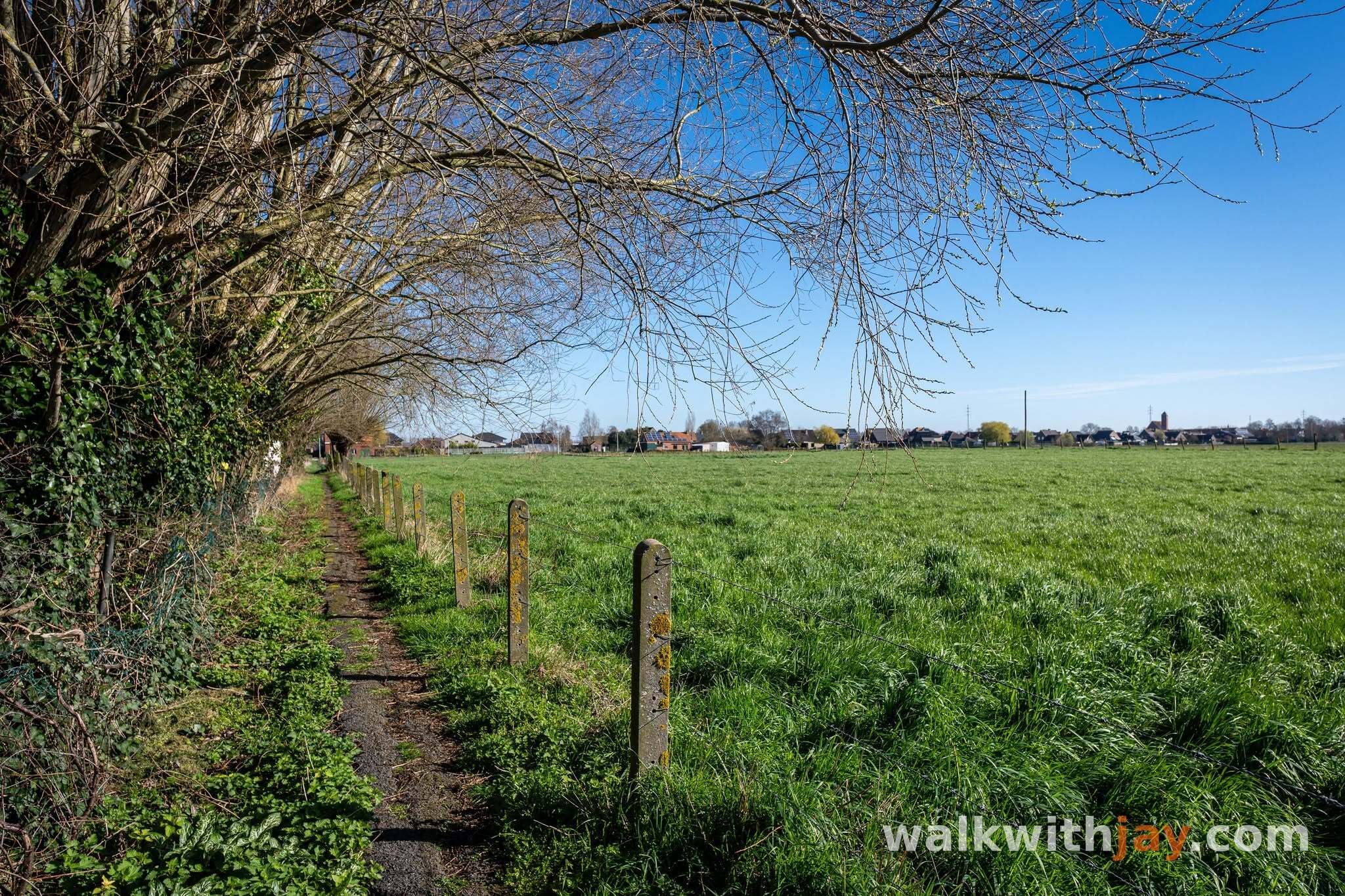
A peaceful walk around Langemark, combining quiet country roads and nature with a surprising number of First World War sites.
The walk
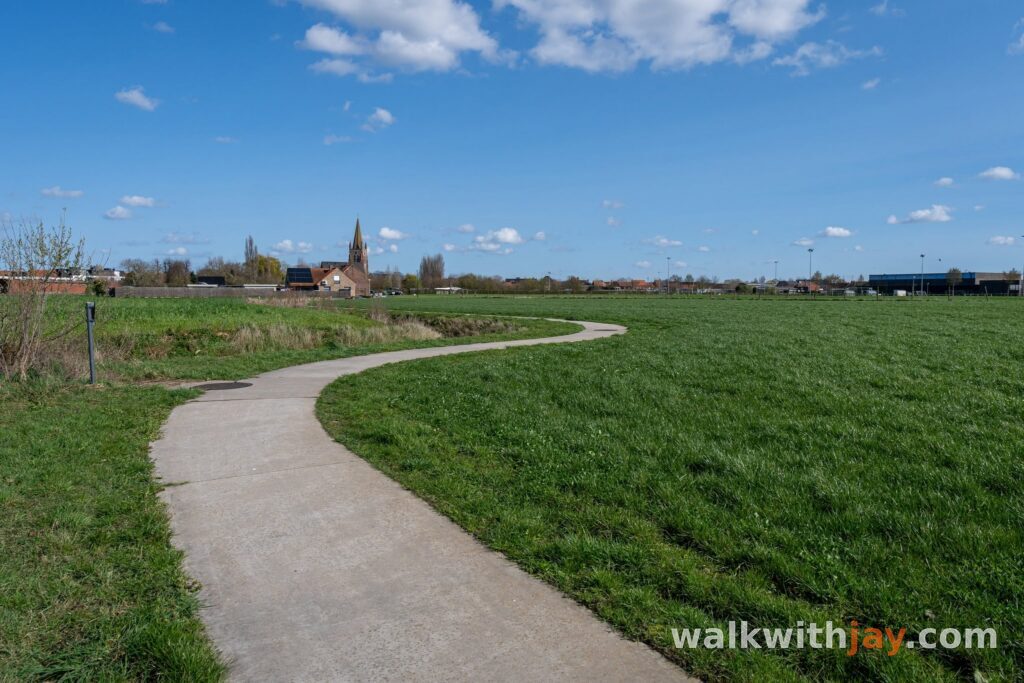
The Bakelandtpad is a signposted 10.5-kilometre loop around Langemark. Its name refers to Lodewijk Bakelandt, the notorious bandit active in this region at the end of the 18th century. Surprisingly, however, the walk itself tells you very little about Bakelandt. What it does offer is a quiet route through the countryside around Langemark, linking several remarkable places connected mainly with the fighting of 1917.
Route map
Bakelandt as the route’s namesake
At the end of the 18th century, Flanders was under French rule. Church property was confiscated, priests who refused to swear allegiance to the French Republic were forced into hiding, crops and livestock were requisitioned and young men were conscripted into the French army. These tensions helped trigger the Peasants’ War in 1798.
It was during this unsettled period that Lodewijk Bakelandt became part of local history. Later popular stories turned him into a particularly violent gang leader and murderer, but research by Professor Stefaan Top based on judicial archives paints a less dramatic picture. Bakelandt was primarily a bandit, and only one murder was attributed to him. Even so, he was beheaded on Bruges’ Market Square on 2 November 1803 together with 23 others.
Today his name is closely associated with Langemark-Poelkapelle, which makes it rather surprising that the Bakelandtpad itself tells you so little about him. There are no information panels along the route that really develop his story. From Vijverpark, the walk follows the old railway line towards a very different chapter in Langemark’s past.
From the Studentenfriedhof to the Broenbeek
The first major stop is Langemark German Military Cemetery, often known as the Studentenfriedhof. After the First World War, it was one of several German cemeteries in the area. Burials from other sites were later concentrated here, and today more than 44,000 German servicemen lie within the cemetery, almost 25,000 of them in the large mass grave.
The route then follows the Broenbeek valley. Along Beekstraat, the memorial to the 34th British Division stands beside a surviving German bunker. In 1917, the Broenbeek was an extremely difficult obstacle. Persistent rain, shelling and strong German positions had turned the surrounding ground into a swamp. The memorial particularly commemorates the artillery and engineer units of the 34th Division, which operated here in very difficult conditions during October and November 1917. The bunker behind it began as a German machine-gun post and was later temporarily used as a British command post.
If you continue straight for a short distance before turning, you can also visit a much smaller memorial in a nearby field. It commemorates Emilien Girault and André Etienne Malliavin of the 2e Régiment de Chasseurs d’Afrique, who were killed here on 9 October 1917. The inscription is now difficult to read.
A quiet stop at ’t Bosseltje
The walk continues towards Madonna along Kleine Merkemstraat. I already knew some of these roads from another route, although this time I was walking them in the opposite direction. After following the Broenbeek again and crossing the Steenbeek, you reach ’t Bosseltje.
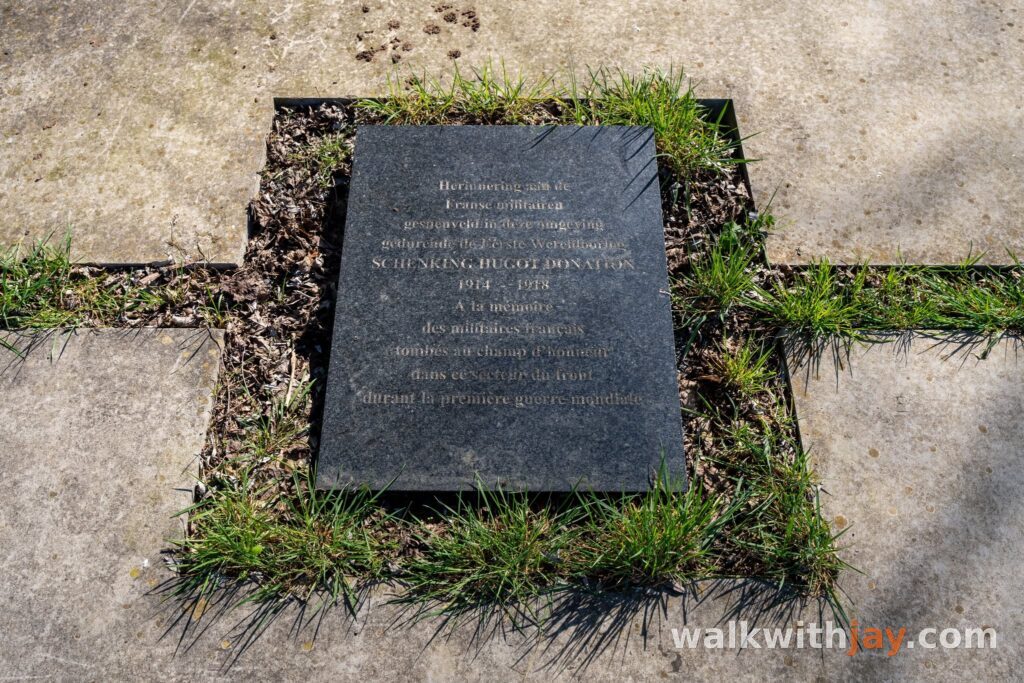
This small nature area beside Hugotstraat was donated to the municipality in 1958 by the Hugot family from Paris in memory of their son, who had died in the area. He may have been Charles Victor Hugot, a French soldier killed near Langemark in December 1914. The donation came with the condition that the land should never be cultivated and that the memory of the French soldiers who died in this sector during the First World War should be preserved.
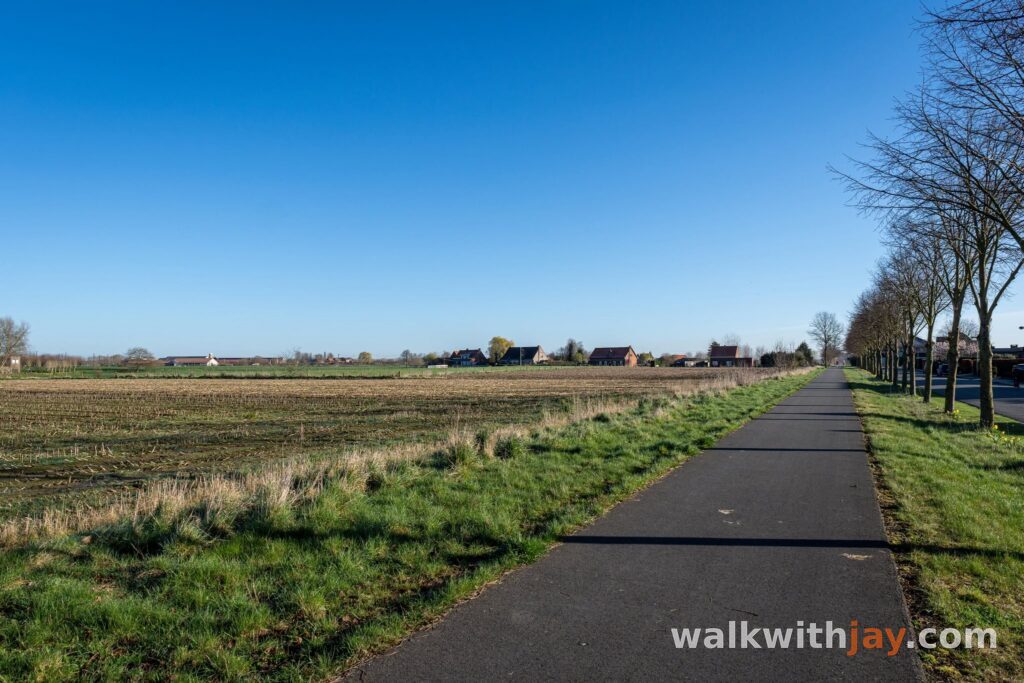
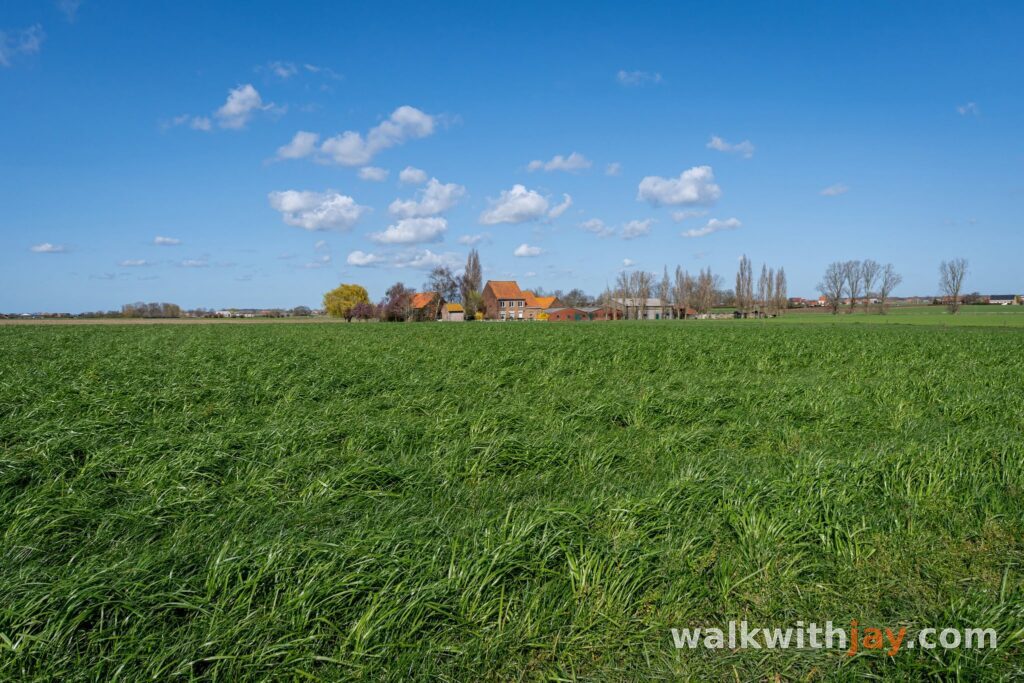
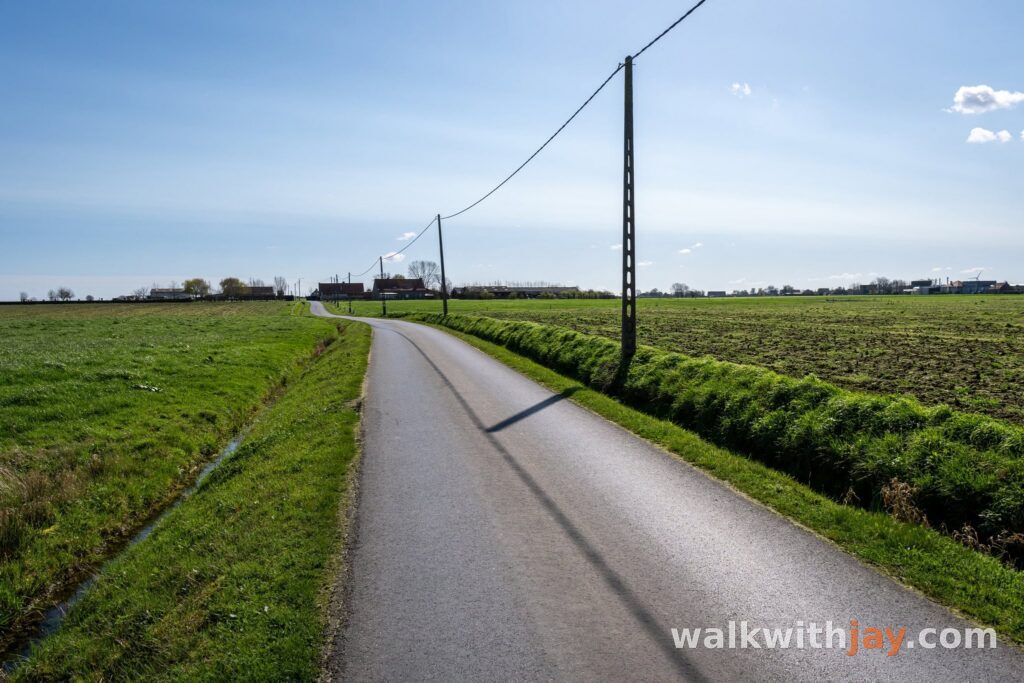
For me, it was a good place to stop for a while. There is a bench at the back, and after the many wartime sites the small green area feels particularly peaceful. The walk then continues along paved roads between the fields. You can also make a detour to Ruisseau Farm Cemetery, a small CWGC cemetery with 82 burials on the grounds of a farm. I decided to leave that visit for another time during this walk.
Harry Patch beside the Steenbeek
When the route reaches the Steenbeek again, there is one final place worth stopping at: the Harry Patch Memorial Stone. It marks the spot where Patch and his comrades crossed the flooded Steenbeek on 16 August 1917 using a hastily constructed pontoon during the fighting around Langemark.
On 27 September 2008, Harry Patch returned here to unveil the memorial himself. He was 110 years old at the time and the last surviving British soldier to have fought in the trenches during the First World War. The stone itself is simple, but its location makes it particularly meaningful because it stands where part of his own wartime experience took place.
After crossing the Steenbeek, the route leads back to Vijverpark. It brings the walk to a fitting end: a quiet landscape that ultimately tells far more stories than the name Bakelandtpad might suggest.
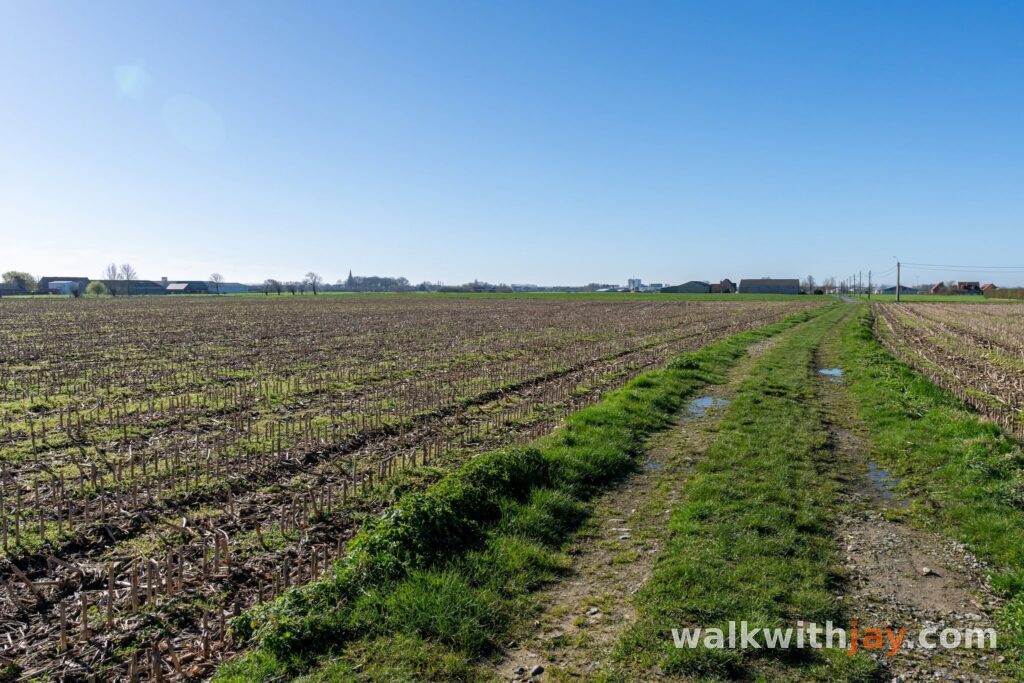
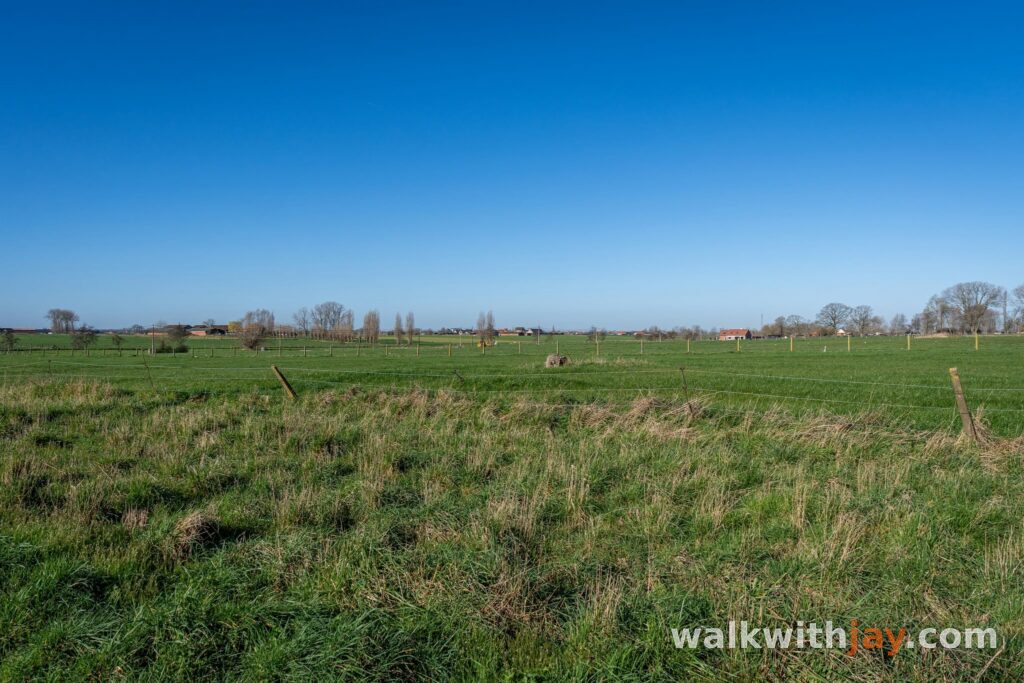
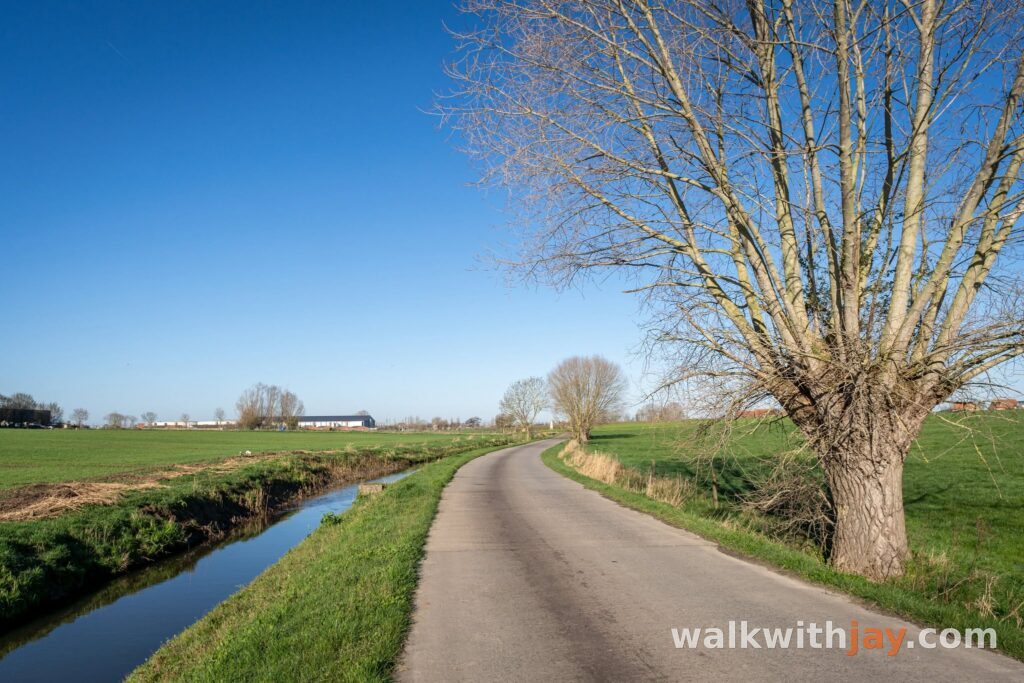
Photos from this walk




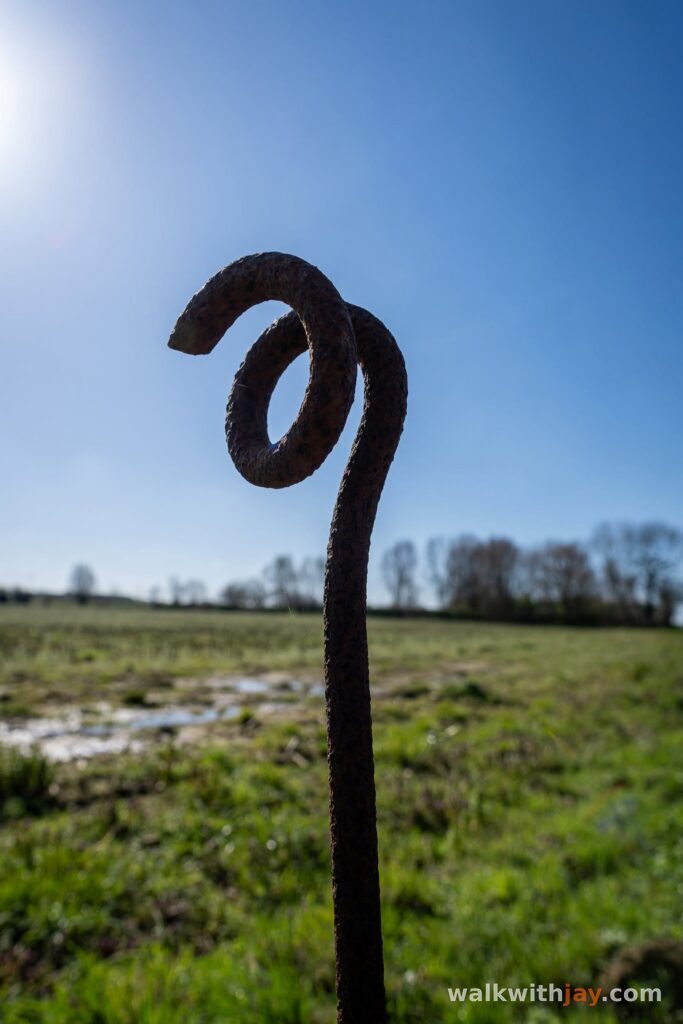
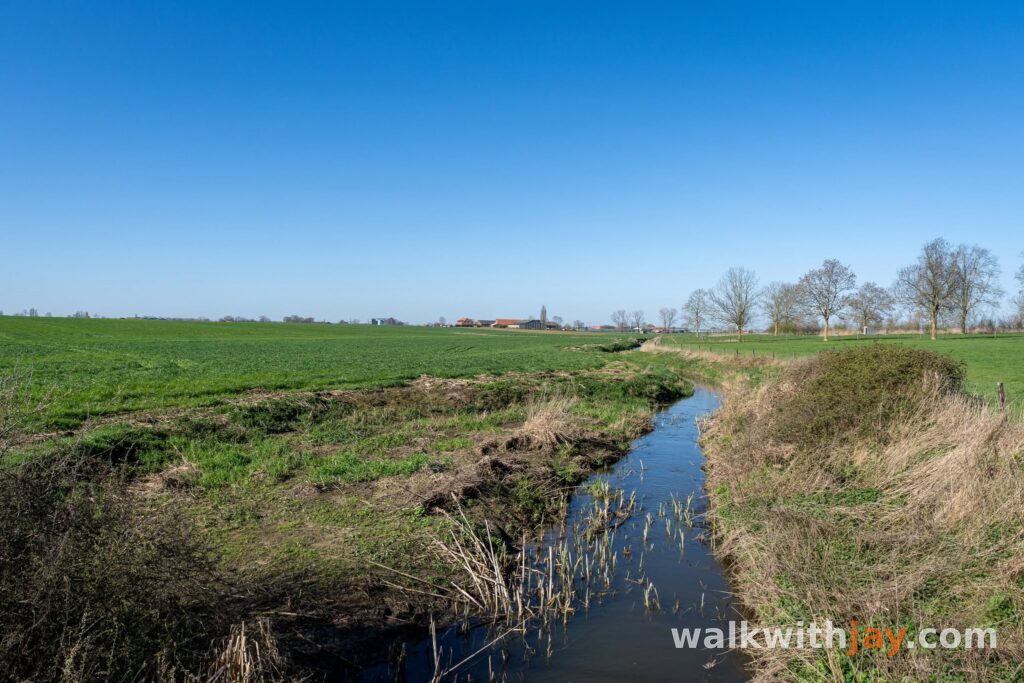
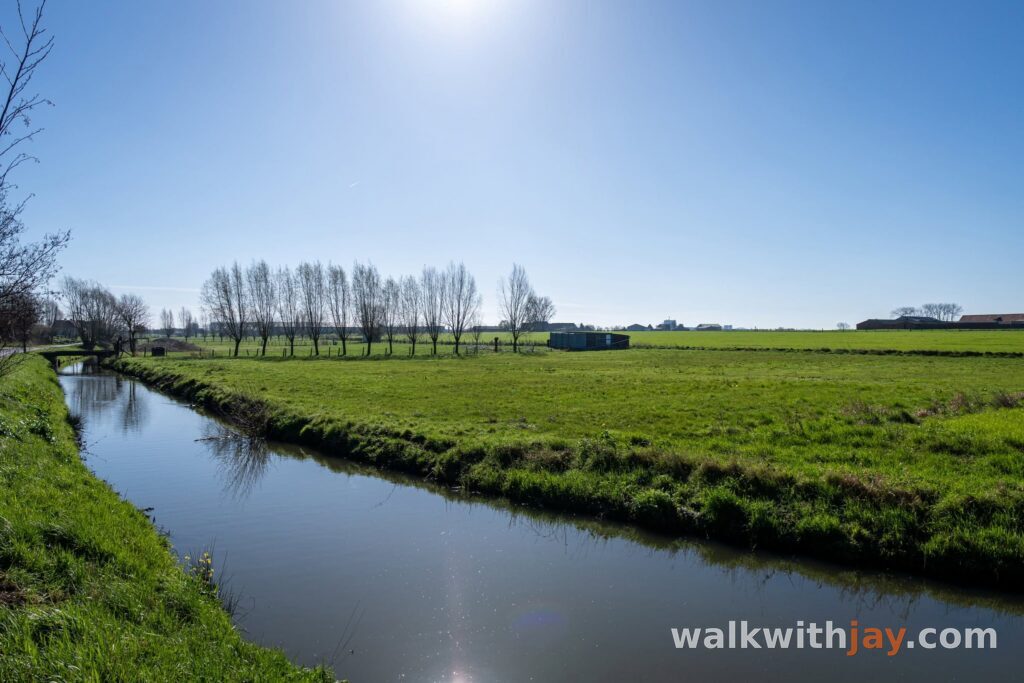
Jay’s tips
From the 34th Division Memorial, a short detour takes you to the memorial stone for Emilien Girault and André Etienne Malliavin. It is worth the extra few minutes if you enjoy discovering less familiar traces of the war.
Good to know
Little shade
Bus stop near the start
Monument
Church
Military heritage
War cemetery
Memorial or commemorative monument
Allow a little extra time for the German military cemetery and the smaller memorials around the Broenbeek. They are relatively close together, but each tells a different part of the story of 1917.
My experience
I found the Bakelandtpad an interesting and peaceful walk around Langemark. The combination of open countryside, the German military cemetery, the Broenbeek, ’t Bosseltje and the smaller memorials along the way gives the route plenty of substance without making it feel heavy.
My main reservation is the name of the walk. If you set out specifically hoping to learn more about Bakelandt, there is very little along the route to tell his story. There are no information panels or places that really bring the theme to life, so it feels like a missed opportunity.
As a walk around Langemark, however, it works well. There is plenty of history, while the quiet roads and stretches between the fields give the route enough breathing space. I would still recommend it to anyone wanting to explore the area, although I do think the route misses an opportunity by doing so little with the Bakelandt story.
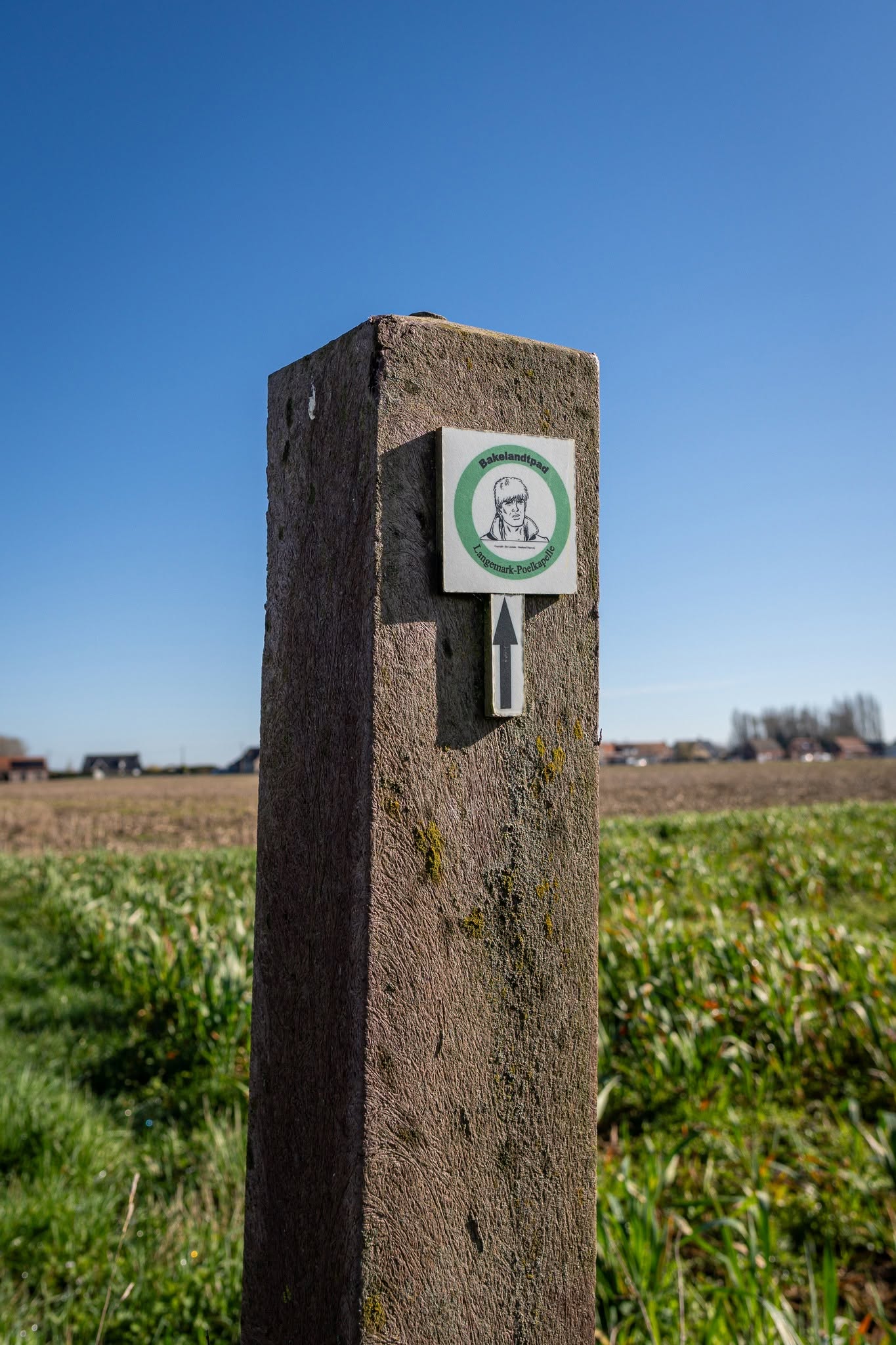
Waymarking
Bakelandtpad
The Bakelandtpad is a separate signposted walking route provided by the municipality of Langemark-Poelkapelle. It does not require a fixed sequence of walking junctions.
Places of interest

Langemark German Military Cemetery
Along the route
German military cemetery containing more than 44,000 burials, often known as the Studentenfriedhof.
Klerkenstraat 86A, 8920 Langemark-Poelkapelle, Belgium ↗
Website →
34th Division Memorial and German bunker
Along the route
Memorial to the artillery and engineer units of the 34th British Division, with a surviving German machine-gun bunker behind it.
Beekstraat, 8920 Langemark-Poelkapelle, Belgium ↗
Website →
Gedenksteen 2e Chasseurs d’Afrique
Nearby
Small memorial stone to Emilien Girault and André Etienne Malliavin, killed here on 9 October 1917.
Beekstraat, 8920 Langemark-Poelkapelle, Belgium ↗
Website →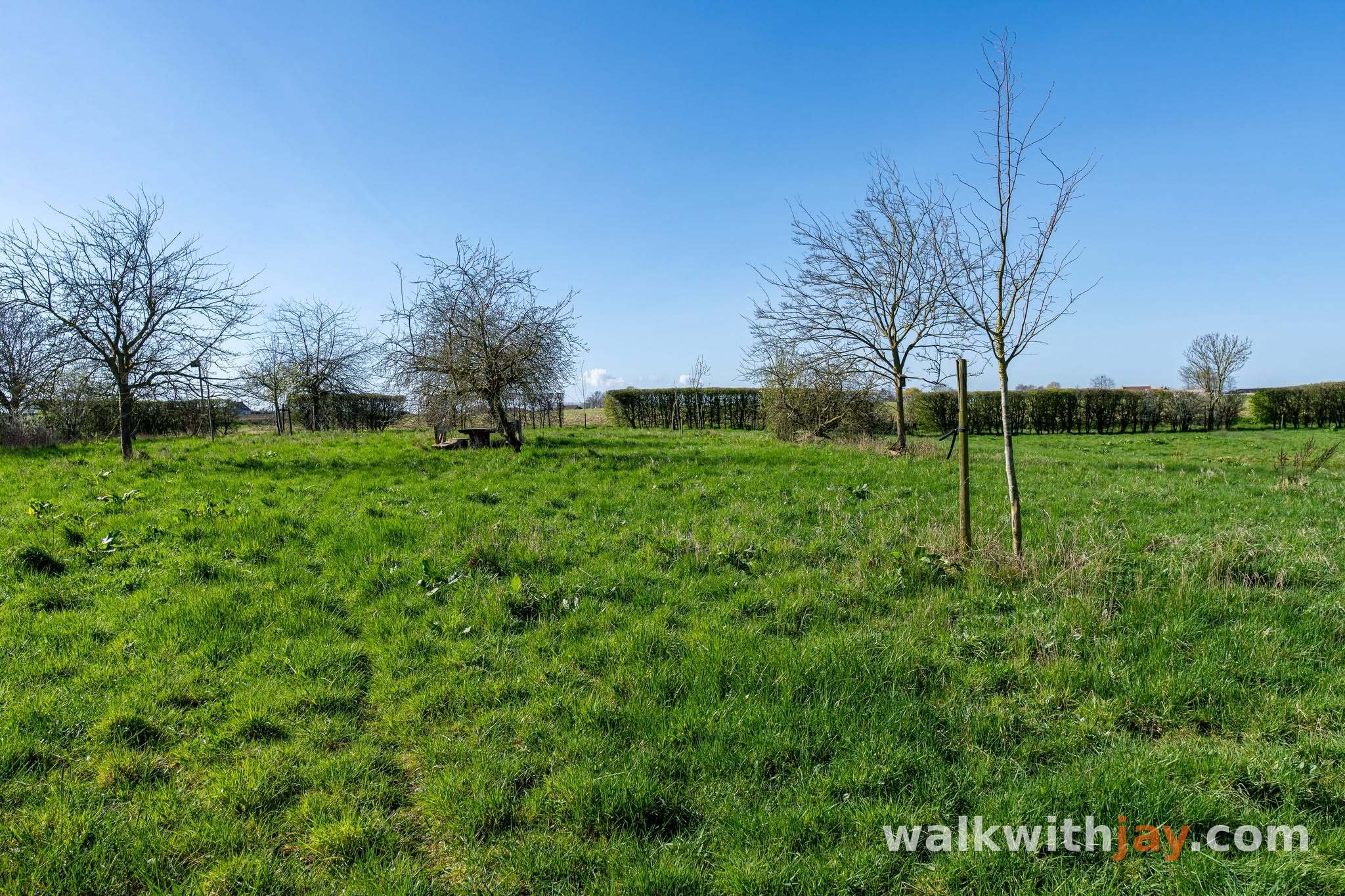
’t Bosseltje
Along the route
Small nature and memorial site donated to the municipality in 1958 by the Hugot family from Paris.
Hugotstraat, 8920 Langemark-Poelkapelle, Belgium ↗
Website →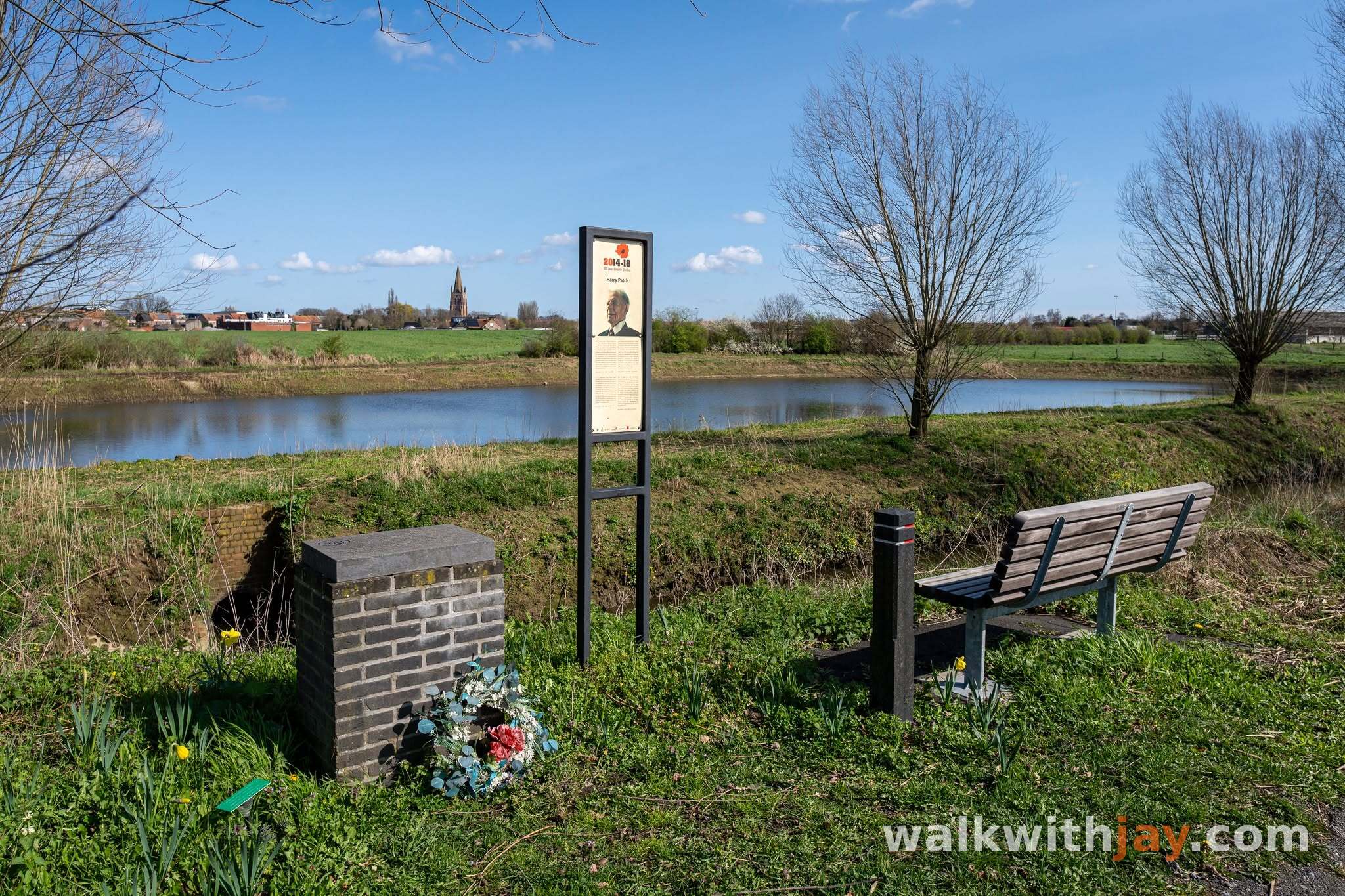
Harry Patch Memorial Stone
Along the route
Memorial stone marking the place where Harry Patch and his comrades crossed the Steenbeek on 16 August 1917.
Melkweg, 8920 Langemark-Poelkapelle, Belgium ↗
Website →Ready to set off?
Open the starting point in your GPS and enjoy the walk.