Guynemer Path
Poelkapelle
A history-rich walk around Poelkapelle, where memorials, bunkers and personal stories reveal the wartime past of the landscape.
The walk
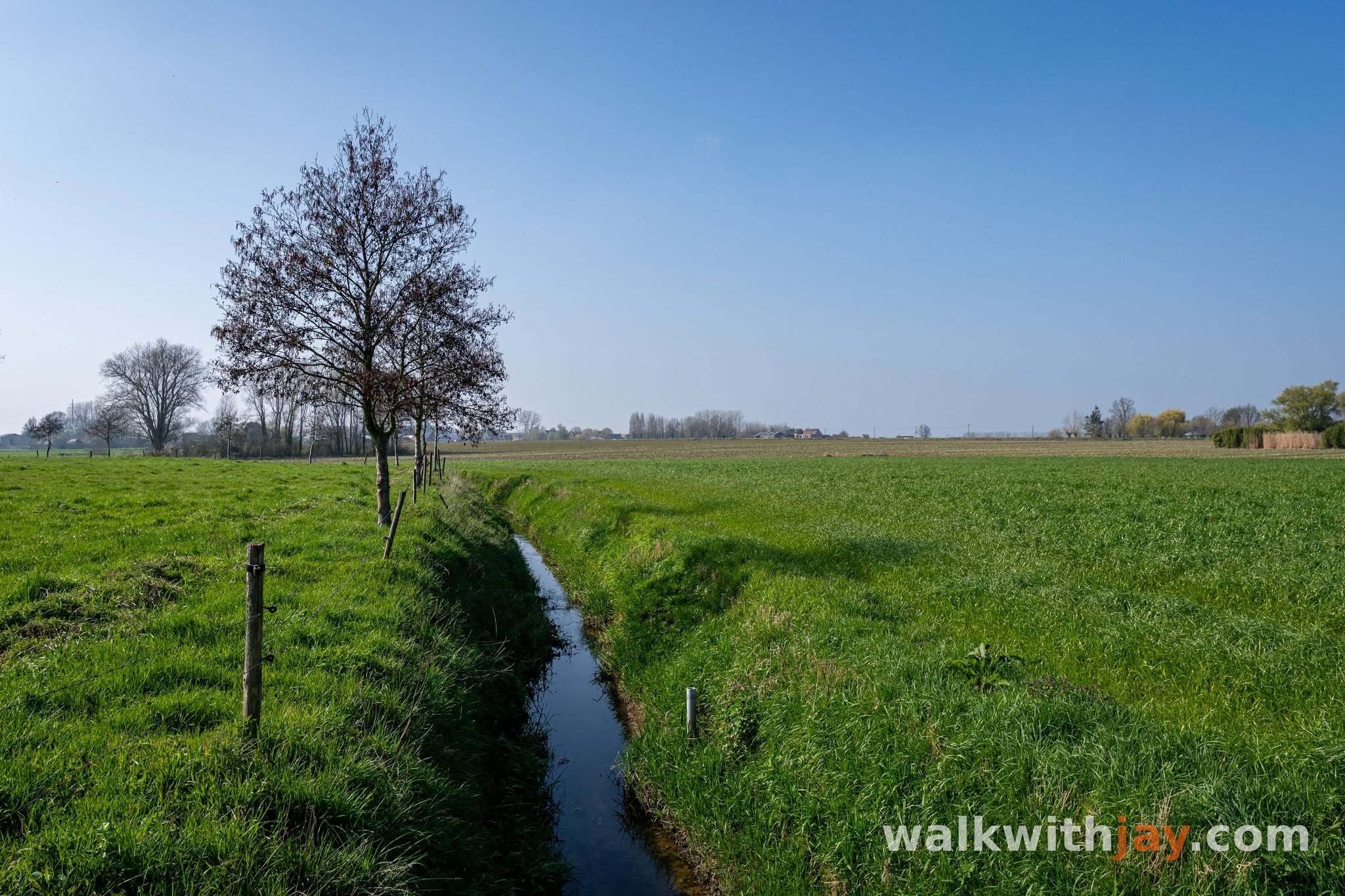
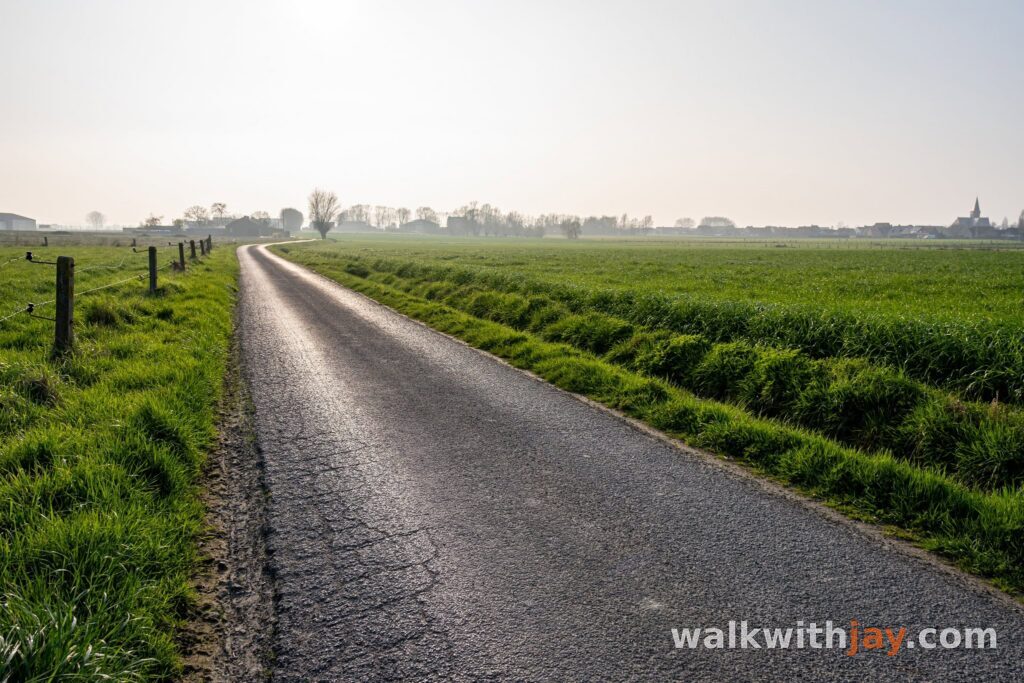
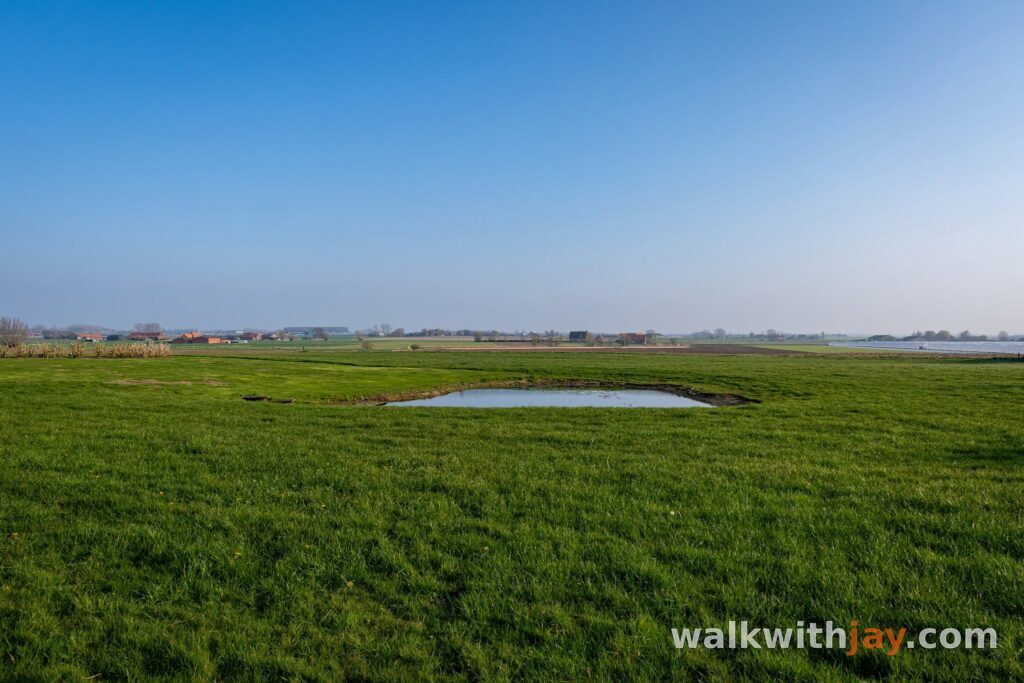
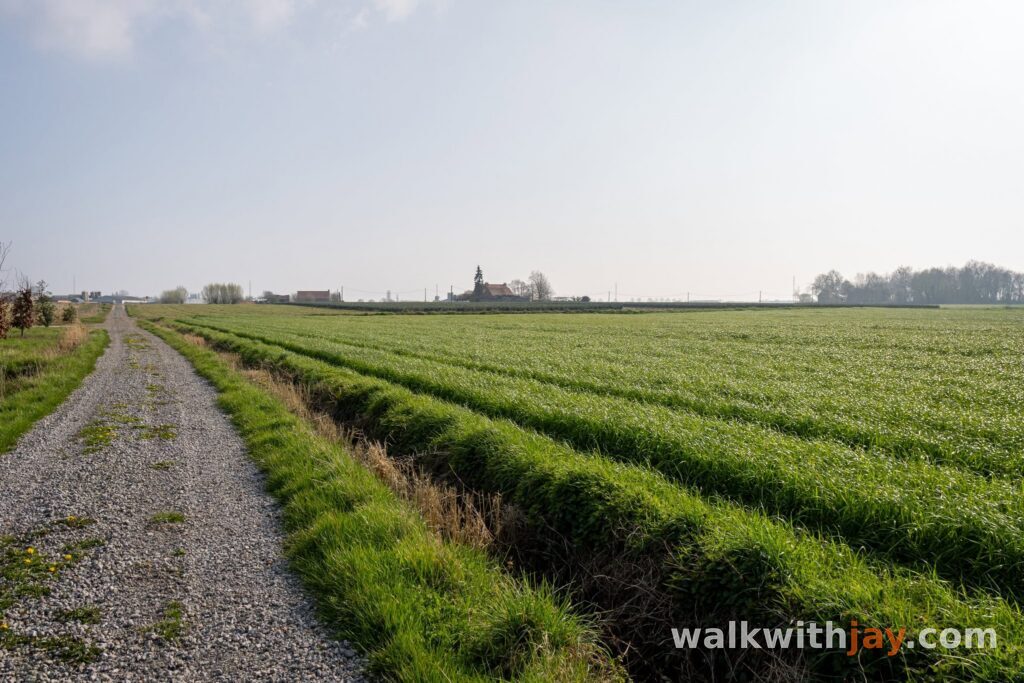
The Guynemer Path starts at Guynemerplein in Poelkapelle and covers 10.5 kilometres through the open countryside around the village. On paper, it is mostly a quiet, paved walk between fields, but the landscape gains meaning as you go. Memorials, bunkers and personal stories from 1917 and 1918 show just how deeply this area was shaped by the First World War.
Route map
Starting with Guynemer
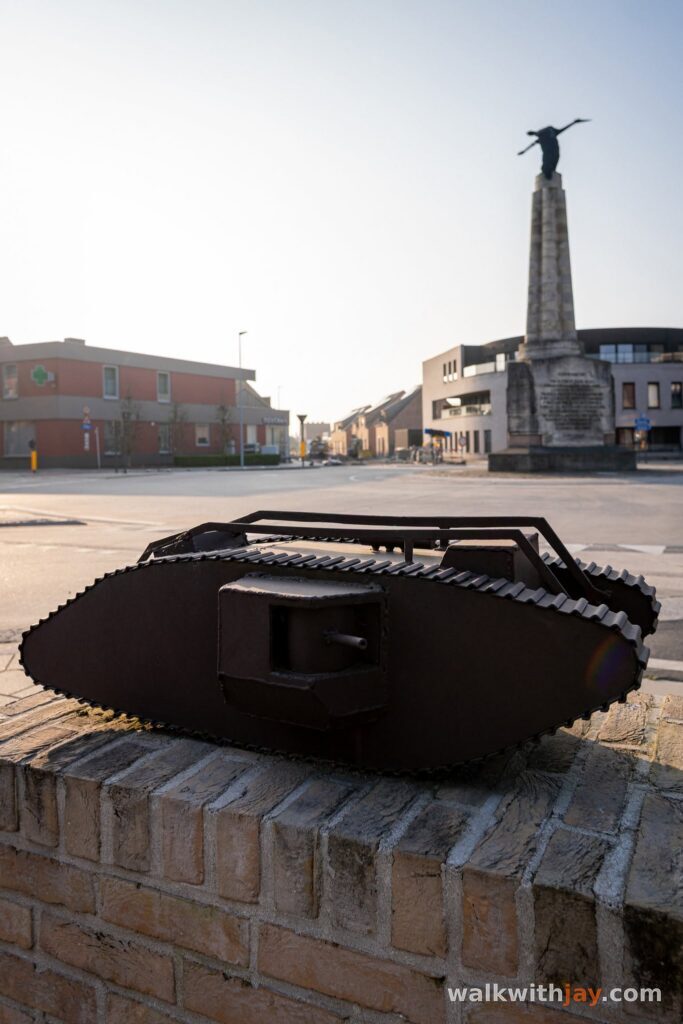
Before the walk has really begun, you are already surrounded by history. The roundabout at Guynemerplein is dominated by the memorial to Georges Guynemer, the French fighter pilot who took off for the final time on 11 September 1917 in his SPAD XIII. Lieutenant Jean Bozon-Verduraz flew with him but lost sight of Guynemer over the Poelkapelle area. He never returned. Neither his body nor his aircraft has ever been recovered with certainty, and his disappearance remains a mystery to this day.
The monument was unveiled in 1923 and is crowned by a stork, the emblem of Guynemer’s famous Escadrille des Cigognes. Nearby, the Guynemer Pavilion continues the story of Guynemer and other First World War airmen.
The Tank Memorial Ypres Salient also stands close to the square. It commemorates tank crews who fought and died in the Ypres Salient and incorporates an original armour plate from a British Mark IV tank. Guynemerplein therefore feels less like a simple starting point and more like the first chapter of the walk.
Joseph Lister and the German positions
Leaving the village by Houthulstseweg, the route gradually opens out into the surrounding farmland. At Schreiboomstraat, a memorial commemorates Sergeant Joseph Lister VC of the Lancashire Fusiliers.
On 9 October 1917, his company’s advance was stopped by German machine-gun fire. Lister went forward alone, dealt with one machine-gun position and then pressed on towards a second. Around one hundred German soldiers eventually surrendered. He was awarded the Victoria Cross for his actions.
Farther on, beside the old railway line, two German concrete bunkers still stand in the fields. They formed part of the defensive system around Poelkapelle. Today they sit quietly in the open landscape, but during the Third Battle of Ypres this area lay directly in the fighting. That contrast between the peaceful countryside now and the events of 1917 is what gives this section much of its impact.
Charles Dresse and the final offensive
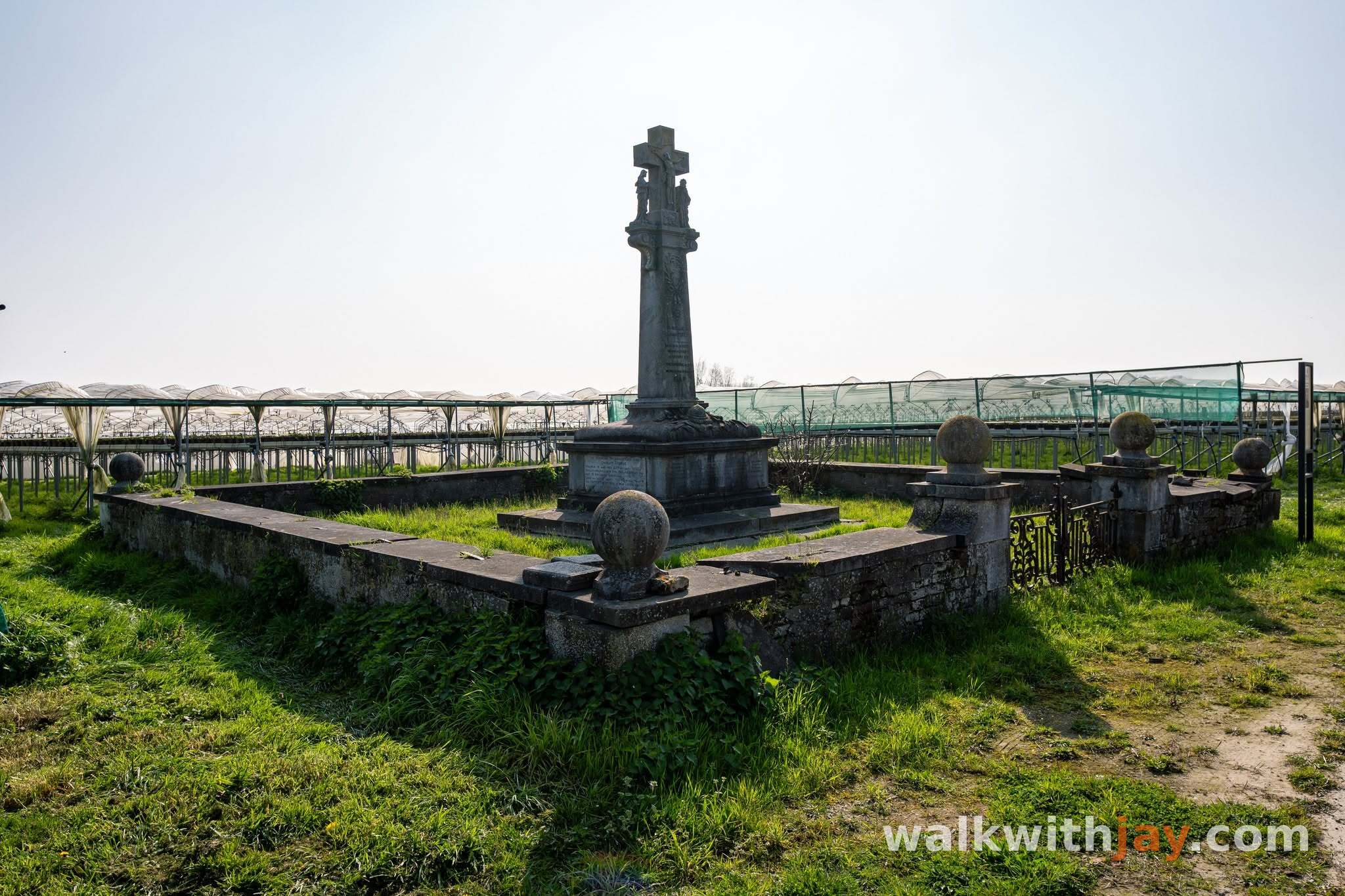
On Poperingestraat stands the memorial to Adjutant Charles Dresse. He was killed here on 28 September 1918, the first day of the Allied liberation offensive.
That morning, the Belgian 9th Line Regiment had advanced towards Westrozebeke before German attacks struck its flanks. During the withdrawal, orders stopped coming through. As the most senior soldier present, Dresse took charge near Bultekot and led a group of men against a German machine-gun position blocking the road to Ferme Davout.
The attack succeeded, but Dresse was fatally wounded at its outset. He was 21. He is buried in the Belgian military cemetery at Westvleteren. The memorial stands where he fell.
Poelcapelle British Cemetery
Quiet, mainly paved country roads eventually lead towards Poelcapelle British Cemetery. The cemetery was created after the war by bringing together graves from the surrounding battlefield and smaller burial grounds.
Nearly 7,500 Commonwealth servicemen of the First World War are buried here, and more than 6,000 remain unidentified. That number of unknown graves is difficult to ignore and gives a very tangible sense of the losses suffered during the fighting around Poelkapelle and Passchendaele.
After the visit, the route turns back towards the village and Guynemerplein. The farmland often looks simple and peaceful, but after passing so many memorials, bunkers and individual stories, it is hard to look at the landscape in quite the same way as when you started.
Photos from this walk







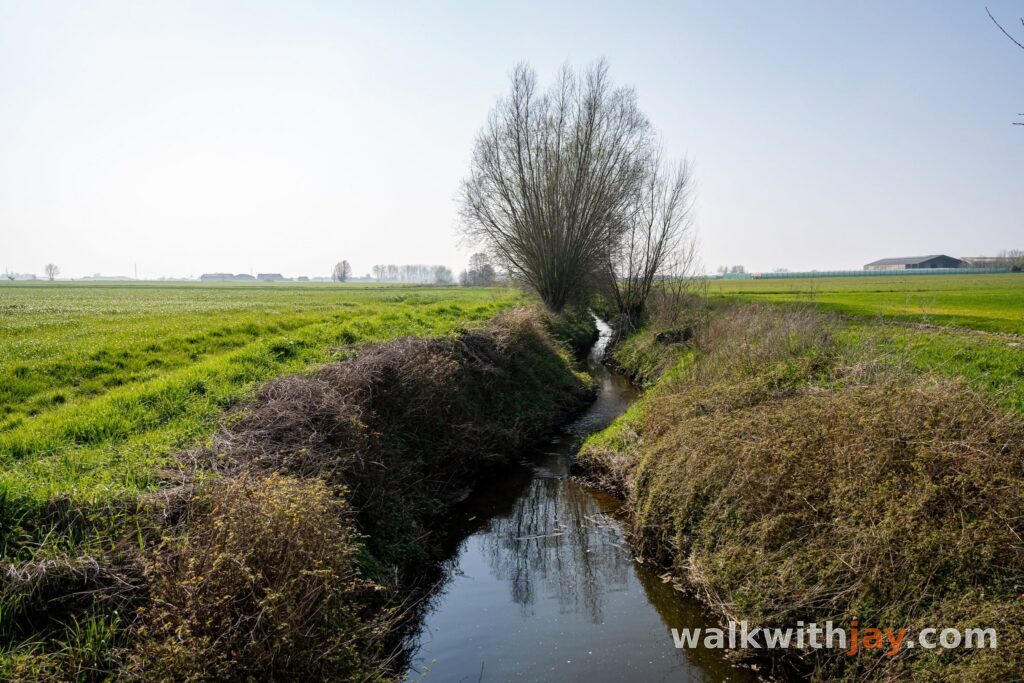

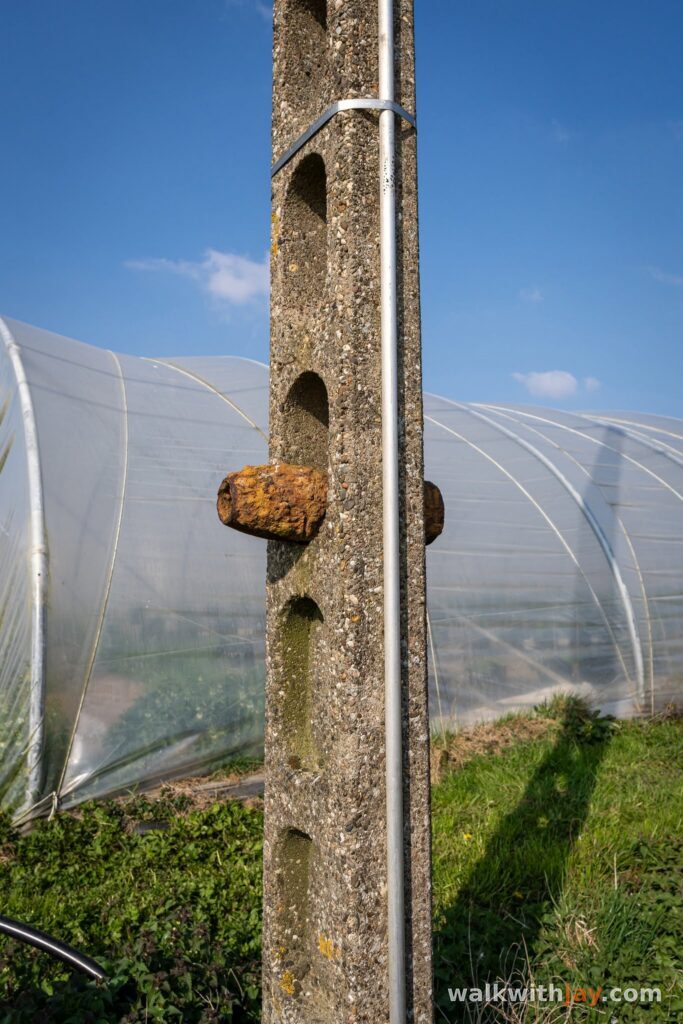


Jay’s tips
Allow some extra time at the start. The Guynemer Pavilion is just beside the route and makes an excellent addition if you want more context on Guynemer and the air war.
Good to know
Little shade
Museum nearby
Bus stop near the start
Monument
Church
Military heritage
War cemetery
Memorial or commemorative monument
Most of the route is paved. It is less suited to walkers looking mainly for unpaved nature trails, but particularly rewarding if you want to explore Poelkapelle’s wartime history.
My experience
For me, the Guynemer Path is strongest because of the history along the way. Over a relatively short distance, you encounter several very personal stories from 1917 and 1918, from Guynemer and Joseph Lister to Charles Dresse and the thousands of graves at Poelcapelle British Cemetery. That gives the walk plenty of substance even when the scenery itself becomes fairly simple.
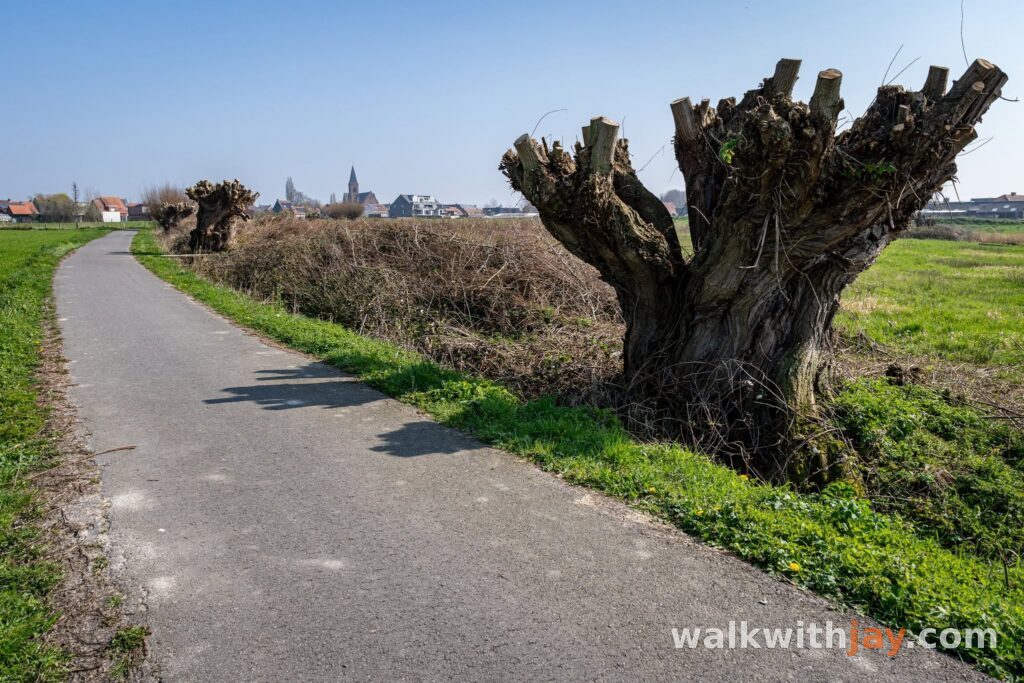
As a walking route in its own right, I find it less convincing. Much of the route is paved and follows quiet roads between fields. That makes it easy to walk, but I miss some variety in both surface and natural scenery.
If you are mainly interested in the First World War and the landscape around Poelkapelle, there is a lot to discover here. If you prefer woodland, nature or unpaved paths, other walks in the area will probably suit you better.
Waymarking
Guynemerpad
The Guynemer Path is a separately signposted 10.5-kilometre walking loop. It does not follow a published fixed sequence of walking nodes.
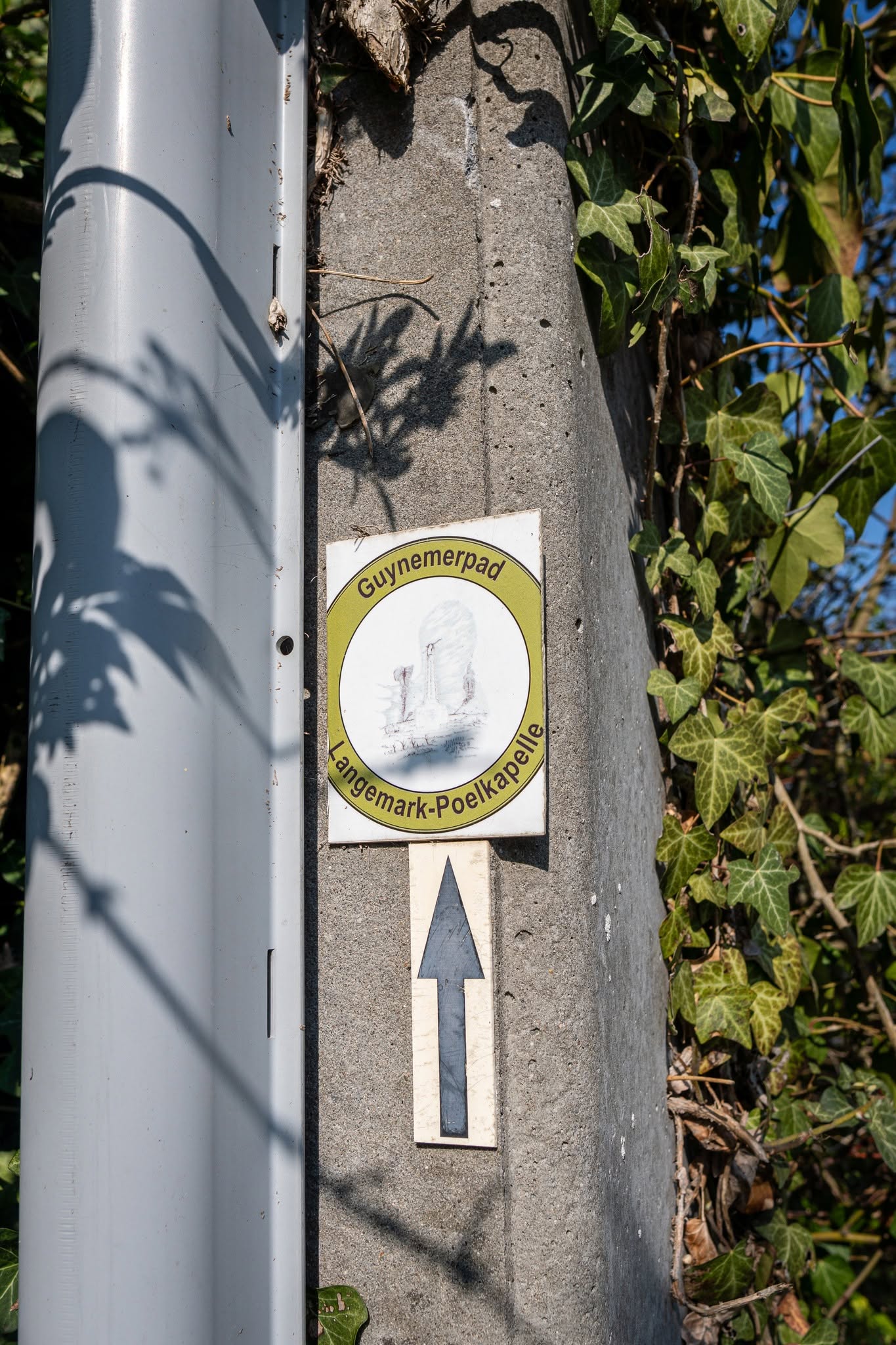
Route map available on site

Places of interest
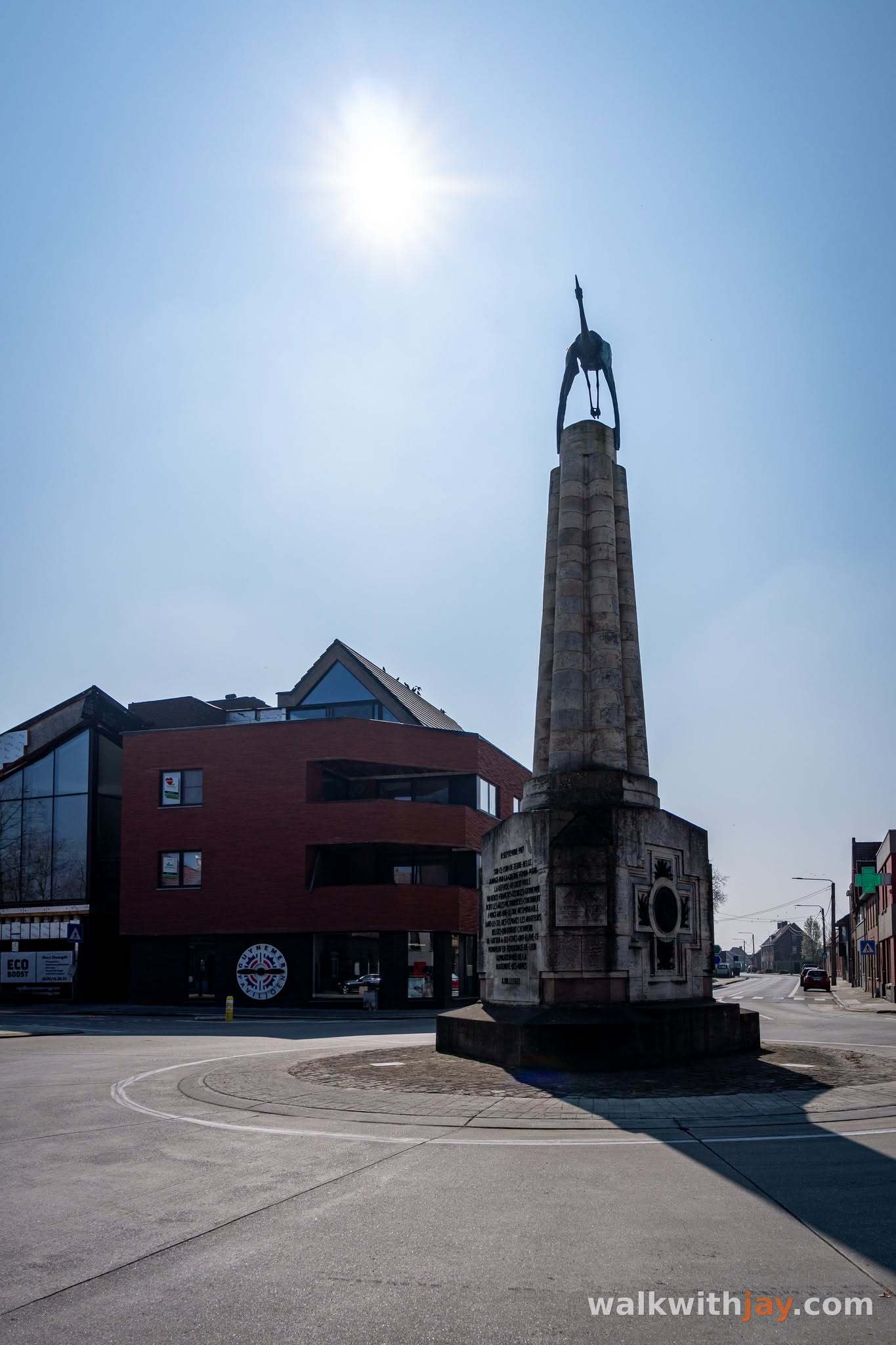
Monument Georges Guynemer
At start/finish
Memorial to French fighter pilot Georges Guynemer, unveiled in 1923 and crowned by the stork emblem of his Escadrille des Cigognes.
Guynemerplein, 8920 Poelkapelle, Belgium ↗
Website →Guynemerpaviljoen
At start/finish
Small aviation museum devoted to Georges Guynemer and other First World War airmen. Opening hours are seasonal.
Brugseweg 126-128, 8920 Poelkapelle, Belgium ↗
Website →
Tank Memorial Ypres Salient
At start/finish
Memorial to tank crews who fought in the Ypres Salient, incorporating an original armour plate from a British Mark IV.
Guynemerplein, 8920 Poelkapelle, Belgium ↗
Website →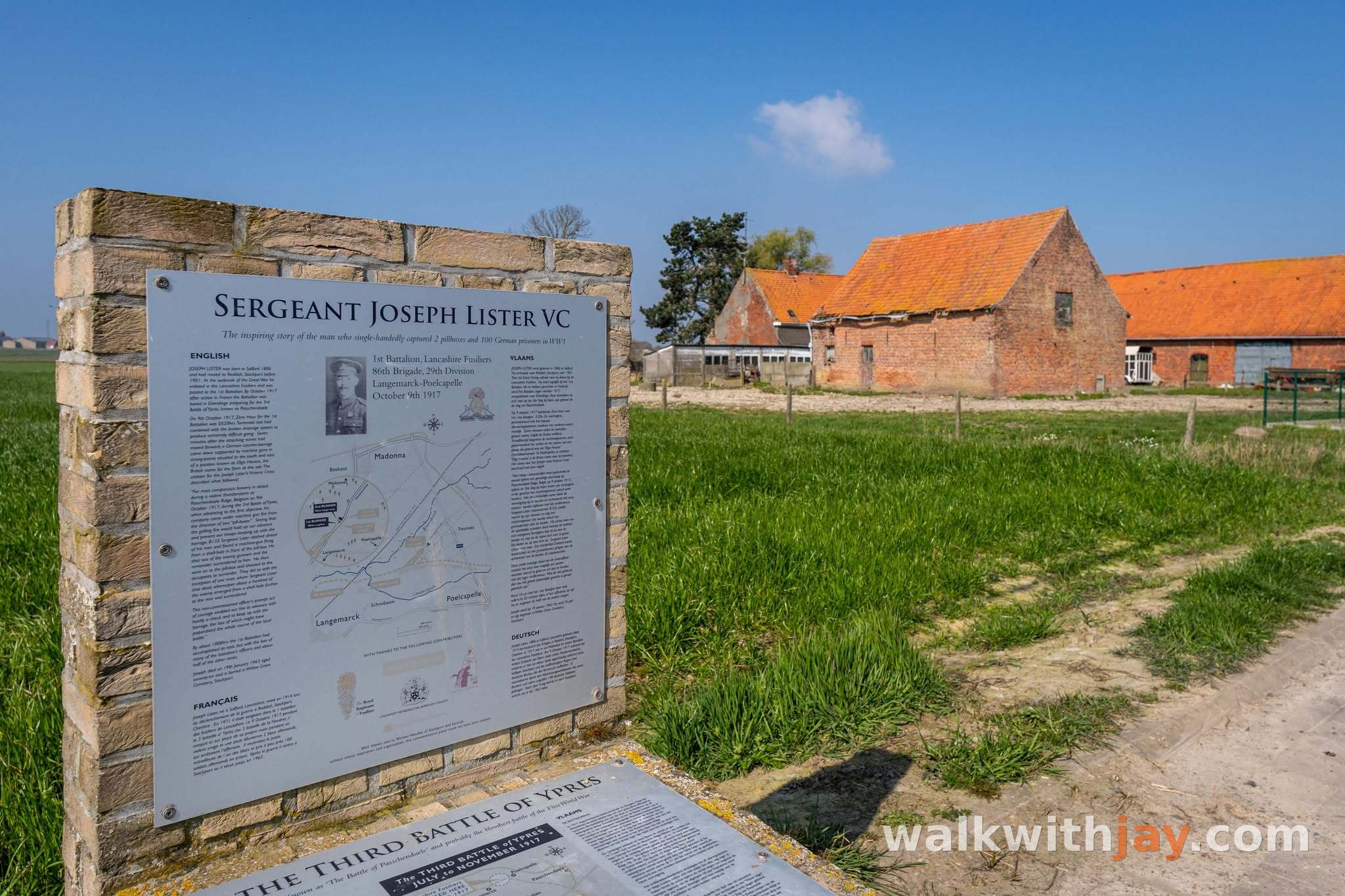
Joseph Lister VC Memorial
Along the route
Memorial to Sergeant Joseph Lister VC, decorated for his actions on 9 October 1917.
Schreiboomstraat, 8920 Poelkapelle, Belgium ↗
Website →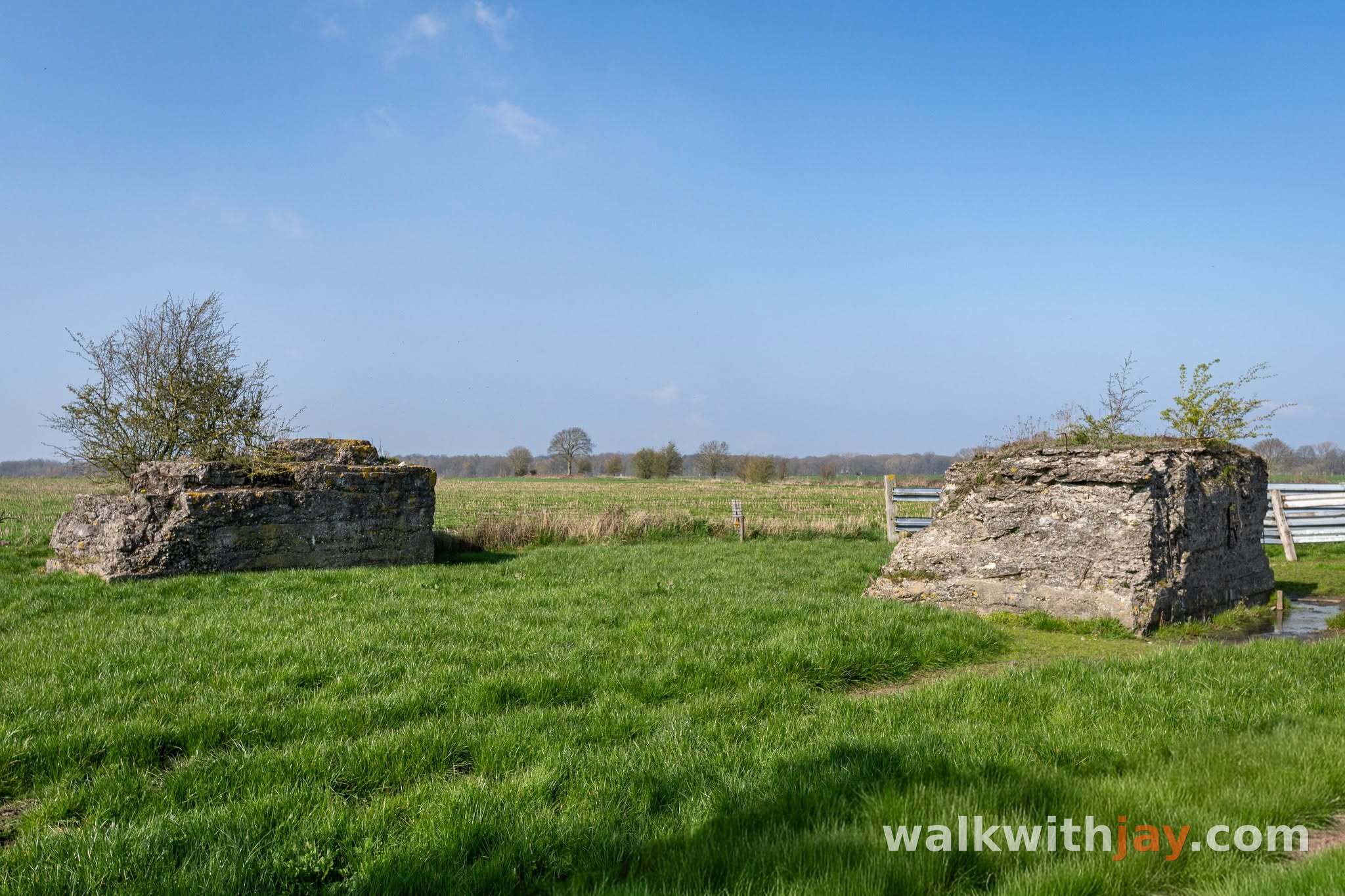
Duitse bunkers langs de oude spoorweg
Along the route
Two German concrete bunkers still visible in the open landscape beside the former railway line.
Oude spoorwegbedding nabij Schreiboomstraat, 8920 Poelkapelle, Belgium ↗
Monument Charles Dresse
Along the route
Memorial to Adjutant Charles Dresse of the 9th Line Regiment, killed here on 28 September 1918 at the age of 21.
Poperingestraat 27, 8920 Langemark-Poelkapelle, Belgium ↗
Website →
Poelcapelle British Cemetery
Along the route
Large CWGC cemetery with nearly 7,500 First World War Commonwealth burials, more than 6,000 of them unidentified.
Brugseweg, 8920 Poelkapelle, Belgium ↗
Website →Ready to set off?
Open the starting point in your GPS and enjoy the walk.