Rooie Zitapad
Langemark-Poelkapelle
A history-rich loop through the countryside around Langemark, passing war memorials, local stories and a former railway line.
The walk
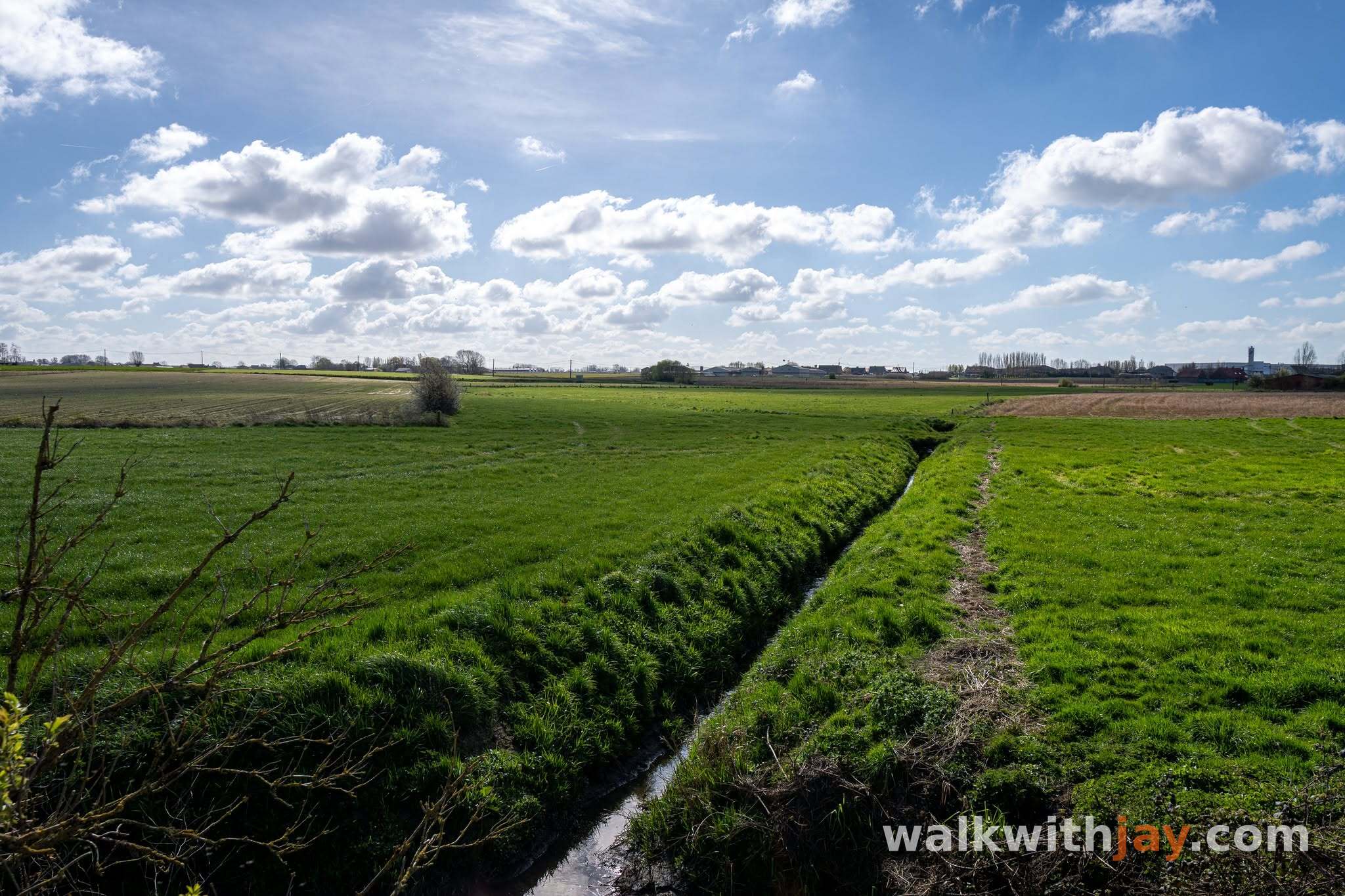
Rooie Zitapad starts at Vijverpark in Langemark and covers 11.7 kilometres through the flat countryside towards Sint-Juliaan and Poelkapelle. The route is paved and signposted, but its real strength lies in the stories along the way, from old hamlets and a vanished tree to a remarkable concentration of First World War memorials.
Route map
From Vijverpark to the Steenbeek
The walk starts at Vijverpark in Langemark. The name Rooie Zitapad refers to Rooie Zita from the Bakelandt comic series, although on the ground the route is shaped much more by the surrounding landscape and local history.
A small church path leads towards the municipality’s water basins. At the Steenbeek, you pass the Harry Patch Memorial. Patch fought in this area in 1917 and returned many years later to the same landscape. The memorial commemorates men of his battalion who were killed during the fighting.
From there, the route continues along paved country roads between open fields. Several old local place names appear along the way, including Blatezak, a lower-lying area whose name is traditionally linked with leaves collecting there in autumn.
The Brooding Soldier and the Death Mill
After crossing the busy Brugseweg, you reach the Canadian Memorial at Sint-Juliaan, better known as The Brooding Soldier and locally as De Canadien. It commemorates the Canadian troops who fought here during the Second Battle of Ypres. The figure faces the direction from which the German chlorine gas cloud came on 22 April 1915, during the first large-scale gas attack on the Western Front.
Farther on stands the memorial to the 1st Battalion Hertfordshire Regiment. On 31 July 1917, the opening day of the Third Battle of Ypres, the battalion suffered devastating losses in this area. The memorial stands close to the furthest point reached during the attack.
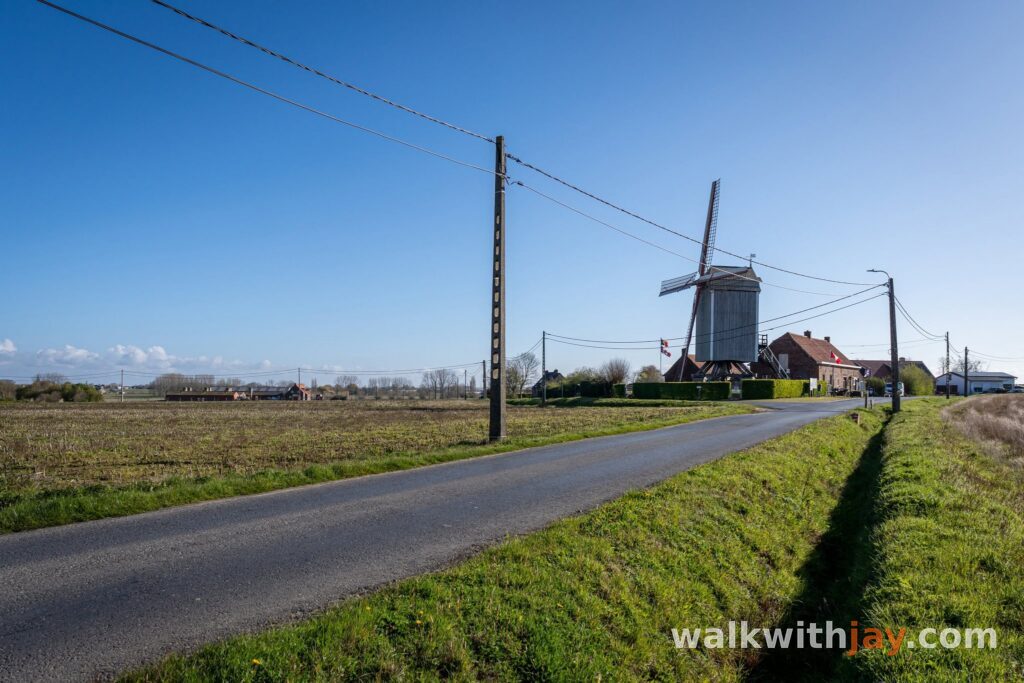
Steenakkermolen then comes into view. The original mill stood directly in the battle zone during the First Battle of Ypres and was destroyed in October 1914. The site became known as the Dodenmolen, or Death Mill. Beside the present mill are Hill 25 and Jan Fieuw’s studio, where battlefield material recovered from the landscape is transformed into contemporary remembrance art.
The Schreiboom and Frederick Dancox VC
The paved roads eventually bring you towards Schreiboomstraat. Before the First World War, an ancient lime tree stood here and became the focus of several local legends. One story claimed that it already existed during the Battle of Westrozebeke in 1382, while others linked it with local justice or the death of Philip van Artevelde. The tree itself did not survive the war.
A short detour nearby leads to the memorial to Joseph Lister VC. The main route continues towards the old railway line, where a memorial column commemorates Frederick George Dancox VC.
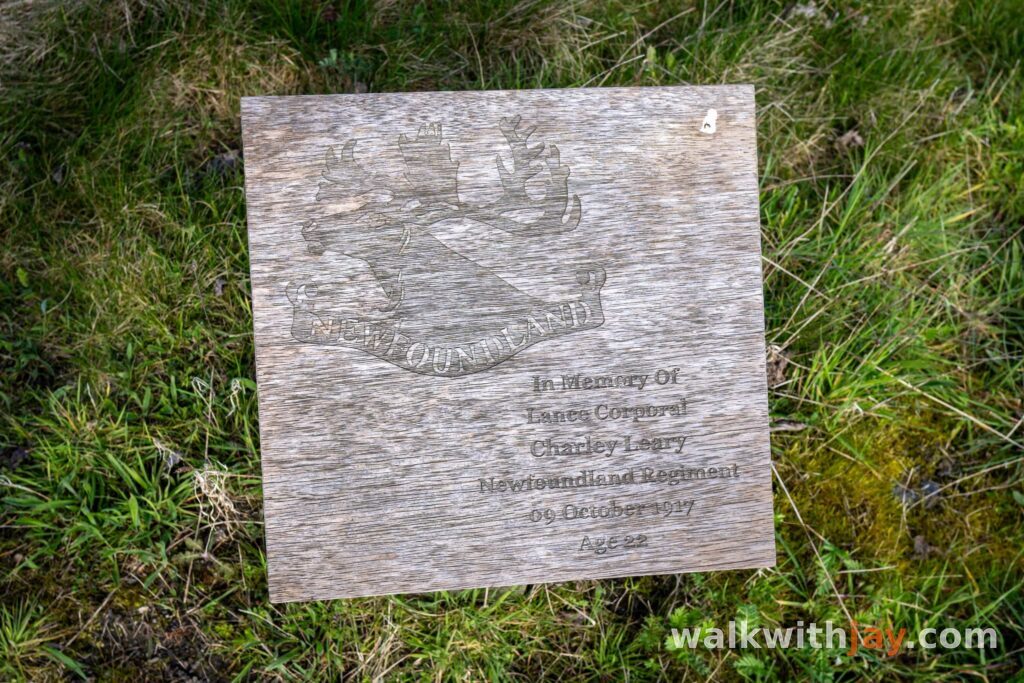
Dancox fought here with the Worcestershire Regiment on 9 October 1917. During the attack near Poelkapelle, he reached a German position under heavy fire and forced its defenders to surrender. He was awarded the Victoria Cross for his actions. Only a few weeks later, on 30 November 1917, he was killed during the fighting around Cambrai.
Back to Langemark along the old railway
The final section follows the former railway line back towards Langemark. This line once linked Ypres with Torhout and formed part of a wider connection towards Ostend. Built in the 19th century to improve transport through the region, it never achieved the success originally hoped for.
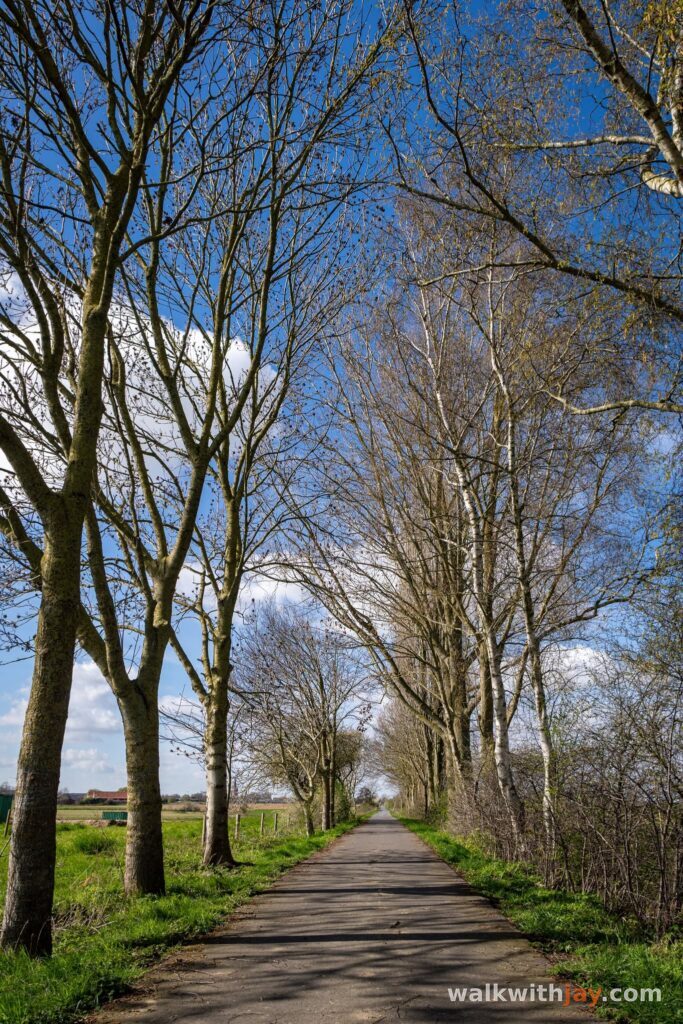
After railway traffic ended, the old trackbed was gradually redeveloped as a walking and cycling route. Its long, straight course makes for a quieter final section before you return to central Langemark and Vijverpark.
The walk therefore owes much of its appeal to the sequence of stories and remembrance sites rather than to dramatic scenery. The countryside remains open and rural, while the monuments repeatedly reveal how deeply the First World War shaped this landscape.
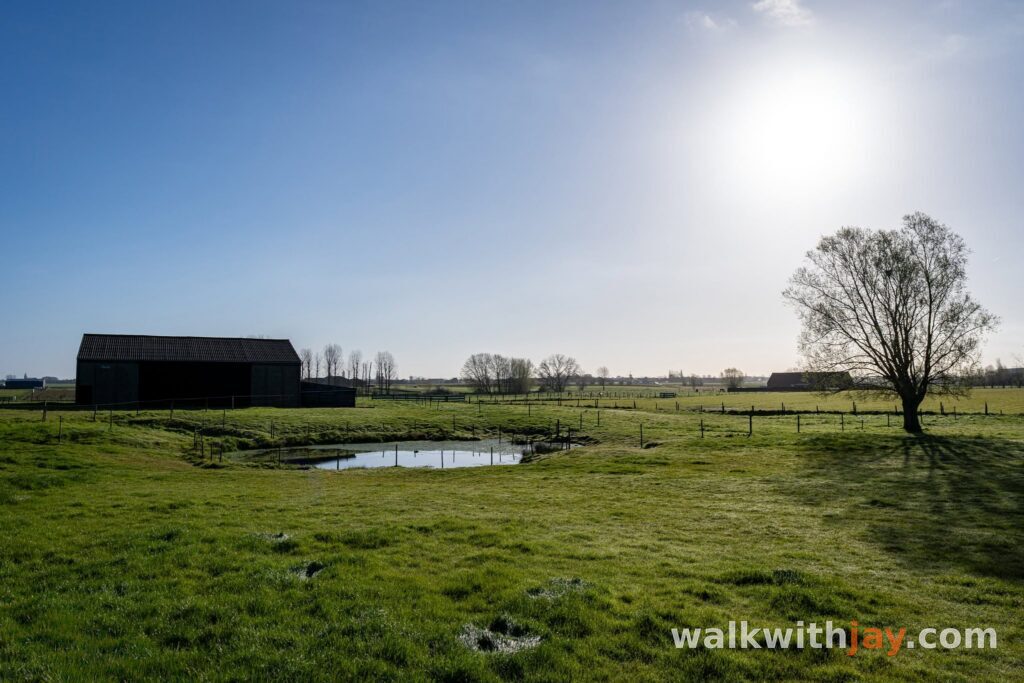
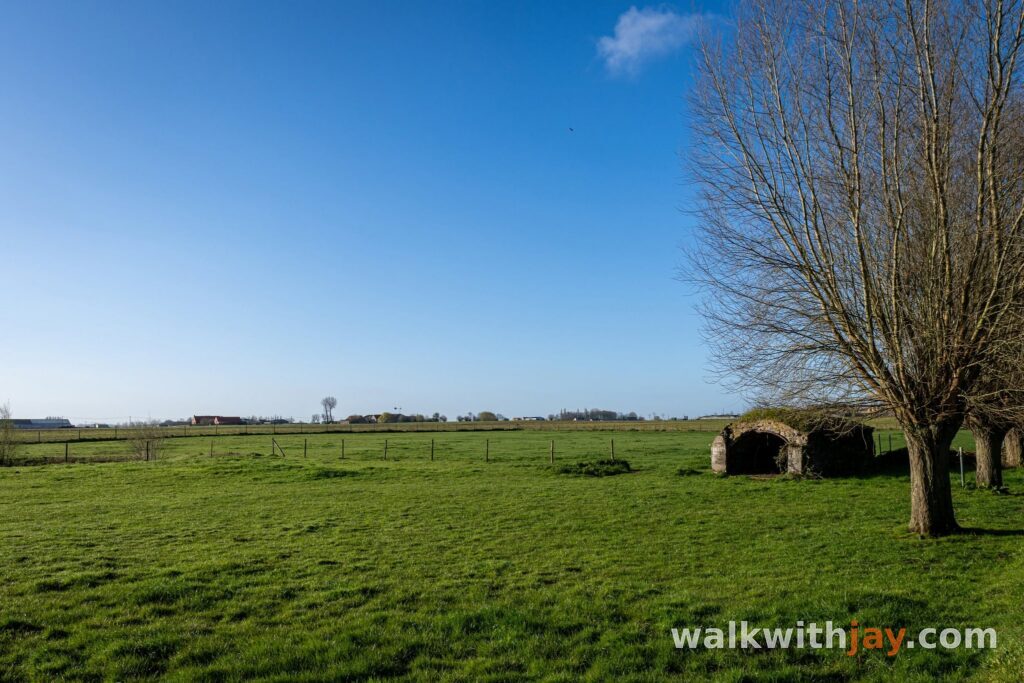
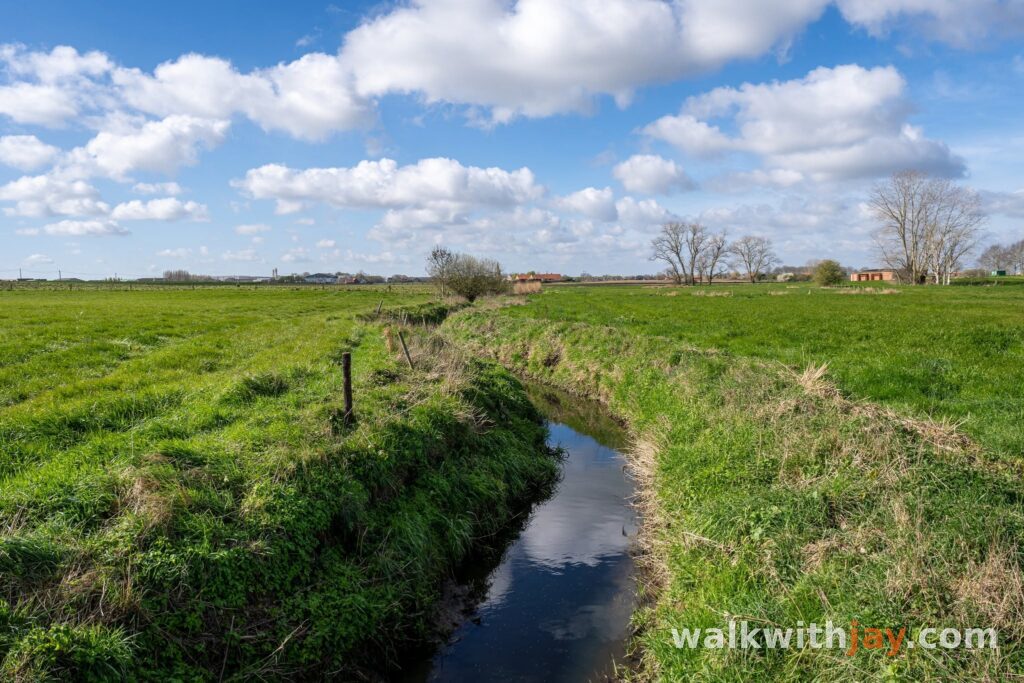
Photos from this walk





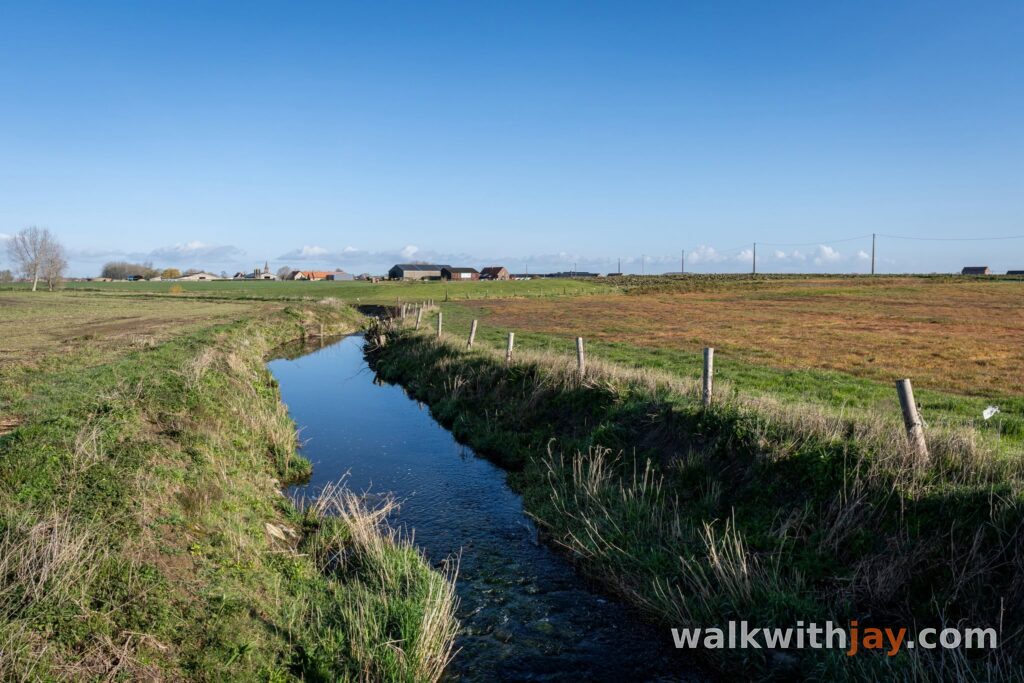
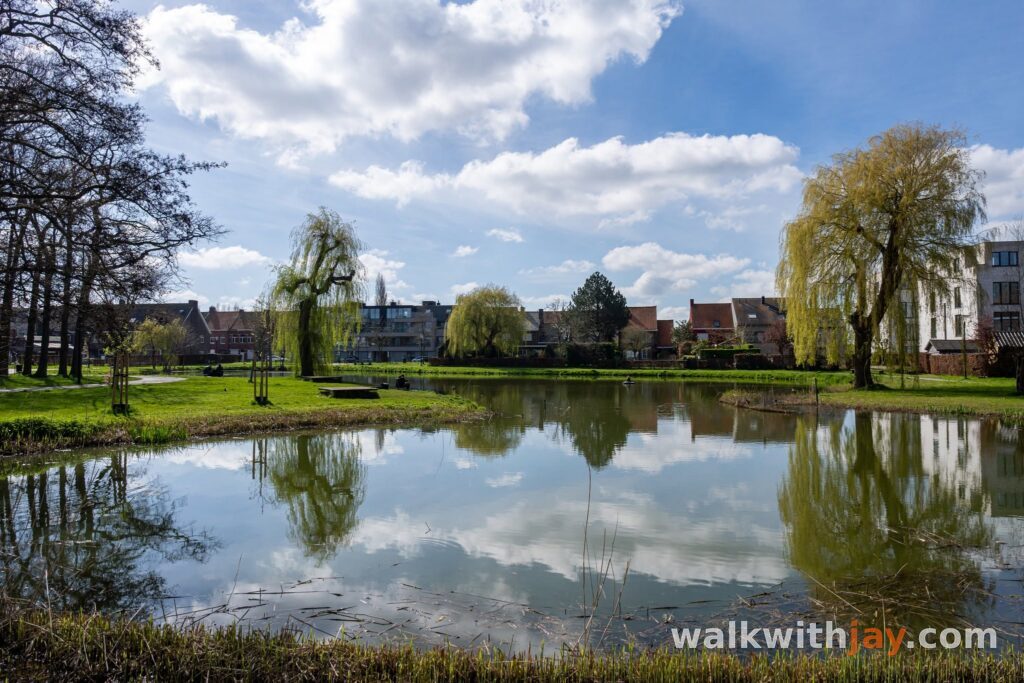
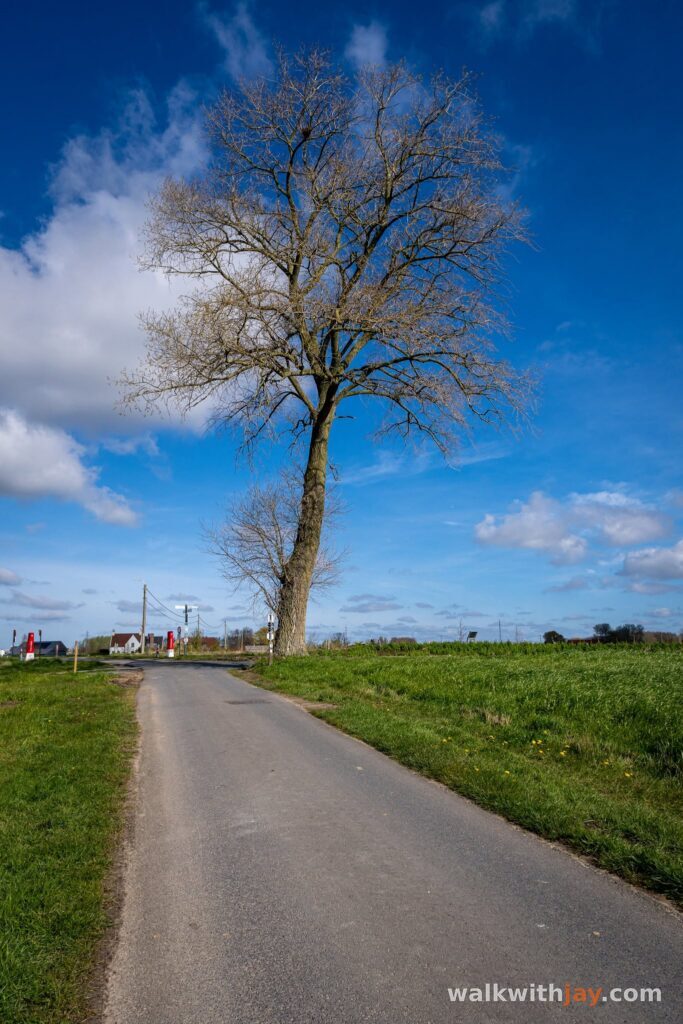
Jay’s tips
If you also want to go inside Hill 25 and Jan Fieuw’s studio, check in advance. Visits are currently by appointment.
Good to know
Little shade
Bus stop near the start
Monument
Church
Windmill
Memorial or commemorative monument
The route is almost entirely paved and includes a crossing of the busy Brugseweg. Keep that in mind if you mainly prefer quiet, unpaved walking paths.
My experience
For me, the strongest part of Rooie Zitapad is the history along the way. You pass a surprising number of memorials and local stories on one route, and the combination of The Brooding Soldier, the Hertfordshire memorial, Steenakkermolen and the story of Frederick Dancox gives the walk plenty of substance.
As a walking route in its own right, I find it less convincing. Almost the entire route is paved and much of it follows country roads between fields. There are peaceful stretches, but I miss some variety in both surface and natural scenery.
If you want to explore the history of Langemark and the Ypres Salient, there is a lot to discover here. Purely for the walking experience, I think there are stronger routes nearby.
Waymarking
Waymarking Rooie Zitapad
Rooie Zitapad is a separately signposted walking loop. It is not a walking-node route.
Places of interest
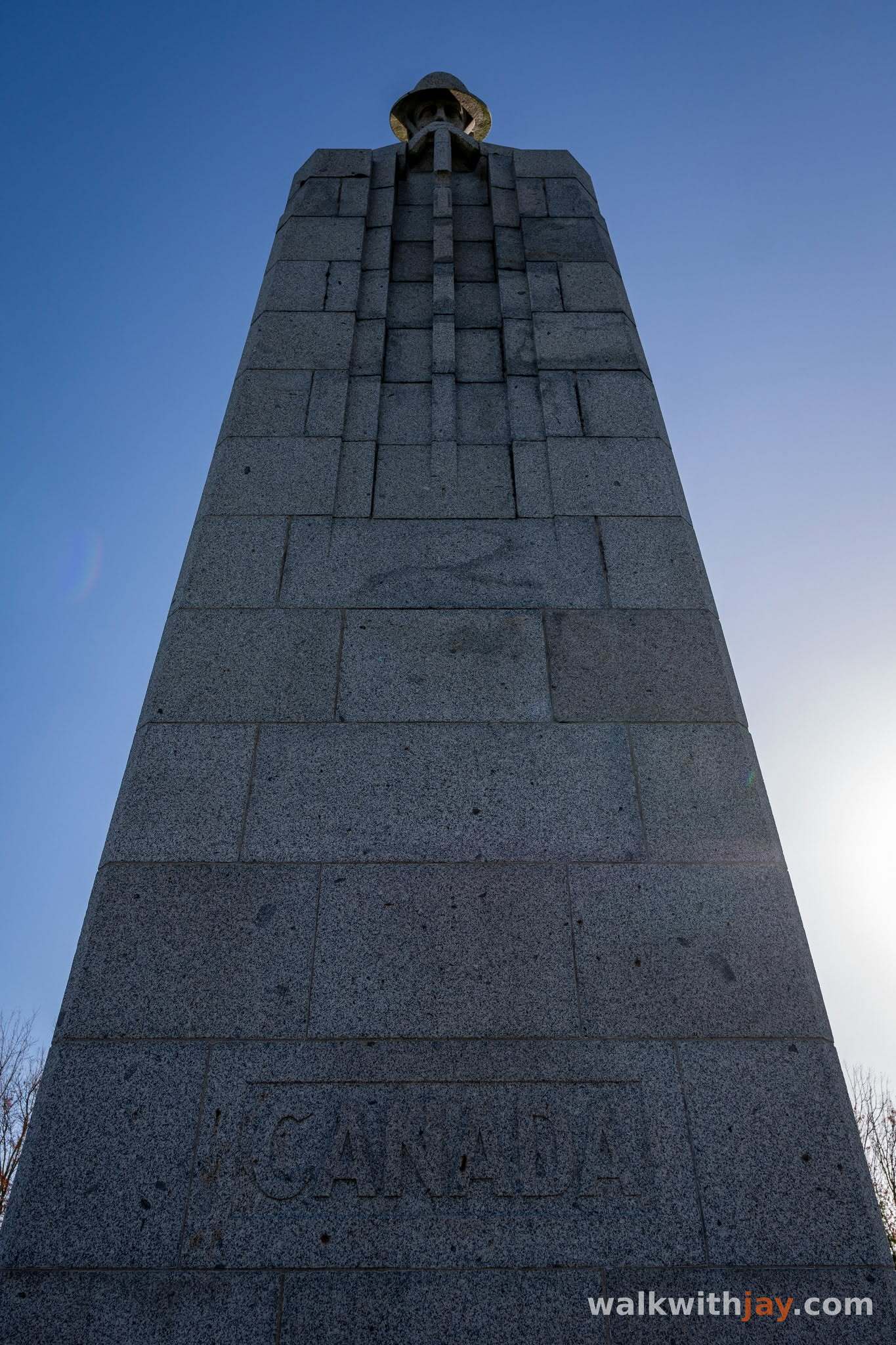
Canadian Memorial – The Brooding Soldier
Along the route
Canadian memorial commemorating the fighting in April 1915 and the first large-scale gas attack on the Western Front.
Brugseweg, Sint-Juliaan, 8920 Langemark-Poelkapelle, Belgium ↗

Hertfordshire Regiment Memorial
Along the route
Memorial to the 1st Battalion Hertfordshire Regiment and its heavy losses on 31 July 1917.
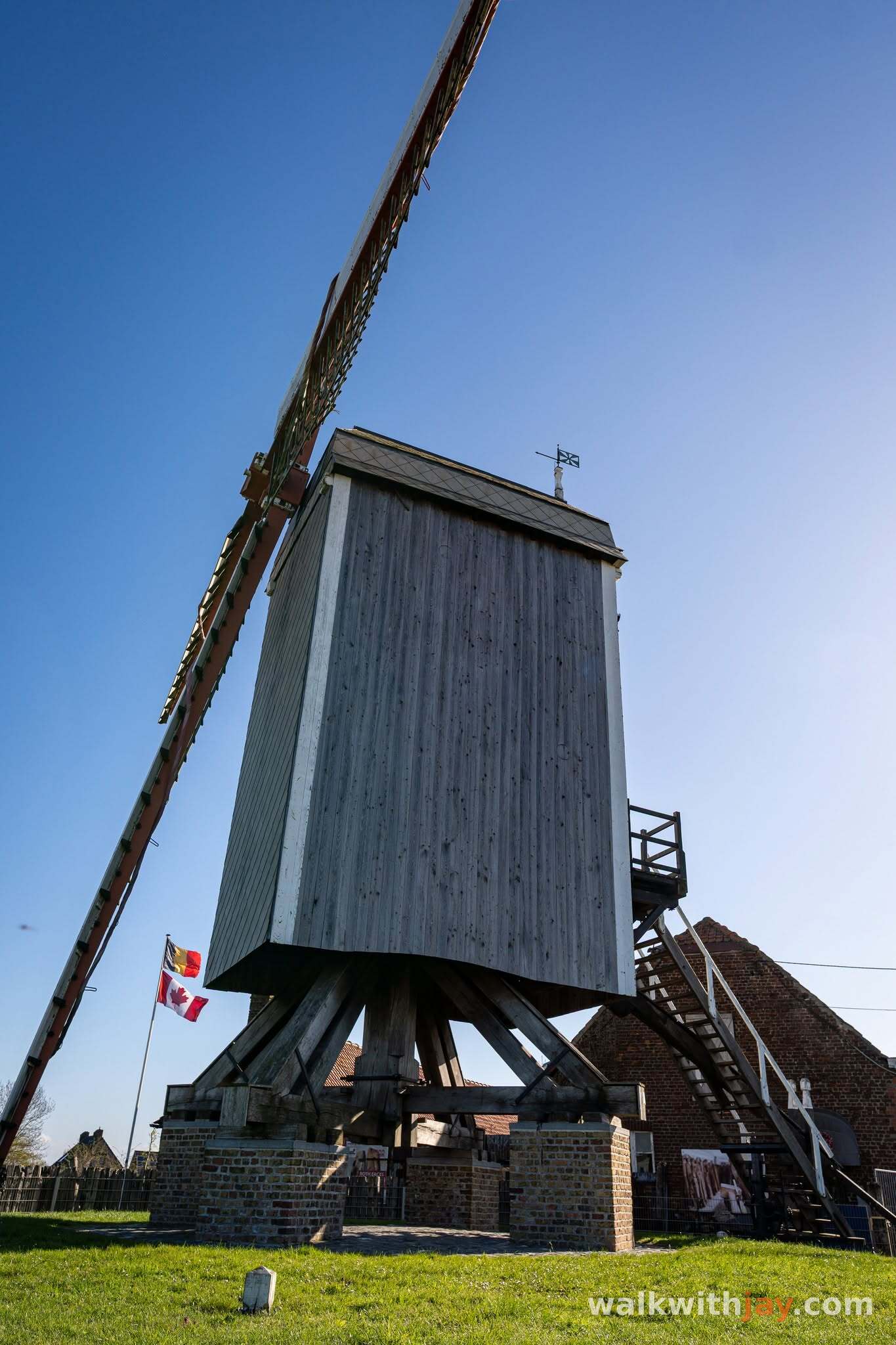
Steenakkermolen
Along the route
Historic mill site, also known as the Dodenmolen or Death Mill, destroyed during the First Battle of Ypres in 1914.
Waterstraat, 8920 Langemark-Poelkapelle, Belgium ↗
Website →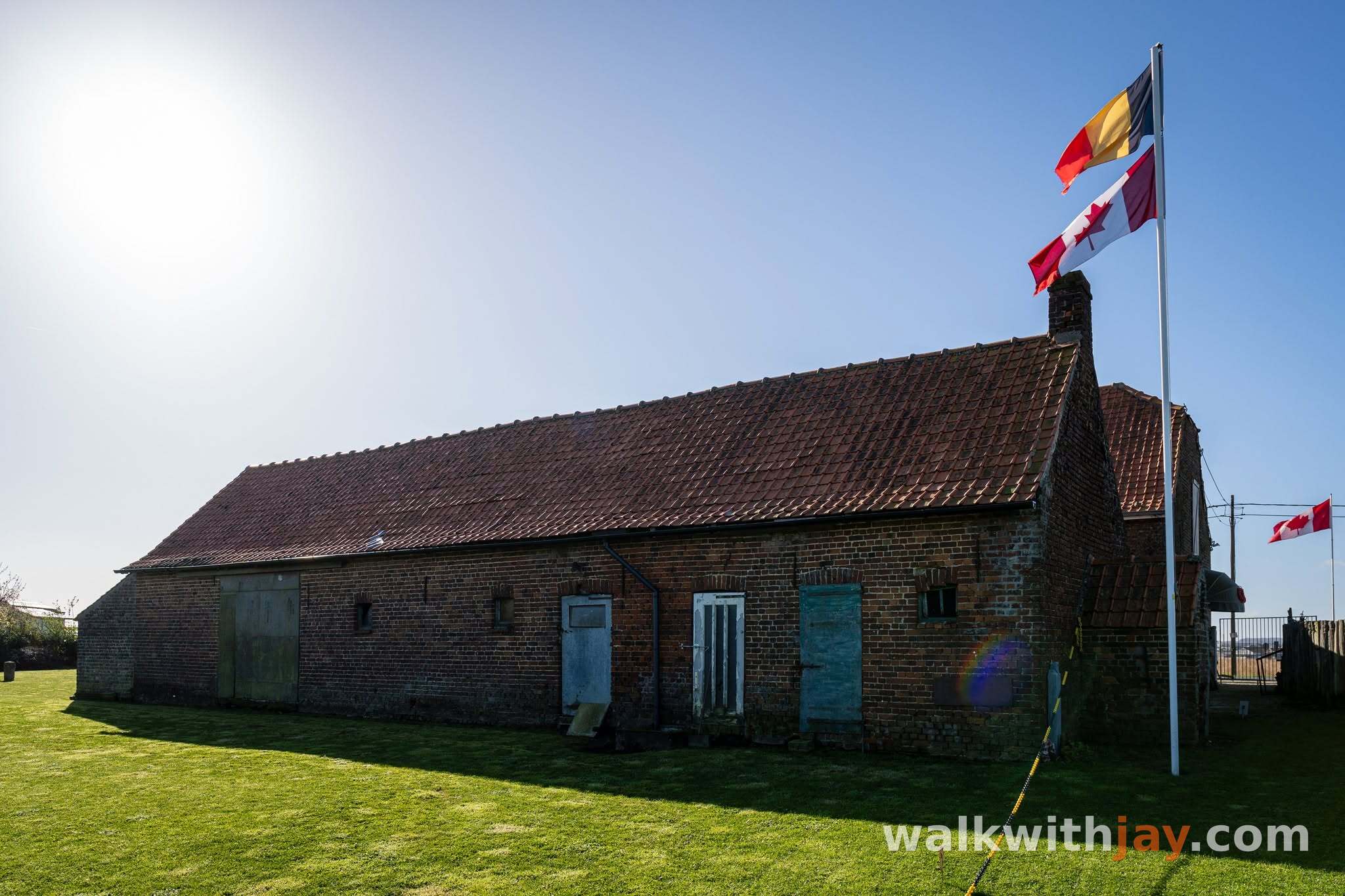
Ready to set off?
Open the starting point in your GPS and enjoy the walk.